Car Insurance Wisconsin: Requirements, Costs & Flexible Payment Options with OCHO
Quick overview: Wisconsin car insurance with OCHO
Wisconsin requires every driver to carry auto insurance before hitting the road—no exceptions. The good news? Average costs here run below the national average, making it more manageable for many drivers. Wisconsin's average annual full-coverage car insurance rate is approximately $1,902 to $2,236. At OCHO, we help Wisconsin drivers compare real-time quotes from multiple insurers and avoid those painful large upfront down payments that can break the bank. OCHO also helps drivers find the cheapest car insurance options in Wisconsin by comparing multiple providers.
Here’s what this guide will cover:
Wisconsin’s legal minimum coverage requirements (the 25/50/10 rule)
What “full coverage” actually means in WI
Average car insurance costs in 2024 and factors that affect your rate
SR-22 requirements for high-risk drivers
How OCHO’s $0-down and pay-over-time options work for Wisconsin drivers
The importance of trust when choosing a car insurance provider
Whether you’re in Milwaukee, Madison, Green Bay, Kenosha, Racine, the Fox Valley, or rural northern Wisconsin, this guide has you covered. The basics of Wisconsin auto insurance apply statewide, but costs and coverage needs can vary by region.
Ready to see what you could save? Check real-time Wisconsin quotes with OCHO and explore no-down-payment options that fit your budget.
Thank you! Your submission has been received!
Oops! Something went wrong while submitting the form. Please try again later.
What car insurance is required in Wisconsin?
Wisconsin is a mandatory insurance state. Every vehicle driven or parked on public roads must be insured or backed by proof of financial responsibility—whether that’s a surety bond, personal funds, or a certificate of self-insurance. For most wisconsin drivers, that means carrying an active car insurance policy.
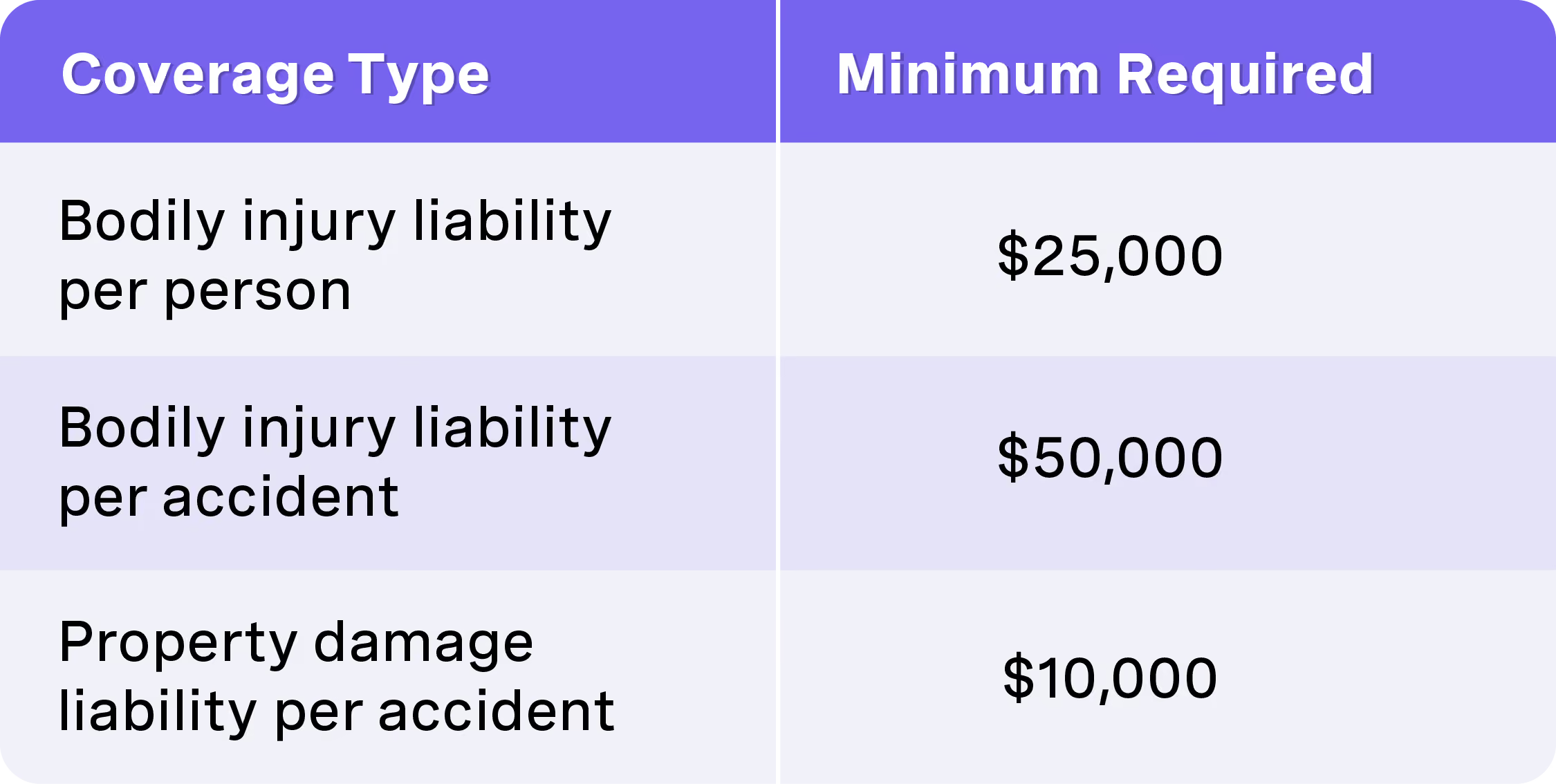
The 2024 state minimum liability and uninsured motorist limits follow the 25/50/10 structure:
Wisconsin law also requires uninsured motorist bodily injury coverage with at least 25/50 limits. This protection kicks in when you’re hit by an uninsured driver who can’t pay for your injuries. Underinsured motorist coverage and medical payments coverage are offered but can be rejected in writing if you choose.
Driving without required insurance in wisconsin can lead to fines around $500, license and registration issues, and SR-22 requirements after certain violations. Fraudulent proof of insurance? That fine can reach $5,000.
When you shop through OCHO, our quote process always checks that your selected policy meets or exceeds Wisconsin’s legal minimums—so you stay compliant without the guesswork.
What “full coverage” car insurance means in Wisconsin
Here’s the thing: “full coverage” isn’t defined in wisconsin law. It’s an industry term that typically means liability coverage plus collision and comprehensive coverage on your own vehicle.
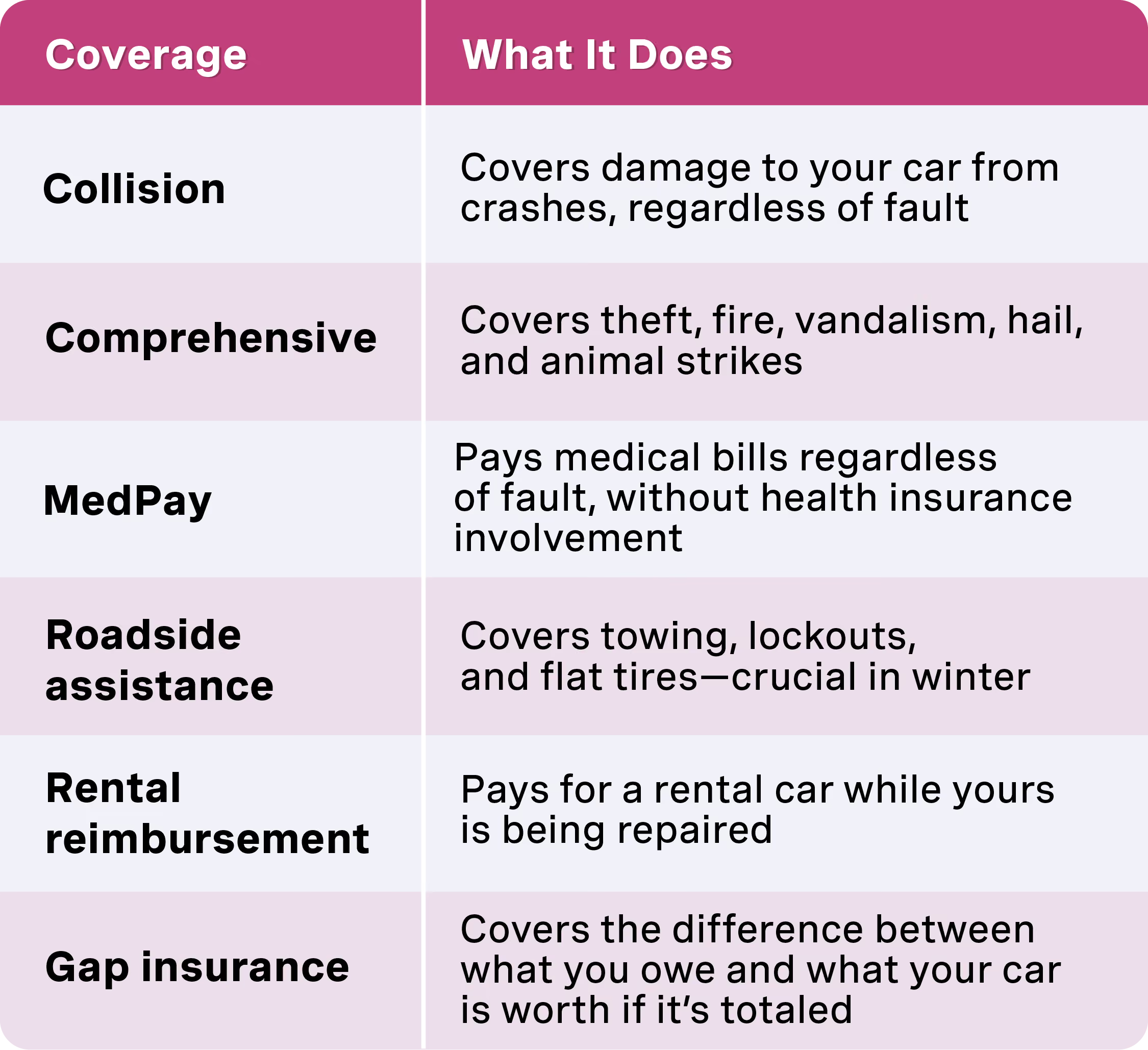
Collision coverage pays for damage to your car from a crash—regardless of who’s at fault. Rolled your car on an icy road? Collision covers the repairs.
Comprehensive coverage handles the non-crash stuff: theft, fire, vandalism, hail damage, and hitting a deer. That last one matters in Wisconsin—wildlife collisions are common in northern and rural areas, especially during fall.
A recommended coverage set for many drivers looks like this:
50/100/50 or 100/300/50 liability limits
Comprehensive and collision with $500–$1,000 deductibles
Optional MedPay for medical bills
Roadside assistance for winter breakdowns
Full coverage is often required if you have a financed or leased vehicle in Milwaukee, Madison, Green Bay, or anywhere else. Lenders want protection on their investment. Drivers with newer vehicles under 8–10 years old often benefit from full coverage too.
OCHO lets you toggle coverage types and limits in real time to see price changes before you buy. Customize your policy to balance protection and cost—without the back-and-forth phone calls.
Is Wisconsin a no-fault state?
No. Wisconsin is a traditional “at-fault” (tort) state—not a no-fault state like Michigan or Minnesota. This means whoever is found responsible for a crash pays for injuries and damages through their insurance.
Fault is typically determined through:
Police reports from the accident scene
Insurance company investigations
Wisconsin’s comparative negligence rules (you can recover damages even if you’re partially at fault, as long as you’re not more than 50% responsible)
This at-fault system is exactly why uninsured and underinsured motorist coverage matters so much. If someone hits you in Milwaukee, Kenosha, or a rural highway and they have little or no insurance, you need coverage to protect yourself. Wisconsin requires UM coverage for a reason—roughly one in eight drivers nationwide is uninsured.
Medical Payments (MedPay) coverage is an optional add-on in Wisconsin that can help pay medical bills regardless of fault. It kicks in without touching your health insurance first, which can be crucial if you’re dealing with high deductibles.
OCHO helps wisconsin drivers compare quotes that include or exclude MedPay and higher UM/UIM limits. You can see exactly how these coverage options affect your monthly cost and make an informed decision.
How much does car insurance cost in Wisconsin in 2024?
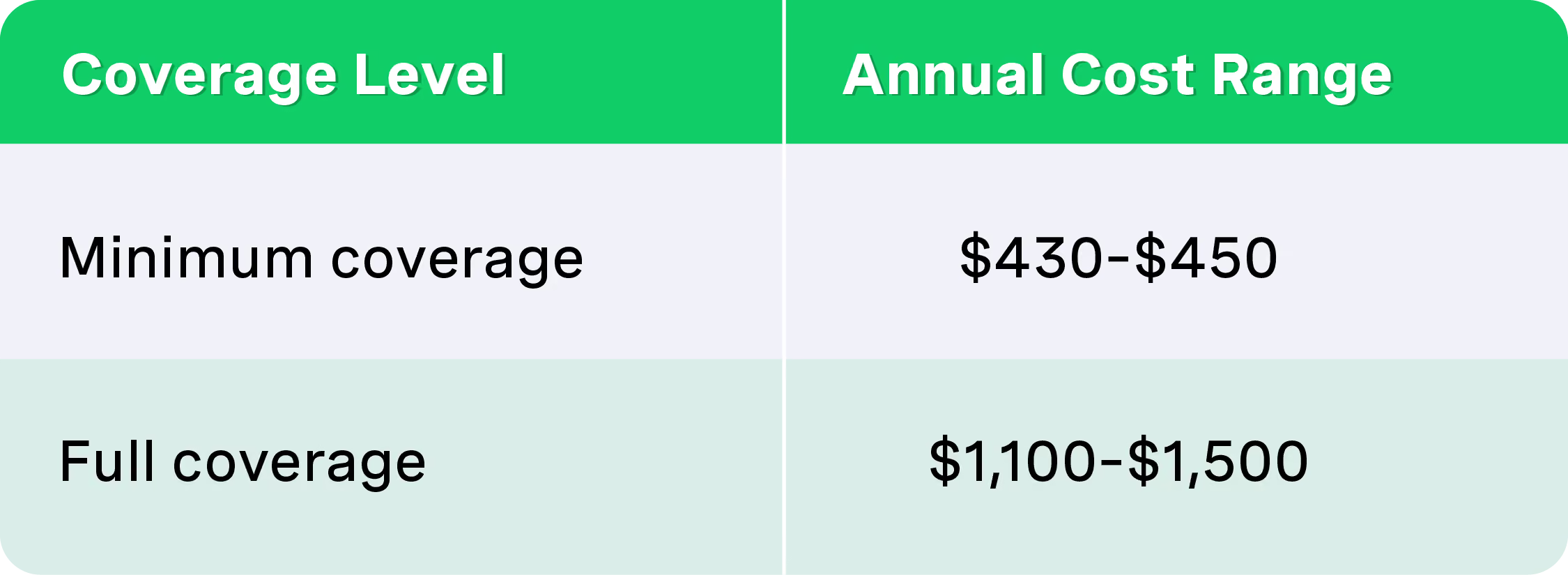
Wisconsin consistently ranks as one of the more affordable states for auto insurance. Based on 2024 data, expect to pay roughly:
The average cost of car insurance in Wisconsin was $1,202 in 2021, which is 21% lower than the national average. The average cost of 'full coverage' car insurance in Wisconsin is $1,078 per year.
These numbers sit below the national average, which is good news for your budget. But individual rates vary significantly based on several factors:
Age: Teen drivers pay dramatically more than 40-year-olds
ZIP code: Milwaukee and southern urban areas typically cost more than Eau Claire or rural counties due to higher claim frequency and theft risk. Drivers in Milwaukee typically pay about 24%–27% more than the state average.
Vehicle type: A new SUV costs more to insure than an older sedan
Credit-based insurance scores: Where allowed, your credit history affects premiums
Annual mileage: More time on the road means more risk
Many drivers with prior lapses in coverage, SR-22 filings, or limited credit face higher upfront down payments. That’s where OCHO’s financing and split-pay options make a real difference—we help you get covered without draining your bank account on day one.
As a broker, OCHO compares real-time rates from multiple partner insurers so Wisconsin drivers see a range of options in one place. No hunting through dozens of websites. GEICO, Travelers, and USAA often provide the lowest rates among car insurance providers in Wisconsin, with GEICO averaging around $98-$115 a month.
When reviewing your quotes, be aware of any additional cost for certain services or features that may not be included in the base rate.
Required liability and uninsured motorist coverage in Wisconsin
Understanding what these coverages actually do can save you money and protect your family.
Liability coverage protects other people and property if you cause a crash. It doesn’t cover your own injuries or vehicle damage—it covers the person you hit.
Here’s what Wisconsin’s 25/50/10 minimums look like in a realistic scenario: You cause a two-car accident on I-94 near Milwaukee. Two people in the other vehicle are injured, and their car is totaled. Your policy would pay up to $25,000 per person for their medical bills (capped at $50,000 total for the accident) and up to $10,000 for their damaged vehicle.
If their injuries exceed those limits? You’re personally responsible for the difference. That’s why many wisconsin drivers choose higher limits to protect assets like a home, savings, or future wages.
Uninsured motorist (UM) coverage protects you when you’re hit by a driver with no insurance. Wisconsin requires at least 25/50 UM coverage. Underinsured motorist (UIM) coverage, which responds when the at-fault driver has insurance but not enough, can be declined in writing.
OCHO’s interface visually shows the impact of increasing liability and UM/UIM limits on your monthly cost. You can see exactly how an extra $20/month buys significantly more protection.
Optional coverages Wisconsin drivers should consider
State minimums get you legal, but they can leave gaps. Optional coverages are just some of the things Wisconsin drivers should consider, including extra protections and resources that fit your needs. Optional coverages often prove cost-effective given Wisconsin’s climate and driving conditions.
Bundling things like auto insurance with homeowners or renters insurance often leads to additional discounts for Wisconsin drivers.
Wisconsin-specific risks make certain coverages especially valuable:
Deer and wildlife collisions in northern and central counties (comprehensive covers this)
Hail and storm damage around spring and summer
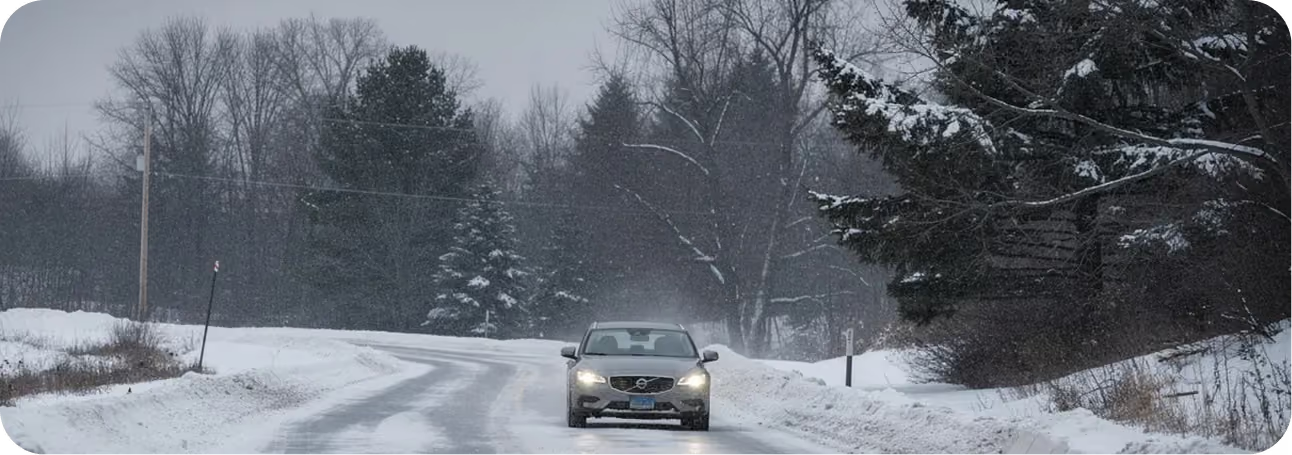
Icy winter roads statewide that lead to spin-outs and collisions
Wisconsin drivers who typically benefit most from fuller coverage include commuters on I-39/I-90, students at UW–Madison or UW–Milwaukee, and gig drivers doing delivery or rideshare in metro areas.
OCHO helps you layer these optional coverages on top of state minimums while still aiming for affordable monthly payments. More protection doesn’t have to mean financial strain.
Thank you! Your submission has been received!
Oops! Something went wrong while submitting the form. Please try again later.
SR-22 and high-risk car insurance in Wisconsin
Some Wisconsin drivers must file an SR-22 certificate after violations like OWI/DUI, driving without insurance, or serious license suspensions.
Important: An SR-22 is not insurance. It’s a proof-of-financial-responsibility form that your insurer files with the Wisconsin DMV to confirm you maintain required liability limits. Think of it as the state keeping tabs on your coverage.
Typical duration requirements in Wisconsin run around 3 years after certain offenses, though exact terms depend on your case and DMV instructions. During this period, any lapse in coverage gets reported to the state—and that can mean license suspension.
SR-22 status typically raises premiums and makes down payments higher, especially for drivers in Milwaukee County and other higher-risk regions. Insurance companies see you as a risk, and they price accordingly.
OCHO can help high-risk drivers compare insurers that accept SR-22 filings and spread that initial cost over multiple paychecks instead of one large lump sum. Getting back on the road legally shouldn’t require emptying your savings account.
Car insurance discounts and ways to save in Wisconsin
Even with Wisconsin’s below-average premiums, stacking discounts makes a difference—especially when you’re watching every dollar.
Multi-car (insure two or more vehicles on one policy)
Multi-policy (bundle auto with renters or home insurance)
Pay-per-mile or telematics programs
Good student (usually requires a B average or better)
Vehicle safety features (anti-theft systems, airbags, backup cameras)
Budget-friendly tactics for Wisconsin drivers:
Raise your comprehensive/collision deductibles to lower premiums
Drop collision coverage on older vehicles worth under $4,000–$5,000
Compare quotes at each renewal or after major life changes
Ask about discounts you might qualify for but weren’t automatically applied
Drivers in underserved communities often miss out on discounts because they don’t regularly shop around. OCHO’s digital platform makes side-by-side comparison easier on a smartphone—no agent appointments needed.
And remember: OCHO’s monthly and paycheck-aligned payment plans can make even slightly higher-coverage policies more manageable. Better protection doesn’t have to mean harder payments.
Thank you! Your submission has been received!
Oops! Something went wrong while submitting the form. Please try again later.
How OCHO makes Wisconsin car insurance more affordable
OCHO exists for Wisconsin drivers who struggle with big upfront payments, irregular income, or limited credit. We’re a digital broker focused on the people the traditional insurance industry often overlooks.
Here’s how we make insurance work for you:
$0 down or low-down-payment options: We finance your initial premium and spread it across upcoming paychecks—without charging interest or late fees for approved arrangements
Paycheck-aligned scheduling: Choose bi-weekly, semi-monthly, or monthly payments that match how you actually get paid
Instant digital proof of insurance: Download your cards immediately for police stops, registration, or dealership purchases anywhere in Wisconsin
Credit-building potential: On-time payments through OCHO can help you build or strengthen credit history over time, which can eventually improve future insurance pricing
We take a bet on you when other companies won’t. That’s the OCHO advantage—making car insurance accessible to everyone who needs it.
Flexible payment options for Wisconsin drivers
Wisconsin drivers, let's set the record straight about car insurance payments. The Old Timers in the insurance game have been sticking you with rigid, unfair payment demands for way too long. But guess what? Those days are over. We're here to shake up this broken system that's been designed to benefit insurance companies, not hardworking Wisconsin folks like you. You deserve payment options that actually make sense—monthly, quarterly, or annual plans that work with your real life, not some corporate spreadsheet. This isn't about their convenience anymore; it's about giving you the power to spread out payments and avoid those budget-crushing bills they love to throw at you.
Here's what really gets us fired up: some of these companies have the nerve to offer you tiny discounts for paying upfront or setting up autopay, like they're doing you some huge favor. Come on! You shouldn't have to jump through hoops or empty your savings account to get basic coverage. The whole system is rigged against people who need flexibility the most. But you know what? We're flipping the script. You can choose a payment schedule that fits your actual lifestyle and never worry about missing payments because the system works against you instead of with you.
At OCHO, we're not playing by their broken rules. We're the new players igniting real change in Wisconsin's insurance market. While the establishment keeps pushing those ridiculous upfront costs, we offer $0-down or seriously low-down-payment options that sync up with your actual paydays. Because here's the thing—if you drive in Wisconsin, you need insurance. It's the law. But being forced to cough up massive deposits? That should be illegal. We're here to keep you protected on Wisconsin roads and keep your budget intact, all while giving those outdated insurance practices the shake-up they desperately need.
Step-by-step: getting a Wisconsin car insurance quote with OCHO
Getting covered through OCHO takes minutes, not hours. Here’s exactly how it works:
Step 1: Gather your details
Driver’s license
Current Wisconsin address
VIN or vehicle details (year, make, model)
Estimated annual miles
Existing policy info (if any)
Names of all drivers in your household
Step 2: Enter your information Input your Wisconsin ZIP code and driver information into OCHO’s online form. Select if SR-22 is required or if you’ve had recent tickets or OWI/DUI—we work with plenty of insurers who cover high-risk drivers.
Step 3: Choose your coverage level Pick state minimum, higher limits, or full coverage. Add optional coverages like comprehensive, collision, MedPay, and roadside assistance based on your needs.
Step 4: Review side-by-side quotes Compare quotes from multiple partner insurers, focusing on total 6- or 12-month cost, available discounts, and customer support options. No misleading teaser rates—you see what you’ll actually pay.
Step 5: Select financing and get covered Choose $0 down when available or a reduced down payment. Schedule payments to match your paychecks. Instantly download proof of insurance valid in Wisconsin.
That’s it. You’re legal, protected, and not stressing about money.
Wisconsin driving basics: licenses, registration, and compliance
Auto insurance connects to other Wisconsin legal requirements. Here’s the basics: There are several important things you’ll need to know and gather, including required documents, coverage options, and safety resources to stay compliant with Wisconsin driving laws.
Driver’s license requirements:
Legal driving age: 16 with a probationary license, 15 and 6 months for a learner’s permit
Pass written and road tests
Provide proof of identity and Wisconsin residency
Renew every eight years with vision checks
Graduated Licensing Program for teens:
Learner’s permit: Must hold for at least 6 months, supervised driving only. Permit holders and their adult sponsors are legally responsible and accountable for their actions while driving.
Probationary license: Passenger limits (no more than one non-family passenger under 25 for first 9 months) and night driving restrictions (no driving between midnight and 5 AM)
Teen drivers face higher insurance costs—adding a young driver to your policy can significantly increase premiums
Vehicle registration steps:
Proof of ownership (title)
Completed MV1 form
VIN verification when needed
Proof of insurance before driving
OCHO can help new residents and first-time drivers in Wisconsin get required coverage quickly so they can register and drive legally the same week.
Customizing your Wisconsin car insurance policy
Every Wisconsin driver's needs are unique, and guess what? The Old Timers in the insurance world don't want you to know that. They'd rather stuff you into their cookie-cutter policies and call it a day. But we're here to set the record straight - with Wisconsin car insurance, you have the power to break free from their broken system and choose from a variety of coverage options to build a policy that actually fits your life, your vehicle, and your budget. Why should you settle for what they think you need?
Start with the basics, sure: bodily injury liability and property damage liability are required by Wisconsin law, but here's what those Old Timers won't tell you - you can crank up those limits for real peace of mind instead of their bare-minimum nonsense. Medical payments coverage? That's another smart move they don't want you thinking about, helping cover medical expenses for you and your passengers after an accident, no matter who's at fault. But they'd rather keep you in the dark about options that actually protect you.
Looking for more protection? You bet you should be! You can add collision coverage to pay for damage to your own car after a crash, or comprehensive coverage to protect against theft, vandalism, hail, or hitting a deer—all those common risks in Wisconsin that cookie-cutter policies love to ignore. Adjusting your deductibles and coverage limits? That's how you beat the system and control your monthly cost while still getting the protection you actually need, not what some insurance company thinks you deserve.
Working with an insurance agent or a digital provider like OCHO can make customizing your policy simple - but here's the thing, we're not like those other companies stuck in the past. We'll help you understand your real options, compare quotes that aren't designed to trick you, and choose the right mix of coverage for your actual situation. The result? A car insurance policy that's tailored to your needs, gives you a real advantage on the road, and helps protect your finances in case of an accident or unexpected event. That's what happens when you stop letting the Old Timers call the shots.
Choosing the right Wisconsin car insurance for your budget
Wisconsin has relatively affordable car insurance compared to most states. But costs still strain many working families, especially in urban ZIP codes like Milwaukee where rates run higher.
Rules of thumb for coverage decisions:
Start above state minimums if possible—25/50/10 won’t cover a serious accident
Keep full coverage on newer or financed cars (your lender requires it anyway)
Consider higher deductibles to drop premiums if you have savings to cover them
Review coverage yearly—your needs and rates change over time
OCHO focuses on underserved and budget-stretched Wisconsin drivers who need flexible ways to pay. We’re not here to push you into risky “no deposit” policies that leave you exposed. Drivers in Wisconsin should be cautious of companies offering 'no deposit car insurance' as these policies often require a first month's payment before coverage begins. We’re here to help you find real coverage you can actually afford.
The bottom line: You need car insurance in Wisconsin. You don’t need to drain your bank account to get it—just make sure you choose a provider you can trust.
Get a Wisconsin quote through OCHO today. Compare options in minutes and see if you qualify for $0 down or low-down-payment coverage. Apply now and take control of your insurance—without the financial stress.
Wrapping up: your next steps for Wisconsin car insurance
You've cracked the code on car insurance essentials in Wisconsin—now it's time to beat the system that's been stacked against you for decades. While the old guard insurance companies want you to stick with their overpriced, inflexible policies, you've got better options. Start by ditching those traditional providers and comparing car insurance policies that actually work for real people with real budgets. Look for Wisconsin car insurance that breaks the mold with flexible payment options, customizable coverage, and discounts that aren't just marketing gimmicks—like multi-car or good student savings that you can actually use.
Don't let them fool you with those sneaky policy details that are designed to confuse you. Review every aspect of each car insurance policy, including coverage options, deductibles, and limits—but do it with your eyes wide open. The industry wants you to think factors like your driving record, age, and vehicle type justify their outrageous rates, so demand a personalized quote and don't accept their first offer. Here's the truth they don't want you to know: the right insurance in Wisconsin isn't about jumping through their legal requirement hoops—it's about protecting yourself, your family, and your vehicle without getting ripped off by a broken system.
Take control by reaching out for quotes, asking the hard questions they don't want to answer, and refusing to settle for policies you don't understand. With the right coverage and payment plan, you'll get the protection, peace of mind, and financial security that should be your right as a Wisconsin driver—not a privilege reserved for their "preferred" customers. OCHO is here to help you revolutionize your insurance game every step of the way—so you can drive with confidence, knowing you've beaten the system and you're truly covered.
Thank you! Your submission has been received!
Oops! Something went wrong while submitting the form. Please try again later.