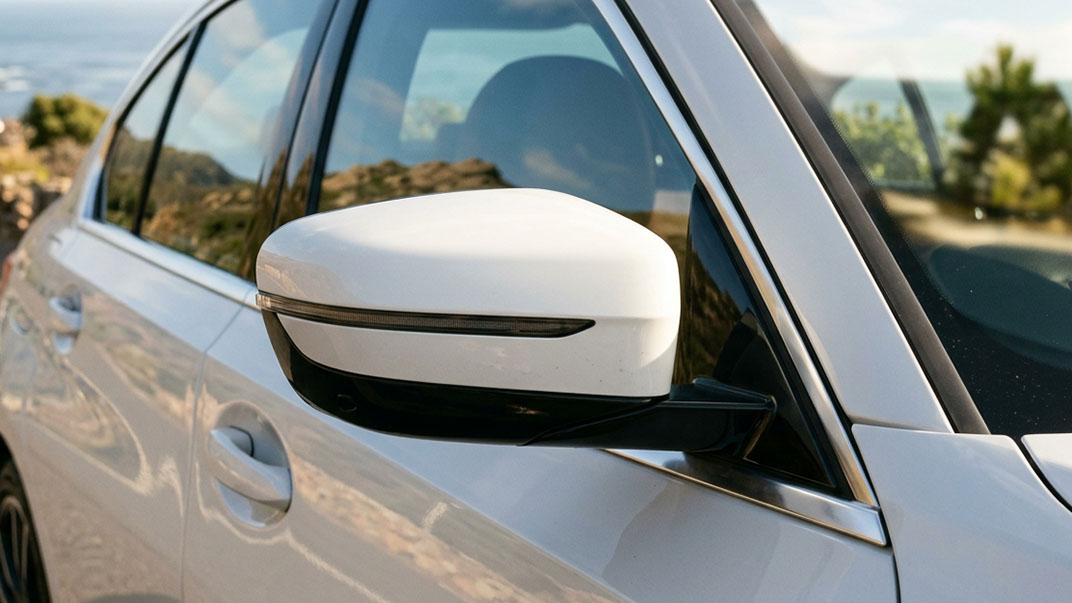
Paint insurance refers to coverage for vehicle paint damage under your existing car insurance policy. There's no standalone "paint policy"-paint repair falls under the broader umbrella of physical damage coverage you already carry (or should carry).
Car paint damage is typically covered under comprehensive or collision auto insurance policies. Collision coverage kicks in after accidents. Comprehensive insurance handles everything else-vandalism, hail, animal strikes. Together, they form your safety net. Without both, you're exposed.
Why does this matter? Paint insurance can help preserve a vehicle's resale value and avoid high repaint costs that can run into thousands. A quality paint job isn't cheap, and letting damage sit untreated leads to rust, corrosion, and a vehicle that's worth significantly less at trade-in. About 80% of U.S. drivers carry comprehensive coverage, which means most people already have some protection-they just don't know exactly what it covers.
Collision coverage covers paint damage from accidents with other vehicles or objects. This includes:
Collision coverage applies regardless of who was at fault. Average collision coverage costs roughly $1,009 per year, reflecting higher claim frequency and severity compared to comprehensive.
Comprehensive coverage protects against non-collision paint damage events. Think of it as protection from unexpected events you can't control:
The critical distinction: damage must result from a covered event that's sudden, not gradual exposure over time.
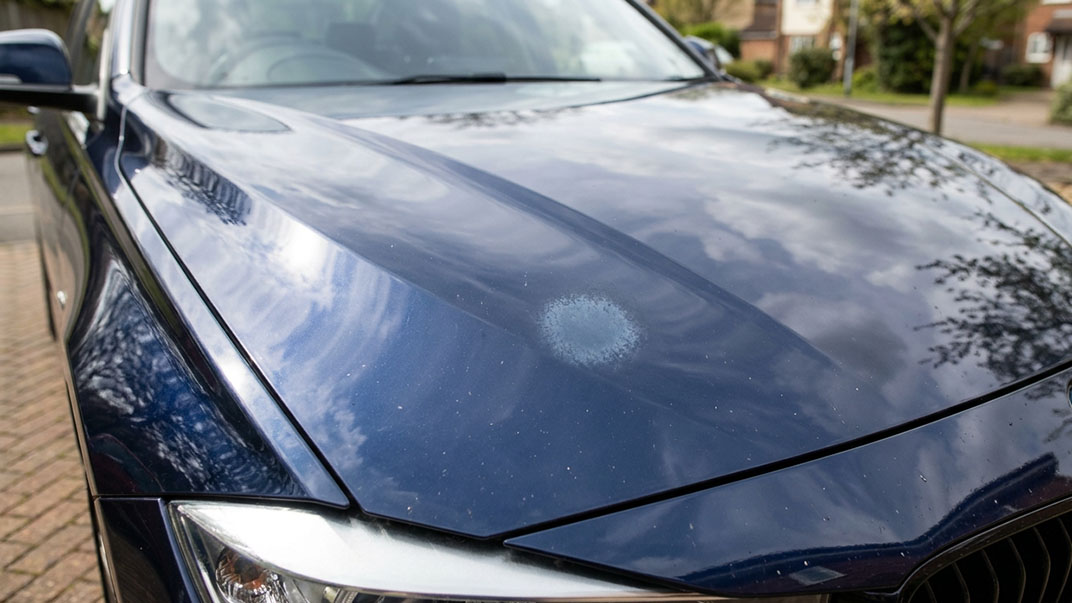
Any collision that damages your vehicle's body panels will include paint repair as part of the claim. Insurers restore the damaged area to pre-accident condition using "like kind and quality" materials. If your factory finish was a multi-stage metallic, they'll match it-not slap on single-stage enamel.
Someone keys your car or hits it with spray paint? That's a comprehensive claim. You'll typically need a police report. Document damage with photos immediately-cosmetic damage that looks minor can degrade resale value fast.
Hailstorms are among the most common claims for paint damage. Falling objects during storms-branches, ice, debris-are covered under comprehensive insurance. After the event, wash off salt, mud, or chemicals promptly to prevent further corrosion that your insurer could classify as neglect.
Here's where it gets tricky. A sudden chemical splash from a truck? Potentially covered. But bird droppings or tree sap left on your hood for months until the clear coat fails? That's not sudden damage-it's maintenance failure, and insurers deny those claims.
For painting contractors, the picture looks different. Business insurance for painting contractors includes coverage for accidents and property damage at a client's property. General liability covers third-party bodily injury and property damage-like paint spills on a client's driveway or overspray on neighboring vehicles. General liability insurance covers third-party bodily injury claims, including customer injuries from slipping on drop cloths at a job site.
Paint insurance does not cover normal wear and tear or aging effects. Insurers draw a hard line between "something happened to your car" and "your car is just old." Here's what falls outside coverage:
Insurers rarely accept claims framed as "sun damage" or "the paint just wore out." Policy limitations explicitly exclude gradual deterioration. The ISO Personal Auto Policy form includes exclusions for "wear and tear, marring, deterioration"-and adjusters enforce them.
Several factors determine what your insurer will actually pay:
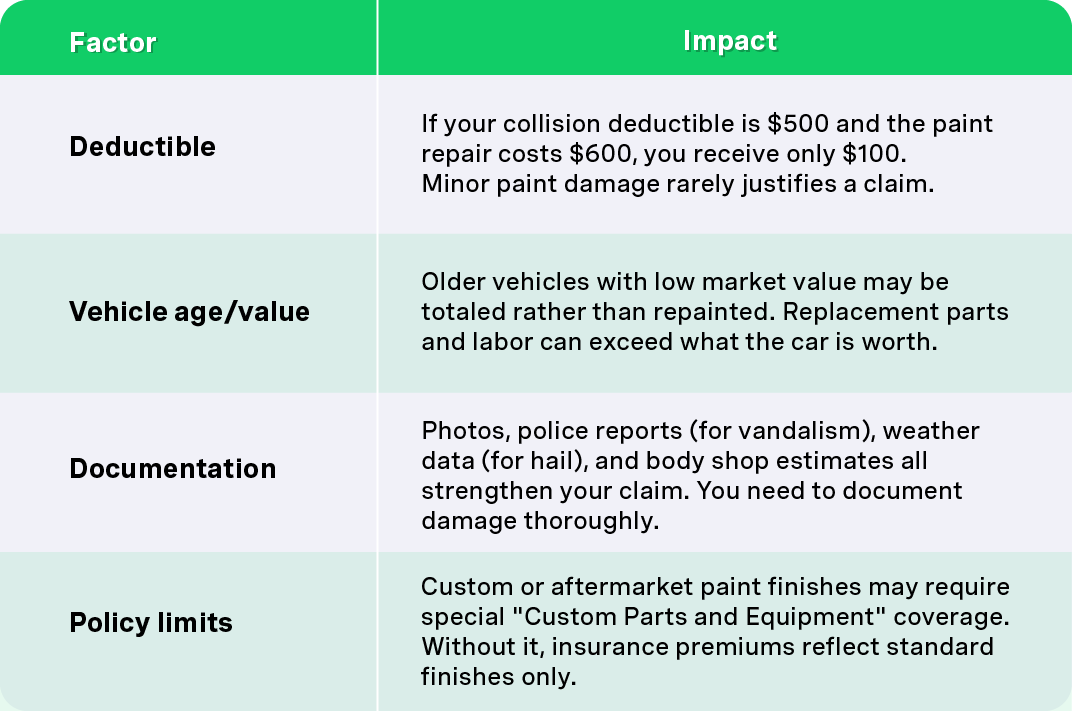
Average costs for coverage vary. Comprehensive runs roughly $426 per year, while deductibles typically range from $250 to $1,000. Insurance costs depend on crew size and job type for painting business policies as well-commercial auto insurance averages $139 per month, while workers' compensation costs about $239 per month.
A hailstorm damages your hood, roof, and trunk-significant damage across multiple panels. The body shop quotes $3,200. With a $500 deductible, your insurer covers $2,700. That makes sense. Same logic applies to vandalism: someone keys both doors and the fender, costing $1,800 in paint repair at the body shop. File it.
When damage spans most of the vehicle, insurers may authorize repainting beyond just damaged and adjacent panels. In severe cases, they might total the vehicle if repair costs approach actual cash value. Claims history matters here-the circumstances surrounding previous claims can affect how adjusters evaluate your current one.
For minor scratches or rock chips affecting only the clear coat, paying out of pocket is usually smarter. Filing a claim for minor damage-say, a $400 scratch with a $500 deductible-means you get nothing and risk increased insurance premiums. Cosmetic damage that doesn't expose bare metal can often wait for a touch-up kit or a detailer.
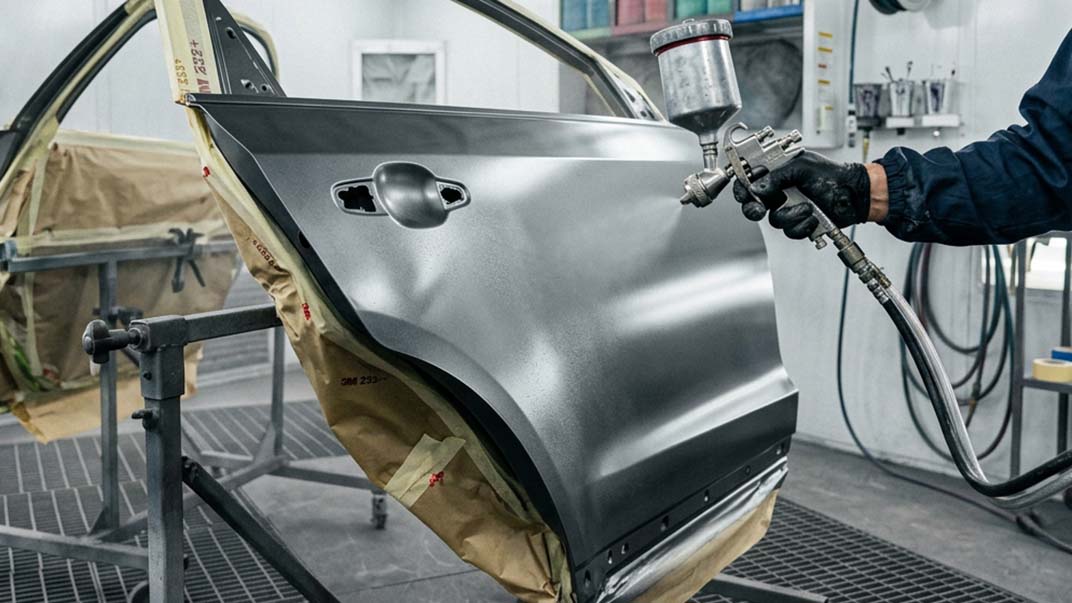
Before you claim insurance for paint repair, calculate: repair cost minus deductible equals your payout. Then factor in potential premium increases. Collision claims tend to raise rates more than comprehensive claims. If the math doesn't add up, don't file. It's that simple.
Unrepaired paint damage accelerates corrosion, reduces resale value, and can turn a $300 fix into a $3,000 problem. But low-quality repairs-mismatched panels, wrong paint codes-look worse than no repair at all. Choose a reputable body shop that does proper color matching.
Ceramic coatings, paint protection film, and regular waxing prevent future damage. These aren't insurance but can save you from needing to file third party claims or handle client claims related to your work vehicle.
For those running a painting business, the financial risks are different. General liability insurance is essential for painting contractors-a lawsuit can bankrupt a painting business without insurance. Workers' compensation is legally required when hiring employees, and most states require workers compensation for painting businesses. General liability does not cover employee injuries; workers' comp does. Workers' compensation covers employee injuries and lost wages, while insurance protects against financial losses from job-related injuries.
Commercial auto insurance is necessary for business vehicles-it covers vehicles used for business purposes, including vans hauling contractor tools and equipment. Contractor tools coverage protects tools from theft and damage. A business owners policy bundles multiple coverage types into a single policy, combining commercial property coverage with general liability. Clients often require proof of insurance before projects start, especially general contractors working with a painting contractor.
The painter insurance cost is more accessible than most think: basic painter's insurance starts under $500 annually, general liability insurance can start around $800 per year, and professional liability insurance covers claims over incorrect product choices or failed finishes. These coverage options protect against client claims, paint spills on a client's property, bodily injury to third parties, property damage at the job site, medical bills from customer injuries, medical costs, lost wages, and legal costs.
Regular maintenance is your cheapest insurance:
Environmental awareness matters. Industrial fallout, acid rain, and pollutants degrade finishes faster than most owners realize. Prevention costs far less than any paint job-and it keeps your insurance pay focused on real emergencies, not avoidable neglect.
No. Gradual sun fading and clear coat oxidation are classified as wear and tear, which every auto policy excludes. The Insurance Information Institute confirms that comprehensive coverage only applies to sudden, identifiable events-not slow environmental degradation. If years of UV exposure have dulled your finish, that's a maintenance issue, not a covered event.
Typically not. Insurers authorize repainting only the damaged panels plus necessary blending on adjacent panels for color match. They won't pay for a full respray unless damage affects most of the vehicle-like a severe hailstorm hitting every panel. If repair costs approach the car's value, the insurer may declare a total loss rather than repaint the whole thing.
The circumstances surrounding the damage determine everything. For vandalism, file a police report. For weather damage, reference date-specific meteorological data. For collisions, document the scene immediately. Take high-resolution photos from multiple angles-close-ups of scratches, wide shots showing extent. A detailed body shop estimate listing paint repair, materials, and replacement parts strengthens your position if the insurer's initial offer seems low.
It can. Even minor damage claims go on your claims history and may increase premiums at renewal. For cosmetic damage under or near your deductible, paying out of pocket usually makes more financial sense. Save your claims for significant damage where the payout justifies the long-term cost.
Compara y obtén cobertura rápido
Encuentra y compara seguros de auto en minutos y obtén su puntaje de crédito gratis.
Elige cuando pagar
Selecciona fechas de pago que coincidan con tu día de pago de sueldo.
Gestiona todo en un solo lugar
Realiza un seguimiento de tu póliza, administra los pagos y solicita una extensión de pago directamente desde tu perfil.





.svg)