
.svg)
Car Insurance California: Coverage, Costs & Requirements
Getting affordable car insurance in California can seem impossible, especially given that the state is amongst the most expensive for insurance in the country. Nearly 20% of Californians drive uninsured.
OCHO is here to help! We do things a little differently. We are a human-centered car insurance agency. We help you buy the coverage you need at a price you can afford.
Don’t let high upfront costs hold you back from getting the protection you need. OCHO is revolutionizing car insurance with no deposit policies that deliver instant, affordable coverage. Say goodbye to the stress of scraping together a lump sum just to get on the road. With OCHO, there’s no financial barrier to getting covered today, and no surprises later.
Our innovative approach ensures you can drive with confidence, knowing your policy starts working the moment you’re approved. It’s car insurance on your terms: flexible, affordable, and built for real life.
What you’ll find in this guide is the information you need to inform you to make the best decision, and all the incredible OCHO benefits to help you get on the road.
How much is car insurance in California?
The national average cost of full coverage car insurance is $2,543. This figure represents a 26% rise from last year. In California, the average annual full-coverage car insurance is higher than the national average: $2,697.
Basic minimum coverage averages $1,417 annually. Monthly premiums range from approximately $118 for basic liability-only policies to $258 for comprehensive protection.
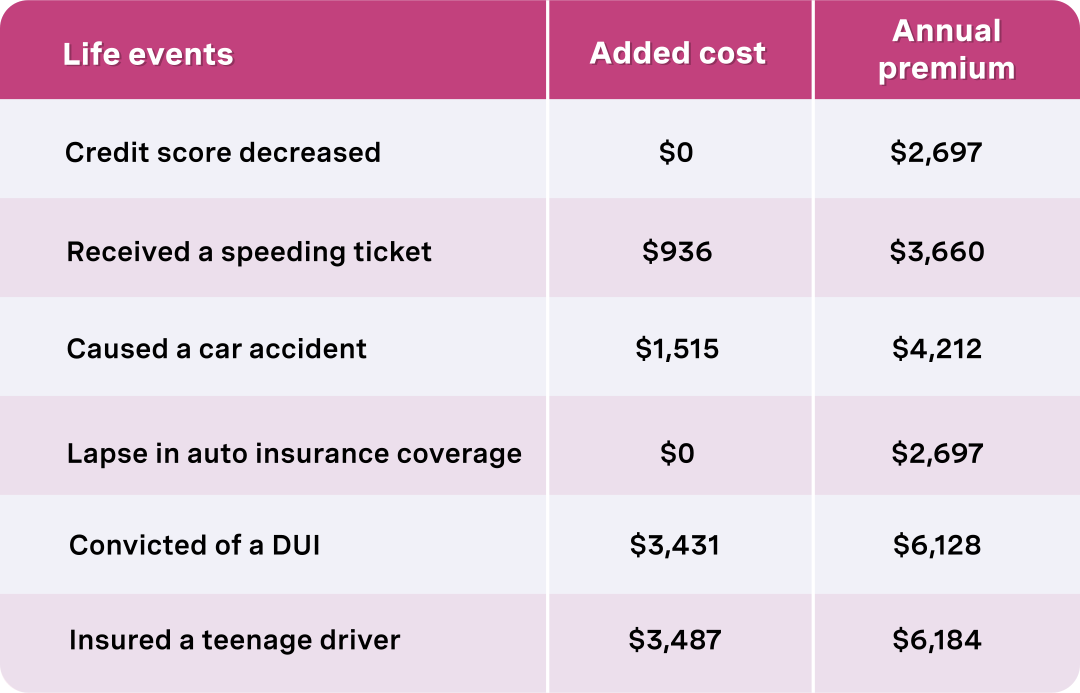
California is one of only seven states in the USA where insurers aren’t allowed to use credit-based scores or your credit history for underwriting or rating auto policies. Check the table below to find the leading factors in increased premiums.
California drivers experienced a shift in 2025 when the state implemented its first car insurance requirement updates in 58 years. These changes affect every driver in the Golden State, from Los Angeles commuters to San Francisco residents, creating new financial obligations and protection standards. Whether you’re a new or a long-time California resident, understanding these updated California car insurance requirements is essential for staying legal and protected on the road.
This guide breaks down everything you need to know about car insurance in California, from the new minimum coverage limits to cost-saving strategies that can reduce your insurance premiums significantly.

Finding the best car insurance in California
If you're cost-conscious, getting low cost auto insurance in California usually means comparing quotes, using every discount you qualify for, and choosing coverage that meets state requirements without paying for things you don’t need.
Shopping around online helps, but it can still feel overwhelming. With OCHO, you can get affordable coverage the easy way. We compare for you, always ensuring you get our cheapest price. We help you lower your upfront cost with $0 down options and flexible payments, so you can stay insured without the financial stress.
We may be biased, but honestly? The smartest way to get cheap car insurance in California is with OCHO.
How does OCHO make car insurance affordable in California?

Affordable, manageable payments
Spread your insurance costs into easy twice-monthly installments so you can stay on top of your bills without the stress of large upfront costs.

Drive now, pay later
Get insured immediately with zero down and easy financing options, perfect for students, gig workers, and drivers on a tight budget.

We pay the insurance company for you
OCHO pays your insurance company upfront, giving you the chance to build a cleaner insurance history and avoid coverage gaps.

Payment extensions available
If life throws you a curveball, request an extension right in the app or webpage. We’ve got your back.

No hidden fees
Transparent, low-cost car insurance with flexible plans and clear terms.

Stay covered and save
Maintaining your coverage consistently helps prevent rate increases and keeps you eligible for cheaper car insurance over time.

Options for every driver
From affordable liability-only plans for older cars to flexible pay-as-you-go coverage, OCHO helps you stay insured your way.
Why choose OCHO for car insurance in California?

Traditional insurers: Can charge up to 40% of your policy.
OCHO: Our prices start from zero deposit.

Traditional insurers: Show you a super cheap price at the start to lure you in, but then hike it up at the last minute.
OCHO: We show you accurate rates from the start. We also double-check your final quote for you, to make sure you’re getting our cheapest price!

Traditional insurers: Delayed due to complex processes.
OCHO: We approve you straight away for our lower down payments.

Traditional insurers: Rigid monthly payments.
OCHO: Flexible payment plans customized to your paycheck, every two weeks, fee-free.

Traditional insurers: Charge you for every change, and if you pay in installments, they can add an extra 3-5% on to your policy amount.
OCHO: Transparent, no surprises.

Traditional insurers: Most insurers will only offer a substantial discount if you pay-in-full.
OCHO: We can pay your policy in full for you, saving you up to 13% off your policy total. Then you pay us in installments as normal. Note: this is only available in select states at the moment.

Traditional insurers: Rigid, don’t offer any extra time outside of the legal 10 day period.
OCHO: You can ask for more time to pay with just a few taps! Up to 15 days extra, at no cost.

OCHO’s new way to unlock the best car insurance rates
One way to get a big discount on your car insurance is by paying for the entire policy upfront, but for most people, that’s just not realistic. The people who need this discount the most don’t have access to it. We don’t think that’s fair.
At OCHO, we’re always finding new ways to help you get insured without breaking the bank. And now, we’re taking it one step further.
So far, we’ve helped drivers cover their down payment, the hardest part of getting insured. But starting now in selected states, OCHO can cover your entire insurance policy, not just the down payment.
Here’s what that means for you:
- You get a pay-in-full discount from your insurance company, it’s usually around 10% off your total policy.
- You still get to pay us back over time, in easy installments.
- You pay zero interest.
So you get the best of both worlds: the lower price that comes with paying in full, and the flexibility of paying over time. It’s an incredible deal that helps you save money and stay insured without financial stress.
Right now, this new service is available for a small number of customers in Arizona, Georgia, Texas and Washington. To find out if you qualify, simply complete your insurance application, and our system will automatically check and let you know if you are eligible once you confirm your final quote.
California car insurance requirements
Under California law, all drivers must carry specific minimum insurance coverage, and the 2025 updates significantly expanded these requirements. The state now requires California drivers to maintain bodily injury liability coverage of $30,000 per person and $60,000 per accident, double the previous limits that hadn’t changed since 1967. Property damage liability increased even more dramatically, from $5,000 to $15,000 per accident.
The new minimum coverage requirements represent a fundamental shift in California car insurance standards:
- Bodily injury liability coverage: $30,000 per person, $60,000 per accident
- Accident property damage liability: $15,000 per accident
- Uninsured/underinsured motorist coverage: $30,000 per person, $60,000 per accident, with $3,500 minimum for property damage
These increases reflect modern accident costs more accurately than the decades-old previous limits. Medical expenses, vehicle values, and repair costs have increased substantially since 1967, making the old minimums inadequate for protecting both drivers and accident victims.
Penalties for Driving Without Insurance
California takes insurance compliance seriously, with severe consequences for uninsured drivers. Penalties include fines ranging from $100 to $200 for first offenses, potential license suspension, and vehicle impoundment until you provide proof of adequate coverage. The California law also requires drivers to submit insurance information within 30 days of initial vehicle registration or face automatic license suspension.
Beyond legal penalties, uninsured drivers expose themselves to devastating financial liability. Without proper coverage, you’re personally responsible for medical bills, property damage, and legal fees that can quickly reach six figures in serious accidents.
Implementation Timeline
While the law officially took effect January 1, 2025, implementation follows individual policy renewal dates rather than universal application. Drivers whose policies renewed before 2025 continue operating under old limits until their next renewal, when their insurance company automatically adjusts coverage to meet new California car insurance requirements.
Factors Affecting Your Rates
Several factors influence California car insurance premiums beyond basic coverage selection:
Driving record: A clean driving record can qualify you for substantial discounts, while accidents, tickets, or violations increase premiums significantly. Insurance companies typically review the last three years of your driving history when calculating rates.
Location: Urban areas like Los Angeles, San Francisco, and San Diego typically have higher rates due to increased accident frequency, theft rates, and traffic density. Rural areas generally offer lower premiums but may have limited insurer options.
Vehicle type and value: Newer, more expensive vehicles cost more to insure due to higher repair and replacement costs. Sports cars and luxury vehicles also face higher premiums due to theft risk and expensive parts.
Age and driving experience: New drivers and teenage drivers face the highest rates due to inexperience and statistical accident risk. Rates typically decrease as drivers gain experience and maintain clean driving records.
Credit score: Most states allow insurers to consider credit scores when setting rates, though California has restrictions on how heavily this factor can influence premiums.
Types of car insurance coverage in California
Understanding different coverage types helps California drivers make informed decisions about their protection needs and budget constraints.
Liability coverage
Liability coverage forms the foundation of every California car insurance policy, protecting you financially when you’re at fault in an accident. Bodily injury liability covers medical expenses, lost wages, and pain and suffering for injured parties, while property damage liability pays for vehicle repairs, property damage, and other accident-related costs you cause.
The new higher limits provide more realistic protection for modern accident scenarios. A serious injury requiring extended hospitalization can easily exceed $100,000 in medical costs, making the old $15,000 minimum woefully inadequate.
Collision coverage
Collision coverage pays for your vehicle repairs or replacement after accidents, regardless of who’s at fault. This coverage becomes especially valuable for newer vehicles or those with outstanding loans, where you need protection beyond basic liability requirements.
In California’s congested traffic areas, collision coverage provides peace of mind for everyday driving situations like fender-benders in parking lots, highway accidents, or incidents with other drivers who may lack adequate insurance.
Comprehensive coverage protects against non-collision damage including theft, vandalism, natural disasters, and falling objects. For California drivers, this protection is particularly crucial given the state’s exposure to wildfires, earthquakes, flooding, and other natural disasters that can total vehicles or cause extensive damage.
Recent wildfire seasons have demonstrated comprehensive coverage’s importance, with thousands of vehicles destroyed by fires in areas previously considered low-risk. The coverage also protects against California’s unfortunately common vehicle theft, particularly in urban areas.
Medical payments coverage and personal injury protectionMedical payments coverage helps pay medical expenses for you and your passengers after accidents, regardless of fault. While not required in California, this coverage can bridge gaps in health insurance or provide immediate funds for emergency medical treatment.
Personal injury protection (PIP) is optional in California but offers broader benefits including medical expenses, lost wages, and essential services like childcare when you’re unable to work due to accident injuries.
Gap insuranceGap insurance becomes essential for drivers with auto loans or leases on new vehicles. When comprehensive or collision coverage pays actual cash value for totaled vehicles, gap insurance covers the difference between the insurance payout and your remaining loan balance.
Given California’s high vehicle costs and rapid depreciation, gap insurance protects against financial loss when your car’s value drops below your loan amount—a common situation in the first few years of ownership.
What is full coverage car insurance?
Full coverage car insurance includes liability, collision, and comprehensive coverage. California doesn’t require full coverage, but with everything that can happen here, most experts still strongly recommend it. Side-note: there’s no such thing as completely full coverage, but Comp&Collision is the closest there is.
Yes, full coverage costs more, about $1,683 a year more than minimum coverage, but that extra investment can save you from massive out-of-pocket costs. Replacing a stolen car, repairing major damage, or paying medical bills can easily run into the tens of thousands.
And in California, full coverage matters even more. Between natural disasters, higher theft rates in busy cities, and the risk of getting hit by someone with little or no insurance, having fuller protection just makes sense.
At OCHO, we help make full coverage affordable with low up-front costs and pay-as-you-go prices, so you can choose the protection you actually want, not just the one that fits your budget.

California car insurance discounts and savings
Smart California drivers can significantly reduce their insurance premiums through various discount programs, with potential annual savings exceeding $1,056 when multiple discounts apply.
Good driver discounts
Insurance companies reward California drivers with clean driving records through good driver discounts up to 20%. These discounts typically apply when you maintain accident and violation-free driving for three to five years, demonstrating reduced risk to insurers.
Multi-car discounts
Families insuring multiple vehicles with the same company can save up to 15.7% through multi-car discounts. This savings applies to each vehicle on the policy, making it one of the most valuable discounts available.
Good student discounts
Young drivers in California can qualify for good student discounts up to 7% by maintaining a 3.0 GPA or higher. Some insurers extend these discounts through age 25, providing ongoing savings for college students and recent graduates.
Bundling home insurance
Combining your auto coverage with home insurance, renters insurance, or other insurance products through the same company typically yields significant discounts. Bundling can reduce both policies’ premiums while simplifying your insurance management.
Usage-based insurance and mileage programs
California drivers who drive less than average can save through usage-based insurance programs that track mileage and driving habits. These programs use telematics devices or mobile apps to monitor safe driving behaviors, potentially reducing premiums by 10-15% for qualified drivers.
Professional and affiliation discounts
Many insurers offer discounts for members of professional organizations, alumni associations, or military service. USAA, for example, provides substantial savings for military families and veterans not available through other insurance companies.
The key is to stay covered, compare options, and take advantage of every discount and flexible payment option available. With OCHO, you can find affordable car insurance without compromising coverage.
Extra OCHO Discounts
- Refer a Friend: When you refer a friend and they purchase a policy, you’ll get $20 off your own policy. You can refer as many friends as you like and keep saving!
- Video Testimonial: Share an honest video review of your experience with OCHO, and we’ll give you $20 as a thank-you.
These discounts are just a little extra way OCHO helps you save while spreading the word about affordable, flexible car insurance.
With OCHO, cheaper car insurance in CA isn’t a gamble. It’s a smarter, more sustainable way to stay insured and save. Our approach removes the stress, unpredictability, and invasiveness of other models, delivering affordable coverage tailored to your long-term goals.

How to get car insurance in California
Obtaining car insurance in California involves several straightforward steps, whether you’re a new resident, first-time buyer, or switching insurance companies.
For new California residents
New residents must register their vehicles and obtain California car insurance within 20 days of establishing residency. This process requires:
- Vehicle registration: Visit a DMV office with proof of ownership, out-of-state registration, and smog certification
- Insurance requirement: Secure California car insurance before registration, as proof of coverage is mandatory
- Use tax: Pay use tax on vehicles purchased out-of-state before California residency
Before registering your vehicle in California, make sure you have the required proof of insurance and understand your DMV options. Drivers can also explore DMV Services Online for registration-related help.
Online quote process
Most California drivers can obtain quotes online by providing basic information including driver’s license number, vehicle identification details, and driving history for the last three years. The process typically takes 15-30 minutes and provides immediate quotes for comparison.
You can get a first quote with OCHO in less than 5 minutes, with just a few details. And you can find out if you qualify for a zero down payment too!
Comprehensive coverage
Comprehensive coverage protects against non-collision damage including theft, vandalism, natural disasters, and falling objects. For California drivers, this protection is particularly crucial given the state’s exposure to wildfires, earthquakes, flooding, and other natural disasters that can total vehicles or cause extensive damage.
Essential information includes:
- Driver’s license information for all household drivers
- Vehicle year, make, model, and VIN
- Current insurance information and coverage history
- Driving record details including any violations or accidents
Choosing coverage limits
While California law sets minimum requirements, financial experts recommend purchasing higher limits for better protection. Consider coverage limits of $100,000/$300,000/$50,000 or higher, particularly if you have significant assets to protect or drive in high-risk areas.
The small premium increase for higher limits often provides exponentially better protection, especially given California’s high medical costs and expensive vehicle values.
Switching insurance companies
California drivers can switch insurance companies at any time, but timing your switch strategically can maximize savings. Compare quotes 30-45 days before your current policy expires to ensure adequate time for processing and avoid coverage gaps.
When switching, never cancel existing coverage until your new policy is active. California’s continuous coverage requirements make gaps expensive, potentially moving you into high-risk categories that increase future premiums substantially.
Best car insurance companies in California
Look, cheaper car insurance from the likes of GEICO or Progressive won’t help you if you’re considered a high-risk driver. Because while the premium may look good for the policy length, they’re going to ask for anything from a 30-50% deposit upfront. That’s why we recommend getting insured through OCHO, so you can get pay-as-you-go car insurance with excellent coverage options.
Let’s take a look at some insurance companies in the California market, offering competitive rates, strong customer service, and comprehensive coverage options.
Top-rated national insurers
Progressive leads in California with average annual premiums around $1,641 and innovative features like usage-based insurance programs. Their extensive agent network and 24/7 claim service make them particularly attractive for busy California drivers.
GEICO offers competitive rates and strong customer service ratings, with particularly good discounts for federal employees, military members, and drivers with excellent records. Their mobile app and online tools streamline policy management for tech-savvy California consumers.
Mercury Insurance specializes in California auto coverage with deep local market knowledge and competitive rates for state residents. As a California-focused insurer, they understand state-specific risks and regulatory requirements better than some national competitors.
Specialized options
USAA provides exceptional value for military families and veterans, with rates often 20-30% below market averages. However, eligibility is limited to military members, veterans, and their families.
State Farm and Farmers maintain strong California presences with extensive local agent networks. While their rates may be higher than online-focused competitors, they offer personalized service and local expertise valuable for complex insurance needs.
Customer service considerations
When selecting an insurance company, consider factors beyond price including:
- Claims handling speed and fairness
- Customer service availability and quality
- Financial strength ratings from agencies like A.M. Best
- Local agent availability for complex questions
- Mobile app functionality and online account management

Special California insurance considerations
California’s unique geography, demographics, and regulations create special considerations for auto insurance that don’t apply in most states.
Teen driving laws and requirements
California has strict requirements for drivers under 18, including mandatory driver education, supervised driving hours, and passenger restrictions. Teen drivers face the highest insurance premiums due to inexperience and statistical accident risk, but several strategies can help reduce costs:
- Good student discounts for maintaining strong academic performance
- Defensive driving course completion credits
- Adding teens to existing family policies rather than separate policies
- Choosing vehicles with strong safety ratings and lower theft risk
Earthquake and wildfire coverage considerations
While standard comprehensive coverage includes natural disaster protection, California drivers should understand their policies’ specific terms regarding earthquake and wildfire damage. Some insurers have special deductibles or restrictions for natural disasters in high-risk areas.
Consider additional factors like:
- Rental car coverage during extended repairs after natural disasters
- Personal property coverage for items stored in vehicles
- Total loss replacement coverage for newer vehicles destroyed in disasters
High-traffic urban areas
Los Angeles, San Francisco, and San Diego drivers face unique challenges including higher accident rates, increased theft risk, and expensive repairs due to specialized parts and labor costs. Urban drivers should consider:
- Higher liability limits due to expensive medical care and legal costs
- Comprehensive coverage for theft and vandalism protection
- Rental car coverage for situations where repairs take weeks in busy shops
Frequently Asked Questions
No, California operates under an at-fault insurance system where the driver responsible for causing an accident pays for resulting damages. This means the at-fault driver’s insurance covers other parties’ medical expenses and property damage, while their own coverage depends on their collision and comprehensive protection.
Yes, California requires proof of insurance before vehicle registration. You cannot complete the registration process without demonstrating current, valid auto coverage that meets state minimum requirements.
Driving without insurance in California results in immediate penalties including fines, license suspension, and potential vehicle impoundment. First-time offenses typically incur $100-200 fines, while repeat violations face escalating penalties and extended license suspensions.
Additionally, uninsured drivers bear personal financial responsibility for accident costs, which can reach hundreds of thousands of dollars in serious incidents.
Insurance experts recommend comparing car insurance rates annually, or whenever your circumstances change significantly. Life events like moving, marriage, adding vehicles, or experiencing changes in your driving record can affect your rates substantially.
Many California drivers save $600 or more annually by switching insurers, making regular comparison shopping a valuable financial habit.
Yes, California drivers can reject uninsured motorist coverage in writing, though this is rarely advisable. Given that approximately 15% of California drivers operate without insurance despite legal requirements, uninsured motorist protection provides valuable financial security when you’re hit by an uninsured driver.
Your driving record over the last three years typically has the greatest impact on premiums, followed by your location, age, and vehicle type. California drivers can most effectively reduce costs by maintaining clean driving records, choosing vehicles with good safety ratings and low theft risk, and taking advantage of available discounts.
Existing policyholders see automatic coverage updates when their policies renew on or after January 1, 2025. Insurance companies adjust policies to meet new minimum requirements unless drivers already carry higher limits. These updates result in premium increases reflecting the expanded coverage.
Car insurance in California is expensive due to a combination of stringent state regulations, high population density, high rates of uninsured drivers, and significant environmental risks. These factors, along with general national trends like inflation and rising repair costs, contribute to premiums that are higher than the national average. Specific California Factors:
High Population Density and Traffic: As the most populous state, California has heavy traffic congestion, particularly in urban centers like Los Angeles and San Francisco. More cars on the road increase the likelihood of accidents and thefts, leading to higher claim frequencies and costs.
Minimum Coverage Increase: As of January 1, 2025, California's mandatory minimum liability coverage limits for bodily injury and property damage significantly increased, which automatically raises the cost of all policies statewide.
High Rate of Uninsured Drivers: California has one of the highest rates of uninsured drivers in the country. The costs associated with accidents caused by these drivers are often passed on to insured motorists through higher premiums to cover the losses.
- Natural Disasters: The state is highly prone to natural disasters such as wildfires, floods, and earthquakes. These events can damage a large number of vehicles, resulting in high volumes of comprehensive insurance claims that force insurers to raise rates to manage their risk and pay for catastrophic losses.
- High Legal and Medical Expenses: California has a high rate of personal injury lawsuits related to car accidents, and the associated medical and legal costs are often higher than in many other states, increasing insurers' payouts.
General Industry Factors
These state-specific issues are compounded by national trends, including:
- Expensive Vehicle Repairs: Modern cars are equipped with complex and costly technology like sensors and cameras that are expensive to repair or replace, even after minor accidents.
- Inflation: General economic inflation has increased the costs of labor, car parts, and rental vehicles, further driving up the expense of claims for insurance companies.
- Post-Pandemic Rate Hikes: Following the end of pandemic-era rate freezes, many insurers in California received approval for significant rate increases to recoup revenue from the period where their costs exceeded premiums collected.
Yes. You must carry electronic or physical proof of insurance. Driving without insurance can result in:
- A $100–$200 fine for the first offense
- A $200–$500 fine for subsequent offenses
- Possible towing/impound• License suspension in certain cases
- Required SR-22 filing to reinstate driving privileges
Yes, but it’s limited. Some insurers will write a policy for an unlicensed driver if you list a primary licensed driver who will operate the car. You may also insure a vehicle to keep it protected while you work on reinstating your license.
In California, there is no official grace period. You must have insurance before driving the car off the lot or operating it on public roads. Some insurers offer temporary “binder” coverage when purchasing through a dealership, but it’s not automatic.
In California, insurance primarily follows the car. If someone with permission drives your insured vehicle, your policy usually provides the first layer of coverage. The driver’s own insurance (if any) may apply second.
No. If you live in California or your car is primarily kept here, you must carry a California-issued insurance policy that meets the state’s minimum limits. Out-of-state policies don’t satisfy CA’s financial responsibility laws.
Yes, but you’ll need a licensed driver listed on the policy as the primary driver. You can apply for insurance without a license, but you will get charged more by the insurance company.
As of 2025, the minimums are:
- $30,000 bodily injury per person
- $60,000 bodily injury per accident
- $15,000 property damage
Most experts suggest going above the state minimum. A common recommended starting point is:
- $100,000 bodily injury per person
- $300,000 bodily injury per accident
- $100,000 property damage
Plus:
- Uninsured/Underinsured Motorist coverage
- Comprehensive & Collision (especially for new or financed cars)
These levels give more protection in California’s high-cost driving environment.
Recent CA insurance changes focus on rate transparency, wildfire risk reforms, and requiring insurers to write more policies after years of restrictions. Regulation updates continue into 2025, but the core laws, like minimum liability and proof-of-insurance requirements remain unchanged.
California bans credit scores, gender, and ZIP-code-level discrimination from being used directly. But insurers do consider:
- Driving record
- Years of driving experience
- Annual mileage
- Vehicle type and safety features
- Claims history
- Where the vehicle is primarily garaged (rating territory)
- Selected coverages and deductibles
- California DMV (handbooks, registration, ID cards)a
- California Highway Patrol (CHP) (road safety updates)
- California Department of Insurance (CDI)
- 511 California (traffic, transit, road conditions)
- CalTrans (road closures, construction updates)
- Compare quotes from multiple insurers
- Check coverage limits—not just the price
- Consider customer service reputation and claims handling
- Look for payment flexibility and discounts
- Use tools like OCHO’s PriceCheck to compare options and find low-down-payment solutions
- Make sure your policy meets the new 2025 minimums
OCHO Insurance Reviews
Discover why thousands of drivers love OCHO! With affordable, no-deposit car insurance, we make staying covered simple, flexible, and stress-free. Experience the OCHO difference and switch to a better way of driving protected today.