If you've ever wondered whether you can pause car insurance the same way you'd pause a streaming subscription, you're not alone. The short answer: a true pause is almost never an option, but there are legal, practical ways to reduce coverage and save money without wrecking your insurance record.
The phrase "pause car insurance" is something drivers say, not something you'll find in any auto insurance contract. It's consumer shorthand for stopping or reducing coverage while you're not driving. Your insurance company uses terms like "storage coverage," "comprehensive-only," or "non-use status" instead.
Insurance companies rarely allow a full pause of car insurance. There's no on/off switch. What they do offer is the ability to adjust your policy-reducing coverage or shifting to a storage plan. As long as your vehicle remains registered, most states require continuous liability insurance. Understanding the difference between a true lapse and a simple coverage change is what keeps you from getting hit with fines, fees, and more expensive insurance later.
A full pause with zero liability insurance is rarely allowed while the car is registered, even if you haven't touched the steering wheel in months. Most states require some insurance on registered vehicles, period.
In most states, insurance databases are connected to the DMV electronically. A gap in required liability coverage can trigger automatic notices or penalties. What people call a "pause" is normally one of three things: reducing coverage to the minimum, switching to comprehensive only coverage (storage coverage), or suspending parts of a policy under special circumstances. And if the car is financed or leased, lenders generally require full coverage-liability and collision coverage plus comprehensive-which limits your options further.

Liability insurance isn't optional décor on your policy. It's tied directly to your vehicle registration and state law. It exists to protect other people and property if your car causes damage, so states treat it as a continuous obligation for any registered vehicle.
Electronic monitoring means a lapse is easy for the DMV to detect, which can lead to registration suspension, fines, or reinstatement fees. Driving without insurance or failing to report a suspended policy can lead to fines in every state. Dropping liability coverage may require notifying the state DMV to avoid penalties. Many insurers also prefer to keep at least some coverage active because continuous insurance history is a key factor in how they price and underwrite your auto insurance.
Many drivers look to pause car insurance during clear breaks from regular driving. The right option depends on the details, but here are the common situations:
The goal in these cases is usually lowering premiums, not abandoning all legal responsibility. Each scenario is typically handled with reducing coverage or switching to storage coverage-not canceling insurance entirely, which helps you avoid a costly lapse in insurance coverage.
Since a full pause is rarely available, here's the practical playbook. The safest options involve some form of keeping your policy active to avoid a lapse. The next sections cover comprehensive-only coverage, keeping minimal liability, and when canceling both insurance and registration might actually make sense.
Choosing the wrong route can create unexpected legal issues, gaps in insurance coverage, or more expensive car insurance down the road—especially if you later have to reinstate car insurance after cancellation.
Many insurers allow you to reduce coverage for a car that will not be driven for at least 30–60 days. Storage coverage typically involves dropping liability and collision coverage while keeping only comprehensive coverage active.
Comprehensive coverage protects parked vehicles from theft, fire, vandalism, hail, and other weather damage-basically all the non driving risks your vehicle faces while sitting still. This approach usually lowers premiums significantly while keeping an active policy and continuous insurance history. Reducing coverage helps avoid lapses in insurance history, and storage coverage can provide significant discounts for non-driving periods.
Insurers may require the vehicle to be parked in a secure location (locked garage, dedicated storage facility) and strictly off public roads. Here's the critical part: driving the car while it only has comprehensive coverage means you have no liability insurance. You'd face serious legal and financial consequences in an accident-no protection, no claim payout for the other party, and potential criminal penalties, which is why understanding your car insurance coverage options is so important.
In some states, even a stored or rarely driven car must maintain liability insurance if it remains registered. Many states require liability insurance on registered vehicles, even when stored. A middle-ground approach: reduce coverage to state-minimum liability plus comprehensive, dropping or lowering collision coverage.
For example, if your car sits in the driveway for a few months while you recover from surgery, keeping minimum liability means no DMV penalties and protection if someone unexpectedly takes the car on the road. Maintaining a storage policy or minimal liability ensures your continuous coverage history is kept-something that directly affects your future premiums.
The closest thing to a full pause is canceling insurance after you remove the car from legal use by canceling its registration. In many states, this means surrendering license plates or filing a specific affidavit of non-use with the DMV. Some states require an affidavit of non-use to suspend liability obligations.
You cannot completely pause a car insurance policy due to state laws, but this approach comes close. The vehicle becomes illegal to drive on public roads until both registration and insurance are restored. Cancel insurance without canceling registration? That can trigger automatic fines, SR-22 filings, and long-term damage to your insurance record. This route usually only makes sense for a multi-year restoration project or truly indefinite storage.

Here's what most people miss: a huge number of drivers think about canceling or trying to pause insurance simply because they can't afford a payment right now. One tough month shouldn't cost you years of higher rates.
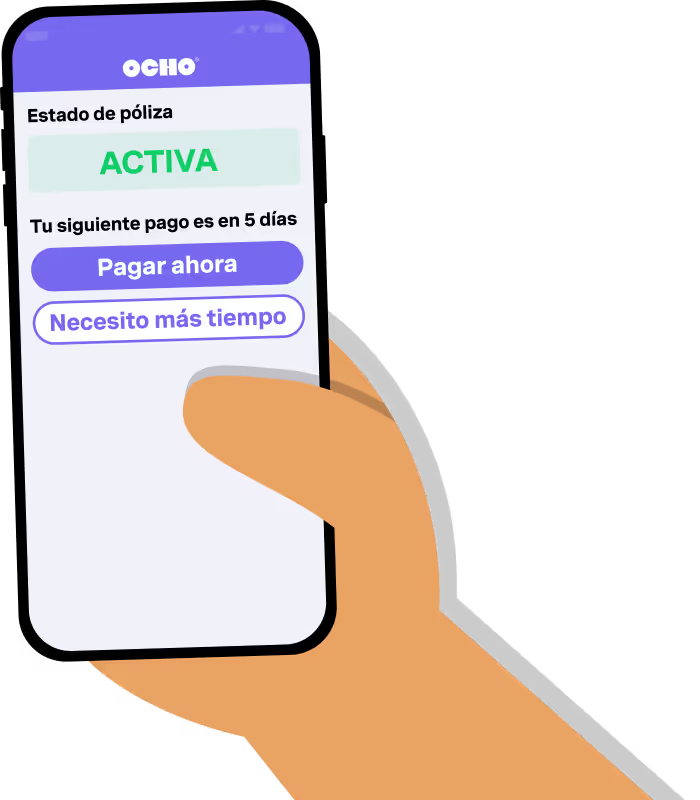
With OCHO, eligible customers can request short payment extensions when they're having trouble paying on time. This helps avoid an automatic cancellation. Many people don't realize that cancellations for non-payment often lead to more expensive car insurance later-insurers see a cancellation as a sign of higher risk, and they adjust your future premiums accordingly. A lapse in insurance can increase future premiums significantly, sometimes by 25–35%.
OCHO's approach works with drivers through extensions instead of quickly canceling. That means you keep continuous coverage, protect your driving record, and avoid gaps that could trigger higher quotes. Imagine a driver who loses a week of work due to illness. Instead of letting the policy cancel and then facing inflated quotes everywhere, they use a payment extension through OCHO or a flexible pay as you go car insurance setup, cover the gap, and their record stays clean. That's the difference between paying more for years and paying nothing extra.
Savings usually come from reducing coverage-especially collision and liability-not from a mythical full pause. Switching to comprehensive only coverage or storage coverage can drop your monthly cost from roughly $80–$150 down to $20–$60 per month, depending on your vehicle and location. Reducing coverage can lower premiums while keeping insurance active.
But a short-term saving from canceling insurance can be wiped out quickly if a lapse leads to higher rates, reinstatement fees, or required high-risk filings. A lapse in coverage can increase future insurance premiums, so compare the cost of reducing coverage versus canceling and restarting later over realistic timeframes-3 months, 6 months, a year. Additional ways of lowering premiums without canceling: raise your deductible, ask your insurer about low-mileage discounts, or request a stored-vehicle rating—and consider options like no deposit car insurance that reduce upfront costs without risking a lapse.
Rules for suspending or reducing car insurance vary widely by state. Some states allow affidavits of non-use and formal plate surrender before you can cancel liability insurance legally. California, for example, offers a formal Affidavit of Non-Use (REG 5090) that cancels registration so liability insurance isn't required while the vehicle is off-road. Other states strongly link registration and liability with no easy suspension period or "pause" option.
Before making changes, contact both your DMV and insurer. Breaking state rules often leads to fines, registration suspension, and reinstatement hassles you didn't budget for, so it may be safer to explore zero down car insurance or similar low-upfront-cost options instead of canceling outright.
Meet a driver in Michigan who owns a convertible. Every year from November 1 to April 1, the car goes into a locked garage. In late October, they call their insurance company, confirm storage rules, and switch to comprehensive only coverage. Comprehensive coverage protects stored vehicles from theft and damage during the suspension period-covering risks like break-ins, fire, and hail.
The numbers: full coverage costs $150/month. Comprehensive-only drops it to $45/month. Over five months, that's roughly $525 in savings. In late March, they reinstate liability and collision coverage before they begin driving again. No lapse on their record, no DMV penalties, no nasty surprises when shopping for quotes. If the car were financed, they'd need to confirm with their lender first-lenders generally require full coverage on financed or leased vehicles, even for seasonal vehicles in storage, and tools that explain how OCHO works can help you see what flexibility you really have.
Here are answers to questions that come up often but aren't fully covered above.
If you're mainly worried about one tight month rather than long-term changes, it can help to understand how OCHO supports drivers who need more affordable insurance so you don’t have to cancel a policy just to get short-term relief.
Most insurers will not formally pause or temporarily suspend a policy for only a week or two. Administrative systems are built around monthly billing cycles at minimum. If your car is simply not being used during a short vacation or work trip, it's safer and cheaper to leave coverage as-is. Some insurers may adjust your rating for long-term low mileage, but they don't treat a one- or two-week break as a "pause." The hassle and risk of changing your policy for such a short window almost never pays off.
Once you no longer own a vehicle, you generally don't need to keep that specific car insurance policy active. However, in some states, holding active plates without matching insurance can still cause problems with the DMV's continuous coverage requirements. Check whether you must surrender or transfer plates at the time of sale to avoid penalties or unwanted notices from the state, and review general OCHO insurance FAQs if you're unsure how your policy should be handled.
A suspended license does not automatically let you cancel or fully suspend your auto insurance, especially if the vehicle stays registered in your name. Some insurers may permit reduced coverage-like comprehensive only coverage-while you cannot legally drive, but state law still controls liability requirements. Drivers with a suspended license should speak directly with their insurer and DMV, since certain violations may require special filings like an SR-22 rather than allowing a suspension of coverage—and make sure you understand your account, billing, and payments setup so you don’t create a lapse accidentally.
Many drivers who’ve avoided lapses by changing how they pay describe in real customer reviews of OCHO how flexible plans kept them covered when money was tight.
Not every lapse automatically guarantees a higher rate, but in most cases, insurers treat any gap in liability insurance as a sign of higher risk. Even a short lapse of 30–60 days can limit your access to preferred rates, especially if it happened due to non-payment. Maintaining at least minimal or storage coverage is usually cheaper over time than canceling and reapplying as a driver with a coverage gap on record.
If you're unsure what your insurer will allow or how to list other drivers properly, OCHO's customer support and FAQs can help clarify your specific situation.
Comprehensive only coverage does not include liability insurance, so the car should not be driven at all on public roads. If anyone might use the car-even occasionally-you need to maintain at least state-minimum liability coverage to insure against uninsured driving consequences. Talk with your insurer about who is listed as an allowed driver and what coverage is required in your specific situation before making any changes.
Compara y obtén cobertura rápido
Encuentra y compara seguros de auto en minutos y obtén su puntaje de crédito gratis.
Elige cuando pagar
Selecciona fechas de pago que coincidan con tu día de pago de sueldo.
Gestiona todo en un solo lugar
Realiza un seguimiento de tu póliza, administra los pagos y solicita una extensión de pago directamente desde tu perfil.




.svg)