A car insurance deductible is the specific dollar amount you must pay out of pocket before your insurance company covers the remaining cost of a covered claim on your own vehicle. A low deductible simply means that amount is smaller, typically anywhere from $0 to $500.
Low deductibles apply primarily to collision coverage (which helps pay for damage when you hit another car or object) and comprehensive coverage (which covers theft, vandalism, hail, and other non-collision incidents). When you shop for car insurance coverage from major insurers like GEICO, Progressive, or State Farm in 2026, you’ll typically see deductible options ranging from $0 and $100 up through $250 and $500.
Here’s what trips people up: liability insurance: the coverage that pays for injuries and property damage you cause to others, usually has no deductible at all. So when someone mentions finding car insurance with low deductibles, they’re talking specifically about protecting their own vehicle, not the liability portion of their car insurance policy.
Let’s make this concrete with an example. Say you’re in an accident and the repair estimate comes back at $1,800. If your collision deductible is $250, you pay that amount and your insurer covers the remaining $1,550. If you had chosen a $1,000 deductible instead, you’d owe $1,000 and the insurance kicks in to pay only $800.
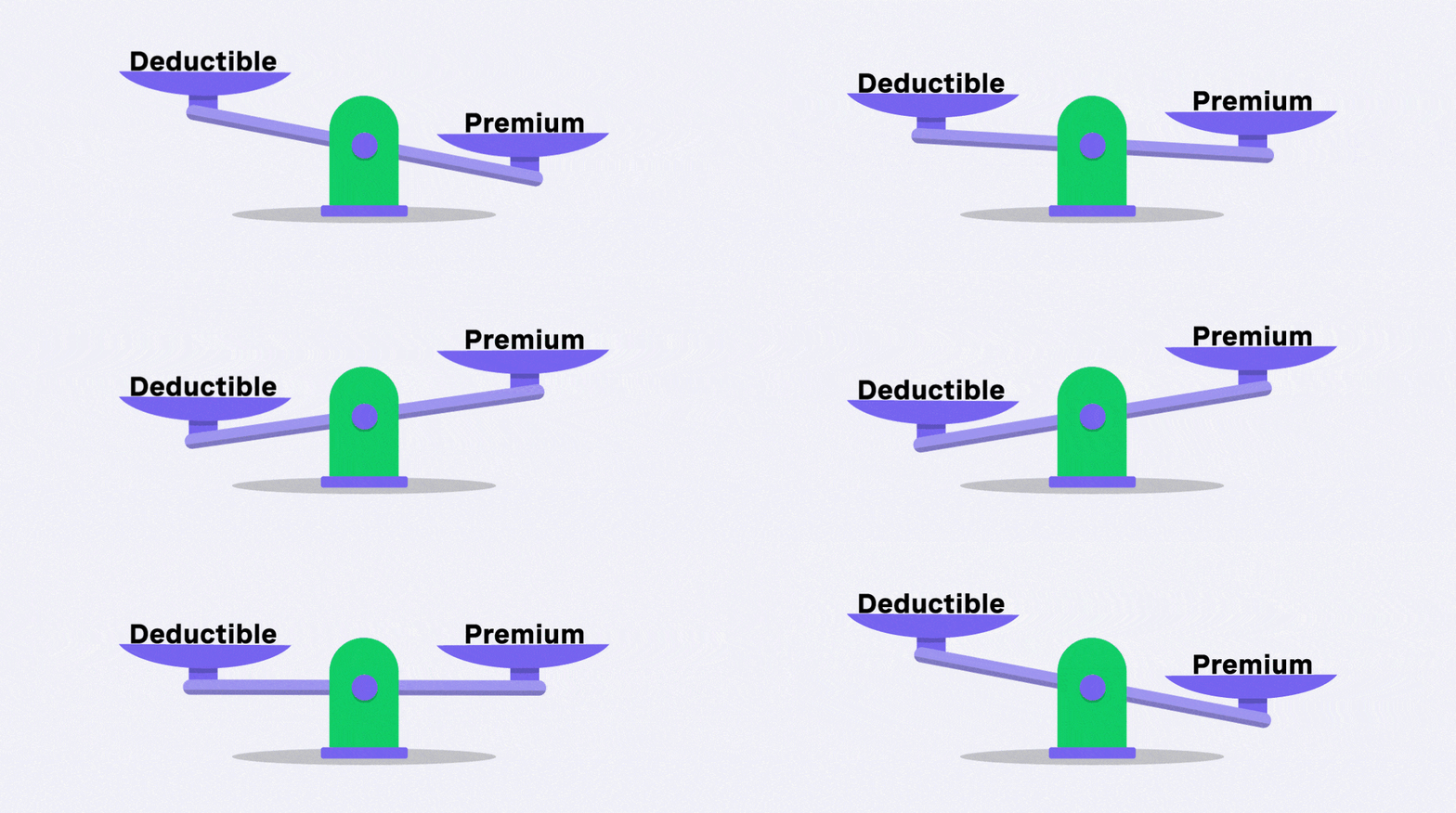
That’s the core trade-off. Lower deductible, less financial shock when something goes wrong. Higher deductible, more money stays in your pocket each month, until you need to file a claim.
Low deductibles reduce your share of repair bills when accidents happen, but they raise what you pay in premiums every 6 or 12 months. That’s the deal, and understanding how it plays out in actual claims helps you decide if it’s worth it.
Here’s the step-by-step breakdown of how car insurance deductibles work when you file a claim:
Scenario 1: Collision Claim You rear-end someone at a stoplight. Your car needs $1,500 in repairs. With a $250 collision deductible, you pay the shop $250 and your auto insurance covers the remaining $1,250.
Scenario 2: Comprehensive Claim A hailstorm damages your windshield and hood: $900 in repairs. With a $100 comprehensive deductible, you’re responsible for $100 and your insurer handles $800.
One thing to note: deductibles are charged per incident, not per policy term. If you’re involved in two at-fault accidents in the same year, you’ll pay your deductible twice. This is where low deductibles can really save you if you’re driving in high-risk conditions regularly.
What about accidents that aren’t your fault? In many not-at-fault situations, the other driver’s liability coverage should pay your full repairs with no deductible from your pocket. However, if their insurer is slow or disputes the claim, your own insurance might handle it first and later seek reimbursement through a process called subrogation. In that case, you might temporarily pay your deductible and get it back later once the at-fault driver’s insurer pays up.
“Low” is relative, but here’s what most U.S. insurers in 2026 consider a low deductible:
Collision Coverage Low Deductible Options:
Comprehensive Coverage Low Deductible Options:
Some carriers offer $0 glass-damage deductibles in states like Florida and Arizona, where windshield claims are particularly common. This means if your windshield cracks, you pay nothing, the insurance company covers the full replacement cost.
Keep in mind that very low or zero deductibles aren’t universally available. State laws and lender requirements can limit your options, so what you see in an online quote in Texas might differ from what’s offered in Michigan.
Here’s a useful tip: you can mix and match different deductibles for collision vs. comprehensive. If you’re more worried about hail damage than fender benders, you might choose a $100 comprehensive deductible paired with a $500 collision deductible to balance your overall cost.
Neither low nor high deductibles are universally “better.” The right choice depends on your cash savings, risk tolerance, commute patterns, and the value of your vehicle. Let’s break this down in dollar terms so you can make a real decision.
A low-deductible policy (like $250 collision) costs more per month but protects you from large out-of-pocket expenses when you file a claim. A high-deductible policy (like $1,000–$2,000) saves you money on your insurance premium each month but leaves you exposed to bigger bills when something goes wrong.
Concrete Example: Let’s say you’re insuring a 2021 Honda Civic in a mid-risk ZIP code. Here’s how the numbers might shake out:

The difference? About $30 per month, or $360 per year, for the lower deductible. If you go claim-free for three years, the higher deductible saves you roughly $1,080 in premiums. But if you have one accident during that time, the lower deductible saves you $750 in out-of-pocket repair costs.
This is where your personal claims history matters. Think back: how many claims have you filed in the last 5–10 years? If the answer is zero, a higher deductible might make financial sense. If you’ve had a few incidents, low deductibles could save you money and stress.
A Simple Decision Rule: If you could comfortably write a $1,000 check tomorrow without putting it on a high-interest credit card or draining your emergency fund, a higher deductible might work for your financial situation. If $500 would strain your budget, stick with a lower deductible.
Let’s walk through a real-world situation. A driver in Chicago with a $250 collision deductible backs into a parking garage pole in November 2024. The damage? A dented rear bumper and cracked taillight totaling $1,900 in repairs.
Here’s how the claim unfolds: the driver files a claim, takes the car to an approved body shop for an estimate, and the insurer approves the repair. The driver either pays the $250 deductible directly to the shop or has it deducted from the insurer’s payment to the shop. Either way, the insurance company covers about $1,650 of the bill.
The main benefit is obvious: the driver doesn’t need to scramble for $1,000+ in cash to get their car back on the road. The repair happens quickly, and life goes on.
The trade-off? That driver’s premium may increase at renewal because of the at-fault accident. But at least they weren’t stuck choosing between an unaffordable repair bill and driving a damaged vehicle.
Now let’s flip the script. Same driver, same $1,900 in damage, but this time they chose a $1,500 collision deductible to save on premiums.
Filing a claim would only net about $400 from the insurer ($1,900 minus $1,500). That’s not much, and filing might still raise their rates at renewal. So the driver faces a tough choice: pay the full $1,900 out of pocket to avoid a claim, or file and get only $400 back while potentially seeing higher premiums for years.
This illustrates the risk of very high deductibles. Medium-sized repairs become almost entirely your responsibility. You end up paying the deductible amount that eats up most of the damage cost.
Over several claim-free years, a driver with a high deductible may save more in premiums than they’d lose on a rare claim. But this outcome is uncertain and depends heavily on driving habits, local traffic conditions, and plain luck. For drivers in dense urban traffic where minor collisions happen regularly, purposely choosing low deductibles often makes more sense.
Low deductibles aren’t for everyone, but for certain drivers, they’re the smart choice. Here’s who benefits most from $0–$250 deductibles:
Drivers with Limited Emergency Savings If you don’t have $1,000 sitting in a savings account ready for emergencies, a high deductible could force you onto a credit card with outrageous interest rates or leave you unable to repair your vehicle at all. Recent graduates, families living paycheck to paycheck, or anyone rebuilding after a financial setback should seriously consider low deductibles for protection against surprise expenses.
Owners of Newer or Financed Vehicles If you drive a 2020–2026 model year car, repairs are expensive. A minor fender bender can easily run $2,000–$4,000 with modern sensors, cameras, and specialty parts. And if you have a car loan or lease, your lender typically requires collision and comprehensive coverage anyway. A low deductible ensures you can actually afford to use that coverage.
Daily Commuters in Congested Areas Drivers with long commutes on packed highways in cities like Los Angeles, Houston, or New York face higher accident exposure simply because of the time they spend in traffic. If fender benders are statistically more likely in your daily driving life, a low deductible helps you absorb those incidents without financial catastrophe.
Residents of High-Risk Areas Do you live in a coastal state prone to hurricanes? A Midwestern area with frequent hailstorms? A neighborhood with higher rates of theft or vandalism? Low comprehensive deductibles protect you against the specific risks in your market. Some drivers choose a very low comprehensive deductible ($100 or even $0) while accepting a higher collision deductible, tailoring protection to their actual risk profile.
In some situations, paying extra each month for a low deductible doesn’t make financial sense. Here’s when you might save money by choosing a higher deductible:
You Drive an Older Vehicle with Low Value If you own a 15-year-old sedan worth $2,000 in the current market, paying for full coverage with a low deductible might cost more per year than the car itself is worth. The math simply doesn’t work. For older vehicles, consider whether comprehensive and collision coverage make sense at all, or at minimum, raise your deductible.
You Have Solid Emergency Savings If you’ve built up 3–6 months of expenses in savings, you can comfortably self-insure a larger portion of minor damage. A $1,000 deductible becomes a manageable expense rather than a crisis. You’re essentially betting on yourself to stay safe—and if you win that bet, you pocket the premium savings.
You’re a Low-Mileage Driver If you drive under 5,000–7,500 miles per year, maybe you work from home or only use your car for weekend errands, your accident exposure drops significantly. Low-mileage drivers may find that higher deductibles make sense given their reduced time on the road.
If you fall into any of these categories, get quotes with both low and higher deductibles. See the actual premium difference for your specific policy and vehicle, then decide if the extra protection justifies the cost.
Finding the right car insurance policy with low deductibles takes some comparison shopping. Don’t just grab the first quote you see—take time to understand what you’re paying for.
Compare Quotes from Multiple Sources Get quotes from at least three national or regional insurers, plus check a couple of online comparison tools. Many companies lure you in with low initial quotes only to raise them later or bury fees in the fine print. Make sure you’re comparing final, accurate prices.
Request Quotes with Multiple Deductible Levels Ask for quotes with identical coverage limits but varying deductibles, for example, $0, $250, $500, and $1,000 for both collision and comprehensive. This shows you the true cost difference and helps you make an informed decision based on real numbers, not guesses.
Look for Zero-Deductible Add-Ons Some insurers offer zero-deductible options on specific items like glass replacement or towing services. These are available in states including New York, California, and Colorado. If windshield damage is common in your area, a $0 glass deductible can save you from paying for chips and cracks out of pocket.
Check for Discounts That Offset Higher Premiums Low deductibles mean higher premiums, but discounts can help. Ask about good driver discounts, multi-car policies, bundling with home or renters insurance, and telematics or usage-based programs that reward safe driving. These savings can make low deductibles more affordable than you expect.
Review Policy Details Carefully Look for features like diminishing deductibles (where your deductible decreases for each claim-free period) and accident forgiveness programs that protect your rates after a first at-fault crash. These can affect your long-term costs significantly.
When you’re on the phone with an agent or filling out an online chat, come prepared with specific questions:
These aren’t hypothetical questions, they’re the ones that actually affect what you pay and how much protection you get.
Q: Is it possible to get a $0 deductible on both collision and comprehensive coverage?
A: Many insurers allow a $0 deductible on comprehensive coverage in certain states, particularly for windshield repairs. However, $0 collision deductibles are much less common and can be quite costly when available. Availability varies significantly by location and insurer, so you’ll need to confirm with specific companies during your quote process.
Q: Do low deductibles always mean my rates will skyrocket after a claim?
A: Not necessarily. Claim frequency and severity matter more than the deductible level itself. Some insurers offer accident forgiveness or have small-claim thresholds that reduce the impact on premiums. Your driving history, the type of incident, and whether you were at fault all play into how much your rates might raise after you file a claim.
Q: Can I change my deductible amount mid-policy if my financial situation changes?
A: Most insurers allow deductible changes at renewal or even mid-term. Your premium will be recalculated to reflect the new deductible, lowering your deductible means your premium goes up, and vice versa. Ask your insurer whether any fees or restrictions apply to mid-term changes.
Q: Are low deductibles available on rideshare or delivery coverage for Uber, Lyft, or DoorDash?
A: Many personal auto insurance policies now offer rideshare endorsements, but deductible choices can be more limited compared to standard personal-use options. If you drive for rideshare or delivery services, check with your insurer about available coverage options and whether low deductibles are offered for that portion of your policy.
Q: How does a low deductible interact with gap insurance on a financed car?
A: Gap insurance covers the difference between your car’s actual cash value and the remaining loan balance after a total loss. However, your physical damage deductible still applies first. So if your car is totaled, you pay your deductible, the insurer pays the car’s value, and gap insurance covers any remaining loan balance. A lower deductible reduces what you owe out of pocket before gap coverage kicks in, which can help in an already stressful situation.
Q: Does choosing a low deductible affect my liability coverage or personal injury protection?
A: No. Liability insurance and personal injury protection are separate from your collision and comprehensive deductibles. Liability coverage—which helps pay for medical expenses and property damage you cause to others—typically has no deductible regardless of what you choose for your own vehicle’s coverage. Your low deductible choice only affects what you pay when your own car needs repairs.
Low deductibles aren’t about paying more for the sake of it, they’re about protecting yourself when money is already tight. For drivers without substantial savings, those with newer vehicles, or anyone commuting through congested traffic daily, a low deductible can mean the difference between a manageable repair and a financial crisis.
The key is doing the math for your specific situation. Get quotes with multiple deductible levels, understand the premium differences, and choose the balance that lets you drive with confidence. Nobody should have to stress about affording repairs after an accident, and the right deductible choice can take that worry off your plate.
Compare & get covered fast
Find and compare auto insurance in minutes, and get your free credit score.
Choose when you pay
Select payment dates that line up with your payday.
Manage everything in one place
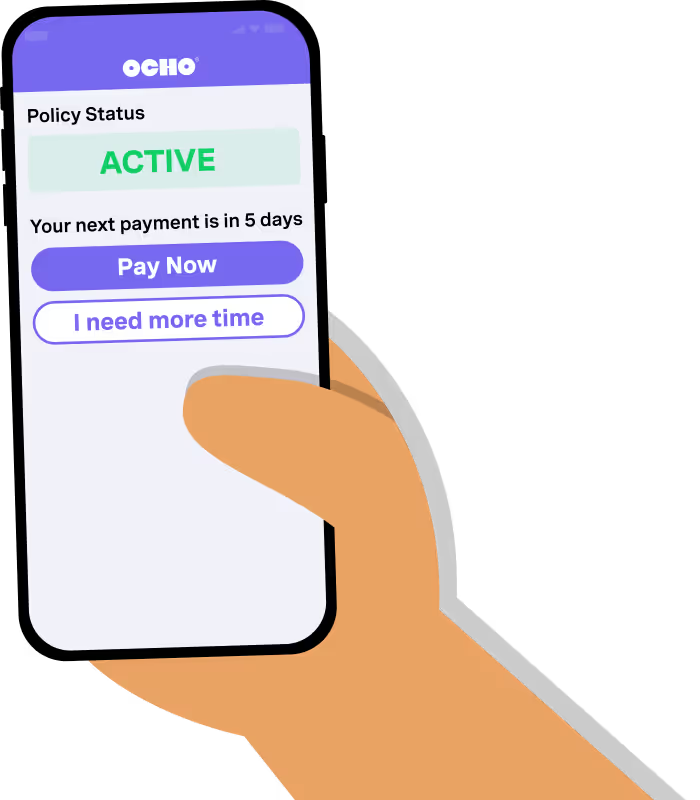
Track your policy, manage payments, and request a payment extension right from your dashboard.




.svg)