How Much Does Your Insurance Increase After an Accident?
Getting into an accident is stressful enough without the added anxiety of wondering what’s about to happen to your car insurance premiums. Whether it was a minor fender bender or something more serious, that crash is going to follow you around for a while—and your insurance company will make sure you feel it in your wallet. Understanding how an accident affects your car insurance premiums is crucial, as it can lead to higher rates and impact your costs for years.
Let’s break down exactly how much you can expect to pay and what you can do about it.
Quick Answer: How Much Will My Insurance Go Up After an Accident?
Here’s the reality: an at fault accident in 2024 typically raises your car insurance by 20% to 60%, which translates to roughly $600 to $1,500 more per year depending on your driving history, location, and insurance provider. To put it in perspective, how much rates increase after an accident can vary widely based on these factors.
A single at-fault crash with property damage only might add around $500–$900 per year for three years, based on recent U.S. averages. When considering how much does car insurance increase after different types of accidents, this is the “best case” scenario for a fault accident.
Accidents with injuries or very high claim payouts can push rate increases to 80% or more. In some cases, insurers may choose not to renew your policy at all. California drivers, for instance, can see bodily injury accidents spike premiums by up to 97%.
Not-at-fault or comprehensive-only claims (hail damage, theft, hitting a deer) usually result in much smaller surcharges—or none at all. However, many insurers still reserve the right to adjust rates based on overall claim activity.
Most accident-related surcharges last three to five years and then gradually drop off if you maintain a clean driving record with no new claims or violations.
After an accident, it’s important to understand how and why your car insurance go up, so you can plan for the potential impact on your budget.
Average Car Insurance Increases After Different Types of Accidents
The size of your rate hike depends heavily on fault, claim amount, and which coverage paid out the claim. Not all accidents affect your rates equally, and different insurers file completely different surcharge plans with each state.
Here’s a text-based comparison to give you concrete numbers:
Clean record, full-coverage baseline: About $1,900–$2,100 per year nationally.
After one at-fault property damage accident: Total annual premium often rises to around $2,500–$3,000—roughly a 30–45% increase.
After one at-fault accident with injuries: Many drivers see totals jump to the $3,000–$3,800 range or higher, especially in states like California where medical expenses and repair costs run high.
Minor fender-bender at-fault accidents (under about $2,000 in paid claims) might trigger a smaller 15%–25% increase. Think backing into a parked car in a parking lot—annoying, but not catastrophic for your premiums.
Moderate at-fault crashes ($5,000–$15,000 in repairs and medical bills) commonly lead to 30%–50% increases for three years. A 35-year-old driver with a 2019 Honda Civic might see their $2,000 annual premium jump to $2,800 or more.
Severe accidents or multiple at-fault incidents can double your premiums—or worse, the insurance company might decline renewal at the next policy term. At that point, you’re shopping for coverage as a higher risk driver.
No fault accident: If you’re involved in a no fault accident, the impact on your insurance premium is usually less severe. Under no-fault insurance policies, your own insurer pays for your damages regardless of who caused the accident, and rate increases are often smaller compared to at-fault accidents.
Every insurer scores differently. The same accident could cost one driver an extra $400 per year and another $1,200 per year. This is why it pays to compare quotes from many insurers after a claim settles.
Key Factors That Decide How Much Your Rates Go Up
Insurance companies don’t use a single flat rate increase for every accident. Instead, they score your risk using many factors and calculate your premium accordingly. Understanding these factors helps you anticipate what’s coming.
Fault status matters most:
At-fault or mostly at-fault accidents cause the largest surcharges. If the other driver was completely responsible, you’re in much better shape.
Partially at-fault situations (like being 20%–40% responsible) can still raise rates in comparative negligence states.
Not-at-fault collisions may or may not affect premiums depending on the insurance company’s policies. Some insurers leave rates alone; others tack on small increases anyway.
Severity and payout size:
Larger car insurance claim payouts (totaled vehicles, significant injuries, lost wages) generally trigger higher and longer surcharges.
Low-cost claims below a few hundred dollars may be surcharged less—or not at all—by some companies. A young driver with a $300 claim might see minimal impact, while a middle-aged driver with a $15,000 payout faces serious premium increases.
Your prior driving history:
A clean record for 3–5 years can soften the blow. Insurers view one isolated incident differently than a pattern of risky behavior.
Existing tickets (like a speeding ticket), previous accidents, or a DUI can multiply the impact of a new claim dramatically. Accidents happen, but accidents on top of violations send red flags.
Type of claim filed:
Collision claims (hitting another vehicle or object) versus comprehensive claims (theft, hail, hitting a deer) versus bodily injury liability all affect rates differently.
Multiple small comprehensive claims—like frequent glass replacements or minor hail damage—can also influence auto insurance rates over time, even if each individual claim seems minor.
Personal rating factors:
Age, location (state and even ZIP code), vehicle model and year, annual mileage, and coverage limits all shape your final post-accident premium.
A 22-year-old driver in Los Angeles will see different increases than a 45-year-old in rural Ohio for the exact same accident. The national average doesn’t always apply to your specific situation.
Other factors, such as additional tickets, DUIs, or insurer-specific policies, can also influence how much your insurance increases after an accident.
How At-Fault vs. No-Fault and Comprehensive Claims Change Your Premium
The word “fault” in an accident and which coverage pays the claim matter more than simply “having an accident.” Let’s break down how each scenario affects what you pay.
At-fault accidents:
At-fault collisions paid under your liability or collision coverage almost always trigger the highest car insurance increase. You caused damage, your insurer paid out, and now they want that money back through higher premiums.
Example: Rear-ending another car and causing $8,000 in damage may raise a $1,800 annual premium to around $2,700 for several years. That’s roughly $900 extra per year—$2,700+ over three years.
No-fault or not-at-fault accidents:
In many states, being rear-ended or hit while legally stopped may not add a surcharge. But some insurance companies still adjust premiums for “increased overall risk”—meaning you filed a claim, regardless of cause.
In a no fault state, personal injury protection covers medical expenses regardless of who caused the crash, but the company can still add a surcharge based on your claim activity.
Research shows that even not-at-fault accidents can trigger $300 or more in annual increases from major insurers in cities like New York and Baltimore.
Comprehensive-only claims:
Events like hail damage, theft, falling trees, or hitting an animal are typically rated differently than crashes involving another vehicle.
Increases, if any, are usually smaller than after a major at-fault collision. A comprehensive claim might bump your premium by 5–10%, while an at-fault crash could double it.
Special situations to know:
Hit-and-run claims handled under uninsured motorist or collision coverage can be tricky. You weren’t at fault, but you’re still filing a claim.
Multi-car pileups where fault is split between several drivers may result in partial surcharges for everyone involved.
How Long an Accident Affects Your Insurance (And When It Drops Off)
An accident doesn’t permanently lock in higher monthly premiums. Insurance companies primarily care about recent history, and that surcharge has an expiration date.
Typical duration: At-fault accidents generally stay “rating-active” for three policy years. Some states and insurers extend serious crashes (involving injuries or very high payouts) to five years or more. The exact length and severity of rate hikes can also depend on the insurance company's policies regarding accident history and how they review claims.
Gradual decline, not sudden drop: The surcharge amount may decrease at each renewal if you have no new tickets or claims. You might pay 50% more in year one, 35% more in year two, and 20% more in year three before it fully drops off.
Visibility vs. surcharge: Your claims and violation history can remain visible on your record for 5–7 years (or longer for DUIs), even if it no longer adds a surcharge. Insurers can see it; they just can’t always charge you for it.
State laws vary based on location: Some states limit how far back companies can look for surcharges (typically three years). Others allow longer look-back periods for major violations or very costly losses. Check your state’s specific rules.
Mark your calendar: Drivers should note the third and fifth anniversaries of a major accident. These are prime times to re-shop coverage and ask your insurer for re-rating. You might qualify for lower rates without switching companies.
Here’s a rough timeline:
Years 1–3: Full surcharge applies. You’re paying the maximum penalty, though it may decrease slightly each year with a clean record.
Years 4–5: Surcharge continues to decline or drops off entirely for most drivers. Accidents stay on your record but may no longer affect pricing.
Year 6+: Most standard at-fault accidents no longer affect your rates. Severe accidents or DUI-related incidents may still show up, but their pricing impact diminishes.
Accident Forgiveness: When an Accident Might Not Raise Your Rates
Accident forgiveness programs are exactly what they sound like: a feature that keeps your premium from going up after your first qualifying at-fault crash. It’s not magic, but it can save you serious money.
Typical eligibility rules:
Most insurers require a completely clean driving record for the previous 3–5 years. No tickets, no claims, no violations.
Some companies only offer accident forgiveness to long-term customers (5+ years with the same insurer) or certain age groups.
Progressive, for example, offers forgiveness for first claims under $500 in most states as of late 2022—instantly upon enrollment.
How you get it:
Can be automatically included for safe drivers with a clean record.
In other cases, you must add it to your policy and pay for it before any accident occurs. You can’t buy forgiveness after the fact.
Know the limitations:
Usually only applies to one at-fault accident per policy or per driver. Your second crash is fair game.
Often excludes severe accidents involving DUI, reckless driving, or very high claim payouts.
Not available in every state. California, Connecticut, and Massachusetts have restrictions.
Real-world example: A driver paying $2,000 annually would face roughly $600 extra per year for three years after an at-fault minor accident—that’s $1,800 total. Accident forgiveness waives that entirely, potentially saving $1,500+ over the surcharge period.
What to do: Check your current policy documents or call your agent to see if you already have accident forgiveness. If not, ask what it costs to add. For many insurers offer discounts and forgiveness as bundled features, so you might qualify without realizing it.
How to Reduce Your Insurance Costs After an Accident
Here’s the good news: you cannot erase a past car accident, but you absolutely can take action to control what you pay going forward. The system isn’t completely stacked against you.
Comparison shopping is essential:
Get quotes from at least three different insurers after your claim is fully settled. Each company scores accidents differently, so savings of $400–$800 per year are realistic for some drivers.
Don’t assume your current insurer has the best post-accident rates. They might—but you won’t know until you compare quotes elsewhere.
Adjust your coverage strategically:
Review deductibles for collision and comprehensive. Choosing a higher deductible lowers premiums but increases your out-of-pocket cost at the next claim.
Consider whether full coverage still makes sense on very old vehicles. If your car is worth $3,000 and you’re paying $1,200 annually for collision coverage, the math might not work.
Stack every discount you can:
Common discounts include multi-car, bundling home and auto insurance, good student, telematics/usage-based programs, and completing a defensive driving course.
Provide proof (transcripts, course certificates, mileage tracking data) to unlock every eligible discount. Insurers offer discounts you might not know about unless you ask.
Improve your risk profile over time:
Drive claim-free and ticket-free for the next 3+ years. Safe driving habits directly translate to lower rates at renewal.
Keep mileage as low as practical. Consider public transit or carpooling to potentially qualify for low-mileage pricing. Lower miles = lower risk = lower cost.
Calendar a review at every renewal:
After an accident, your premiums will change at each renewal period. Set a reminder to review your options every six months or at each policy term.
Insurance rate increases aren’t forever. As your accident ages off your record, you should see auto insurance rates drop—but only if you actively check and negotiate.
The bottom line? An accident on your record doesn’t mean you’re stuck paying inflated insurance premiums indefinitely. Shop around, stack discounts, drive safely, and revisit your coverage regularly. The drivers who do this consistently pay hundreds less than those who simply accept whatever their insurer charges.
Your crash happened. What you do next determines how much it actually costs you.
Reversing Rate Increases: Can You Get Your Premium Back Down?
If you’ve experienced a rate hike after a car accident, you’re not alone—but you’re also not powerless. While an at fault accident can cause your car insurance premiums to jump, there are proven ways to bring your car insurance rate back down over time.
Start by reviewing your policy: After an accident, take a close look at your current coverage and talk to your insurance provider about your options. Sometimes, adjusting your deductibles or coverage limits can help lower your monthly premiums. For example, choosing a higher deductible means you’ll pay more out of pocket if another accident happens, but your regular payments could decrease.
Take advantage of discounts: Many insurance companies offer a variety of discounts that can help offset the impact of a fault accident. Completing a defensive driving course, maintaining good grades if you’re a student, or driving fewer miles each year can all lead to lower insurance premiums. Don’t hesitate to ask your insurer about every possible discount—they may have options you haven’t considered.
Shop around and compare quotes: Not all insurance companies treat accidents the same way. After a car accident, it’s smart to get quotes from different insurers. Some may offer better rates, especially if you now qualify for accident forgiveness programs or other incentives. Comparing quotes can reveal savings of hundreds of dollars per year, even after a rate increase.
Maintain a clean driving record: The best way to reverse a rate hike is to avoid further accidents and traffic violations. Insurance companies reward safe driving habits, and a clean driving record over the next three to five years can gradually bring your premiums back down. Over time, the impact of a single accident will fade, especially if you demonstrate you’re a lower risk.
Consider accident forgiveness: If your insurance provider offers accident forgiveness, see if you’re eligible to add it to your policy for the future. While it won’t erase a past rate increase, it can protect you from another hike if accidents happen again down the road.
Understand your state’s laws: Some states limit how much your insurance company can raise your rates after a single accident, while others allow more flexibility. In no fault states, personal injury protection (PIP) can help cover medical expenses and lost wages, and may affect how your premiums are calculated. Knowing your rights and local regulations can help you advocate for yourself if you think your rate increase is too steep.
Get the OCHO app now!
Compare & get covered fast
Find and compare auto insurance in minutes, and get your free credit score.
Choose when you pay
Select payment dates that line up with your payday.
Manage everything in one place
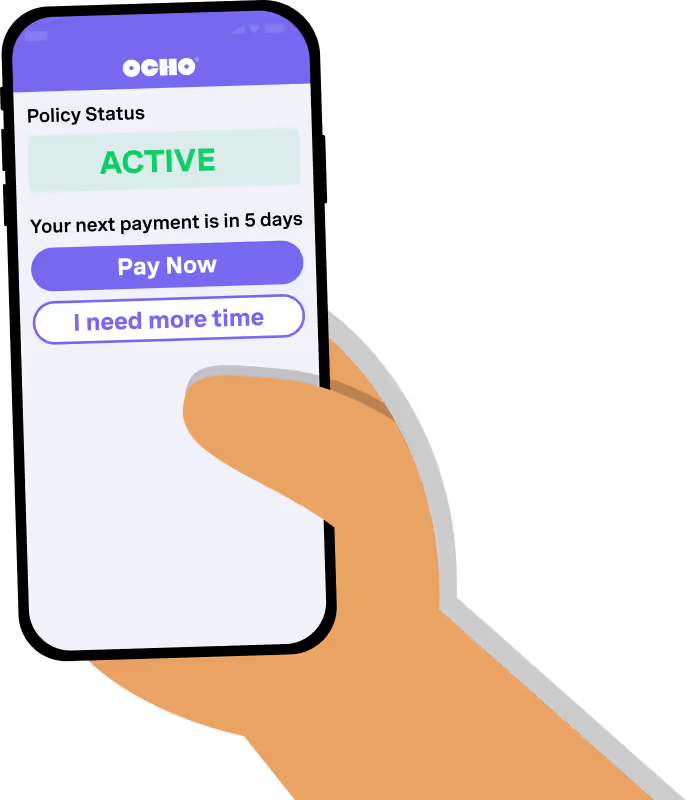
Track your policy, manage payments, and request a payment extension right from your dashboard.
Finally, car insurance you can afford.
Start your OCHO journey today.
Thank you! Your submission has been received!
Oops! Something went wrong while submitting the form. Please try again later.







.svg)