Getting hit with an SR-22 requirement can feel overwhelming, especially when you're already dealing with the financial stress of a major driving violation. An SR-22 isn't just another form—it's your pathway back to legal driving, but it often comes with higher insurance costs and complex requirements that can strain your budget.
At OCHO, we understand that life happens, and everyone deserves a second chance to get back on the road affordably. This comprehensive guide will walk you through everything you need to know about SR-22 insurance, including how to find affordable options that won't break the bank.
SR-22 insurance isn’t actually a type of insurance policy—it’s a certificate of financial responsibility that proves you’re carrying the minimum auto insurance coverage required by your state. The SR-22 is a form filed with your state’s Department of Motor Vehicles (DMV) to show you have the required liability insurance. Think of it as a guarantee letter that your insurance company files with your state’s Department of Motor Vehicles (DMV) on your behalf.
The SR-22 form serves as continuous proof that you maintain active auto insurance coverage. As a certificate of financial responsibility, the SR-22 is proof of financial responsibility required by the state. If your policy lapses or is canceled, your insurance company is legally required to notify the state immediately, which could result in the suspension of your driving privileges.
The SR-22 helps drivers prove financial responsibility to the state after certain violations.
While most states require an SR-22, Florida and Virginia mandate an FR-44 for certain violations. The key differences include:
SR-22 Requirements:
FR-44 Requirements:
Not every motorist will need an SR-22—only those involved in certain traffic offenses or who have had their driver's license suspended. You may be required to file an SR-22 if you’ve been convicted of:
You may need an SR-22 after specific traffic offenses, and the requirement is directly tied to your driver's license status. The court or your state’s DMV will notify you if an SR-22 filing is required. This notification will specify how long you must maintain the SR-22 and any other requirements you must meet.
Getting SR-22 insurance involves several steps, but the process doesn’t have to be complicated. Not every auto insurance company or car insurance company offers SR-22 filings, so it's important to check with your insurer before applying.
Start by calling your current auto insurance provider to ask if they offer SR-22 filings. Many major insurers handle SR-22 certificates, but not all do. If your current company doesn't provide this service, you'll need to find a new insurer.
If you need a new insurance company, gather quotes from multiple providers that offer SR-22 filings. Be upfront about your SR-22 requirement when requesting quotes—this ensures accurate pricing and avoids surprises later.
Once you've selected an insurer, purchase your auto insurance policy with the required coverage levels. Make sure your policy meets or exceeds your state's minimum requirements.
Your insurance company will file the SR-22 form with your state's DMV. This process is typically electronic and happens quickly, though some states may require mailed filings.
Most states charge a filing fee for SR-22 certificates, typically ranging from $15 to $50. This is separate from your insurance premium and is usually a one-time fee.
When it comes to SR-22 insurance, the Department of Motor Vehicles (DMV) is at the heart of the process. After a driver is required to file an SR-22, it’s the insurance company that notifies the DMV, confirming that the driver has the minimum liability coverage required by state law. From there, the DMV takes on the responsibility of monitoring your insurance status to ensure you maintain continuous coverage and meet all financial responsibility requirements.
If your auto insurance policy lapses or is canceled for any reason, your insurance provider is obligated to alert the DMV right away. This immediate notification can result in the suspension or even revocation of your driver’s license, making it crucial to keep your insurance policy active at all times. The DMV’s role doesn’t stop at monitoring; they also track your SR-22 status, process any necessary filing fees, and may require you to provide proof of insurance periodically.
Many state DMVs now offer online services, making it easier for drivers to access their driving records, check the status of their SR-22 filing, and manage their compliance with financial responsibility laws. If you’re unsure about your state’s specific requirements, the DMV is your go-to resource for information on the minimum liability coverage required, how to file an SR-22, and the duration of your obligation. They can also explain the consequences of policy lapses, such as additional penalties or extended SR-22 periods.
To stay on track, it’s essential to work closely with both your insurance company and the DMV. Make sure you understand the minimum liability coverage you need, pay any required filing fees promptly, and maintain continuous coverage to avoid interruptions in your driving privileges. If you’re shopping for a new policy, consider getting a free auto insurance quote to compare rates and coverage options from different insurance companies.
In short, the DMV plays a vital role in ensuring drivers meet their financial responsibility requirements after a driving offense. By staying informed, maintaining your insurance coverage, and communicating with both your insurance provider and the DMV, you can protect your license, avoid costly penalties, and keep your driving record moving in the right direction.
SR-22 insurance is typically more expensive than standard auto insurance for several reasons:
High-Risk Classification: Having an SR-22 requirement automatically classifies you as a high-risk driver, leading to higher premiums.
State Requirements: Some states have higher minimum coverage requirements, which increase costs.
Personal Driving History: The severity and frequency of violations on your record impact pricing.
Coverage Levels: Choosing higher coverage limits increases your premium but provides better protection.
Most drivers can expect their insurance premiums to increase by $300 to $1,000 annually when an SR-22 is required. However, costs vary significantly based on:
The duration of SR-22 requirements varies by state and the severity of your violation. The length of time you need to maintain an SR-22 depends on what your state requires.
Typical Timeframes:
During this period, you must maintain continuous auto insurance coverage. Any lapse in coverage will be reported to the state, potentially resulting in license suspension and requiring you to restart the SR-22 period.
If you need SR-22 insurance but don't own a vehicle, you can obtain a non-owner SR-22 policy. This type of coverage:
Non-owner SR-22 policies are ideal for people who:
Getting SR-22 insurance doesn't have to break the bank. Here are strategies to find affordable coverage:
Different insurance companies assess risk differently, so rates can vary significantly between providers. Get quotes from at least three companies that offer SR-22 filings.
Choosing higher deductibles can lower your premium, though you'll pay more out-of-pocket if you file a claim.
Even with an SR-22 requirement, you may qualify for discounts such as:
Avoid any gaps in coverage, as lapses can reset your SR-22 period and result in additional penalties.
At OCHO, we understand that needing SR-22 insurance often comes at a financially difficult time. Traditional insurance companies typically require large down payments, which can be especially challenging when you're already facing financial consequences from a driving violation.
No Down Payment Options: Unlike traditional insurers that may require substantial upfront payments for high-risk drivers, OCHO offers no down payment car insurance options that make getting SR-22 coverage more accessible.
Flexible Payment Plans: Our payment plans align with your paycheck schedule, making it easier to maintain continuous SR-22 coverage without financial stress.
No Deposit Required: Get started with no deposit car insurance and avoid the burden of large upfront costs.
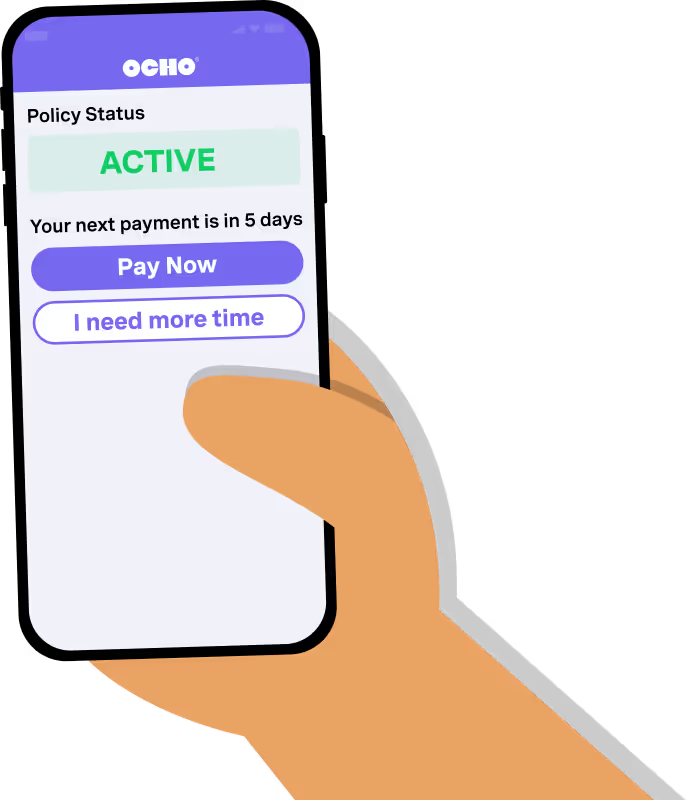
Extended Grace Periods: We provide extra time to make payments when you need it, helping you avoid coverage lapses that could reset your SR-22 requirements.
Credit Building Opportunity: Your on-time insurance payments are reported to credit bureaus, helping you rebuild your credit while maintaining required coverage.
OCHO's innovative approach to auto insurance financing makes SR-22 coverage more manageable:
SR-22 requirements vary significantly by state. If you move to a new state, you may need to coordinate with the new state's department of motor vehicles (DMV) to ensure your SR-22 filing is properly transferred and you remain in compliance.
Here are some key differences:
Each state's department or DMV may have different requirements for SR-22 filings. It's important to check with your state's department of motor vehicles for specific details and to ensure you meet all obligations.
Since OCHO currently operates in Arizona, Georgia, Illinois, Missouri, New Mexico, Texas, Washington, and Wisconsin, here's what you need to know about SR-22 requirements in these states:
OCHO Operating States with SR-22 Requirements:
Important Note About New Mexico: New Mexico is one of the few states that doesn't use SR-22 forms, but OCHO still operates there and can help with alternative financial responsibility requirements if needed.
Avoiding these common mistakes can save you time, money, and frustration. Failing to comply with SR-22 requirements can result in other penalties, such as fines, license suspension, or even car impoundment.
This is the most critical mistake to avoid. Any gap in coverage will be reported to the state and may result in:
Not all insurance companies provide SR-22 filings. Research and confirm that potential insurers offer this service before switching policies.
While minimum coverage meets SR-22 requirements, it may not provide adequate protection. Consider your financial situation and choose coverage levels that protect your assets.
Respond promptly to any communications from your state's DMV regarding your SR-22 requirements. Ignoring these notices can lead to additional penalties.
Your SR-22 requirement won't last forever. Here's what to expect and how to prepare for the future:
Once you've completed your required SR-22 period with continuous coverage, your insurance company will stop filing the form with the state. However, this doesn't happen automatically—you may need to request that your insurer stop filing the SR-22.
After your SR-22 period ends, you can work on improving your insurance rates by:
The best way to avoid needing another SR-22 is to:
Most insurance companies can file SR-22 certificates within 24-48 hours of purchasing a policy. Electronic filings are typically faster than mailed forms.
Yes, though poor credit may result in higher premiums. OCHO's flexible payment options and no down payment policies make SR-22 insurance more accessible regardless of credit score.
If you move while under an SR-22 requirement, you'll typically need to maintain the filing in the state that required it. Some states have reciprocity agreements, but it's best to consult with your insurance company and both states' DMVs.
You can drive as soon as your SR-22 policy is active and the filing is complete. Your insurance company will provide proof of coverage that you should carry while driving.
Some employers conduct driving record checks, and an SR-22 requirement may impact jobs that require driving. However, this varies by employer and position.
Needing SR-22 insurance doesn't have to derail your financial stability or keep you from getting back on the road. With OCHO's innovative approach to auto insurance, you can access the coverage you need without the traditional barriers of large down payments and rigid payment schedules.
Our commitment to making insurance accessible means you can focus on rebuilding your driving record and moving forward, rather than struggling with unaffordable insurance payments. Whether you need standard SR-22 coverage or non-owner SR-22 insurance, OCHO's flexible solutions are designed to help you meet your requirements without breaking your budget.
Ready to get back on the road? Contact OCHO today to learn more about our SR-22 insurance options and discover how our no down payment, flexible payment plans can help you maintain the coverage you need while working toward a better financial future.
Finally, car insurance you can afford—even when you need SR-22 coverage. Start your OCHO journey today.
Compare & get covered fast
Find and compare auto insurance in minutes, and get your free credit score.
Choose when you pay
Select payment dates that line up with your payday.
Manage everything in one place
Track your policy, manage payments, and request a payment extension right from your dashboard.




.svg)