You opened your renewal notice, and your jaw dropped. Your car insurance premiums jumped—again. But here’s the thing: you didn’t get a ticket. You didn’t file a claim. You didn’t buy a new car. So why would your car insurance go up for no reason?
Here’s the reality: there’s always a reason. It just might not be something you did. In fact, several factors can influence your car insurance rates, even if they aren't immediately obvious to you.
Changes in driving habits, claims, and economic conditions over the past few years have also impacted car insurance rates for many drivers.
When it comes to car insurance, understanding what goes into your premium can help you take control of your insurance costs and make smarter decisions about your coverage. Insurance companies use a variety of factors to determine your car insurance rates, and knowing what these are can help you manage your auto insurance premiums more effectively.
One of the most important factors is your driving record. A clean driving record with no accidents or reckless driving incidents can lead to lower car insurance premiums, while a history of claims, speeding tickets, or multiple claims can result in higher premiums. Insurance companies also look at the type of car you drive—vehicles with advanced safety features or lower repair costs may be cheaper to insure, while high-performance or luxury cars can increase your insurance rates.
Where you live plays a big role in your car insurance costs as well. Areas with higher crime rates, more traffic, or frequent natural disasters often see higher insurance premiums because the risk of accidents, theft, or damage is greater. The number of drivers and vehicles in your household also affects your insurance rates, as more drivers or cars can mean a higher likelihood of future claims.
Your credit score is another key factor many insurers use when determining premiums. A higher credit score can help you qualify for lower auto insurance rates, while a lower score may lead to higher insurance costs. This is because insurance companies have found a correlation between credit history and the likelihood of filing claims.
To help offset rising costs, many insurers offer discounts for bundling auto insurance with home or renters insurance, as well as a multi vehicle discount for households with more than one car. Taking advantage of these discounts can help you save money on your insurance premiums.
It’s important to remember that external factors like rising repair costs, labor shortages, and inflation can also impact your auto insurance premiums, even if your personal situation hasn’t changed. Insurance companies regularly review and adjust their rates based on changes in driving behavior, claims history, and local trends.
To keep your car insurance costs in check, review your policy annually, compare quotes from different insurers, and make sure you’re getting all the discounts you qualify for. By understanding the factors that influence your car insurance premiums and taking steps to maintain a clean driving record and good credit score, you can work towards lower insurance rates and better coverage. Taking control of these factors puts you in the driver’s seat when it comes to managing your auto insurance.
When your car insurance rates increase without any apparent cause, it typically means nothing changed on your end—but plenty changed everywhere else. Insurance companies don’t price your policy in isolation. They’re looking at the entire risk pool, economic conditions, and local trends that affect how much they’ll likely pay out in claims. Regional events and natural disasters can also lead to a spike in insurance claims, which in turn drives up premiums for everyone.
Let’s talk concrete examples. Between December 2020 and December 2021, used car prices exploded by 37 percent—the largest 12-month jump ever recorded. New car prices climbed nearly 12 percent in the same period. From November 2021 to November 2022, repair costs increased 15 percent while bodywork expenses rose 12 percent. All of that gets baked into what you pay, even if your car is sitting safely in your garage.
Post-COVID driving patterns also shifted dramatically. Fatal crashes jumped 15 percent in 2022 compared to 2020. More drivers on the road means more accidents, which means insurers are paying out more, which means—you guessed it—everyone’s premiums go up. Fraudulent or excessive insurance claims can also contribute to higher insurance rates for all policyholders, as insurers spread the increased costs across the entire customer base.
Auto insurance is priced by risk for an entire group of drivers. Your rate can move even when your driving record and vehicle are completely unchanged. Think of it like health insurance for cars: when the cost of “treatment” (repairs, replacements, medical bills) rises, everyone’s premium adjusts accordingly.
In the sections below, we’ll break down the most common causes of these mystery rate hikes and show you exactly how to figure out what happened with your own policy.
Insurers must adjust premiums when the cost to repair or replace vehicles rises. This isn’t optional—if they don’t, they can’t pay claims. And from roughly 2021 through 2024, the cost of almost everything related to cars surged dramatically.
The culprit? A perfect storm of supply chain disruptions, labor shortages, and inflation running hotter than it had in four decades. Microchip shortages alone cut vehicle production in half, driving up both new and used car prices. When your insurer calculates what they’d pay to replace your totaled vehicle, they’re using current market values—not what you originally paid.
Here’s what’s been driving your car insurance costs higher:
Even if you never file a claim, insurers base prices on what future claims are likely to cost. When a fender bender now costs $5,000 to fix instead of $3,000, that ripples through to everyone’s premium.
Check your renewal documents for language like “statewide rate revision” or “rate filing effective July 2024.” If you see that, inflation is likely the primary driver of your increase.
Insurance companies price risk by ZIP code. This means local claim trends can raise your premium even with a clean driving record. Insurers may view a spike in local claims as an indication of increased risk, which can lead to higher premiums for everyone in the area. Your neighbors’ bad luck becomes your financial burden through the shared risk pool.
Think about what could trigger this in your area:
When your community experiences a spike in comprehensive or collision claims—whether from weather, theft, or accidents—everyone in that territory pays more at renewal. Major events like wildfires, hurricanes, or civil unrest can trigger broad rating changes affecting thousands of policies at once.
Signs this might be your situation:
If you suspect this is happening, check your state insurance department’s website for recent consumer alerts about market-wide auto insurance rates in your region.
“Nothing changed” often overlooks quiet shifts in your personal profile that insurers track closely. Many factors you might not think about can trigger a premium adjustment at renewal.
Here are the personal factors insurers monitor:
Insurers regularly re-verify data through motor vehicle reports and third-party databases. They might discover an old ticket you forgot about or correct information that was previously missing from your driving history.
Here’s your 5-minute check: Pull your declarations page from last year and compare it line by line with your current one. Look at:
If anything looks different, you’ve found your answer.
Rate hikes can be triggered by your record even without a recent major accident you remember. The details matter, and sometimes they surprise people.
Common record-related factors that increase premiums:
Managing insurance claims carefully and maintaining a clean driving record can help lower your car insurance premiums.
About accident forgiveness: it may protect your rate for the first chargeable accident, but it doesn’t apply to every type of claim. Read the fine print on your policy.
If you suspect a hidden claim or error is affecting your rate, request a copy of your CLUE (Comprehensive Loss Underwriting Exchange) report. This document shows your claims history across all insurers for the past several years. Also request your state driving record to verify what your insurer is seeing.
A clean driving record is valuable—but only if it’s actually clean in the databases insurers use.
Your specific vehicle—and how attractive it is to thieves—can change pricing even between model years. This is true even if you didn’t buy a new car.
The most dramatic recent example: certain 2011-2021 Hyundai and Kia models experienced theft surges due to a viral social media trend showing how easily they could be stolen. Comprehensive rates for those vehicles jumped nationwide, affecting owners who had never had a theft issue personally.
Other vehicle factors that drive insurance costs higher:
Even without buying a new car, insurers periodically update how they rate specific vehicles based on real-world loss experience. Your 2019 sedan might cost more to insure this year simply because that model had worse-than-expected theft or collision claims nationally.
Ask your insurance agent whether a different trim level, model year, or vehicle with better safety ratings could reduce premiums next time you shop for a car.
In most U.S. states, insurers use a credit-based insurance score alongside your driving data to price risk. This isn’t the same as your FICO score, but it’s strongly influenced by similar factors.
Common triggers that can lower your insurance score:
Important exceptions: California, Hawaii, and Massachusetts restrict or ban the use of credit for auto insurance pricing. If you live in one of these states, focus more on other factors like driving behavior and claims history.
What you can do:
If your credit has materially improved since your last renewal, you may qualify for a better rate. Many insurers only pull credit data periodically, so proactively requesting a re-evaluation can work in your favor.
One of the most common “mystery” reasons for a rate jump is the loss or change of discounts you didn’t realize you had.
Discounts that commonly disappear:
Coverage adjustments also affect cost more than most people expect. Adding rental reimbursement or additional coverage, lowering deductibles from $1,000 to $500, or raising coverage limits will all increase premiums.
Compare your declarations pages line by line:

Call your insurer or insurance agent and specifically ask: “Which discounts are currently applied to my policy, and which ones might I qualify for that aren’t being applied?” This single question can uncover significant savings.
Here’s the bigger picture: auto insurance works through risk pooling. Insurers collect premiums from many drivers to pay the claims of the few who have losses. When that math stops working, everyone’s rates adjust.
When an insurer’s overall loss experience worsens—more severe crashes, expensive lawsuits, rising reinsurance costs—regulators may approve statewide rate increases for that company. These changes are often filed months in advance with state insurance departments and then applied at your next renewal date, which makes them feel completely random.
Signs a company-wide rate filing is behind your increase:
You can search your state insurance department website for recent auto insurance rate filings. Many states publish this information publicly, and it can confirm whether your insurer recently received approval for broad rate increases affecting all policyholders.
2022 and 2023 marked peak years for these filings as insurers caught up with pandemic-era cost increases. If your rate jumped during this period, company-wide adjustments were likely a major factor.
Good news: you can usually get a clear explanation if you know what to ask for. You have more control here than you might think.
Follow this step-by-step process:
Step 1: Pull your declarations pages from last year and this year. Compare premiums by coverage type—liability, comprehensive, collision, and any add-ons.
Step 2: Look for changes in listed drivers, vehicles, coverages, and deductibles. Note anything that looks different.
Step 3: Check for new tickets or claims on your driving record or CLUE report. Request both if you haven’t reviewed them recently.
Step 4: Call or message your agent/insurer and ask them to walk you through each factor that changed and its dollar impact. Be specific: “I’d like to understand which factors contributed to my $200 increase and how much each one added.”
Request a written or emailed summary of the reasons for the increase. Some states actually require insurers to provide this upon request. Document what you learn—it’ll make comparison shopping much easier if you decide to get quotes from other drivers’ insurers.
This entire process takes less than an hour and puts you back in the driver’s seat.
You can’t control every factor affecting your premium—inflation, reinsurance costs, and local accident trends are beyond your reach. But you can often offset increases with strategic changes.

Additional steps to lower rates over time:
If your rate jumped significantly without a clear personal cause, get multiple quotes. Insurers offer different rates for the same risk profile, and what’s expensive at one company might be reasonable at another.
Here’s the bottom line: understanding why your car insurance went up puts you back in control. You’re no longer at the mercy of a confusing renewal notice. You know the factors, you know how to investigate them, and you know the levers you can pull to save money.
That’s not powerlessness. That’s information—and information is how you beat the system in the long run.
Compare & get covered fast
Find and compare auto insurance in minutes, and get your free credit score.
Choose when you pay
Select payment dates that line up with your payday.
Manage everything in one place
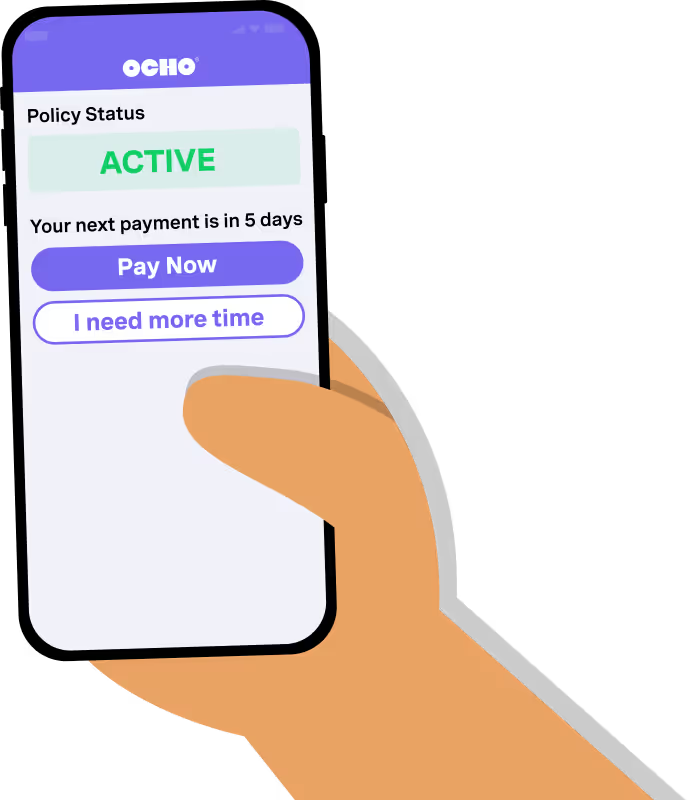
Track your policy, manage payments, and request a payment extension right from your dashboard.




.svg)