If you've been searching for daily car insurance, you're not alone. Many drivers want flexible, short-term protection without committing to months of premiums. Here's the truth about what actually exists in the U.S., what doesn't, and how to get covered starting today.
Let's cut straight to it: true one day car insurance and same day car insurance are two very different things. You can absolutely get insured and driving the same day you apply. But a standalone 24-hour auto insurance policy? That's a product that virtually no major U.S. insurer sells.
In the U.S., most insurance companies write car insurance policies with minimum terms of six months, sometimes 12 months for an annual policy. The infrastructure, regulations, and pricing models simply aren't built for 24-hour coverage windows.
When people search for "daily car insurance" or "daily insurance," they usually need to do one of three things: drive a friend's car for a day, pick up a new vehicle today, or cover a brief rental. These are real needs, and there are real solutions, but they don't come in the form of a literal day-by-day insurance policy.
OCHO helps drivers get same-day bindable car insurance policies with flexible payment plans, including $0 or low down payment options, reflecting its mission to provide affordable, accessible coverage for hardworking drivers. The coverage itself is a standard-term policy, but you can be legally insured starting today.
What most people actually use for temporary protection includes existing car insurance policies (yours or the car owner's), non-owner liability coverage, or rental car contracts. The rest of this article breaks down each option so you can find the right policy for your situation.
In theory, daily car insurance is a policy that lasts 24 hours or a few days and then ends automatically. No renewal, no long-term commitment, no ongoing premium. Temporary car insurance can cover from 1 hour to 28 days in markets where it's available.
This kind of product is common in the UK and parts of Europe, where you can purchase temporary car insurance online in under 2 minutes, get instant proof, and drive legally for a fixed number of days. Daily insurance does not affect your no claims discount in those markets, making it popular for borrowing cars or test drives.
The U.S. system works differently. Standard car insurance policies are written for continuous coverage, typically a six month policy or an annual policy. Insurers here expect ongoing exposure, not one-off bursts.
People look for daily cover because they want to avoid paying for months of premiums when they only plan to drive briefly, or because they don't own a car but need short-term liability insurance. Daily or short-term car insurance allows coverage payment by the 24-hour block or per mile driven, but in the U.S., these options remain extremely limited.
Here's the catch: daily car insurance typically costs two to three times more than the per-day rate of a traditional policy. The next sections walk through options that give you "daily" flexibility without that markup.
True standalone daily car insurance is largely non-existent among major U.S. insurers. Here's why:
Regulatory overhead. Every car insurance policy requires state-approved rating factors, filings, and administrative processing. These costs don't scale down for a 24-hour term. Most insurers require a minimum six-month policy term for standard coverage because the paperwork alone costs more than a one-day premium would justify.
Risk and moral hazard. Drivers seeking last-minute, temporary coverage tend to be higher risk. They may have lapses in continuous coverage, recent violations, or urgent situations. Most insurers price for predictable, long-term exposure, and occasional drivers looking for a quick fix don't fit that model.
Pricing accuracy. Short-term policies make it harder for companies to track driving history and claims data. Without enough exposure time, insurers can't price fairly, so daily rates for temporary insurance are often higher than traditional monthly policy costs.
Misleading ads. Many "daily car insurance" advertisements online are actually referring to rental car coverage, non-owner liability insurance, or the ability to cancel a standard policy early, with fees and consequences. A few smaller insurers offer limited options. For example, Hugo sells liability-only policies in 3-to-30-day increments in select states, but these are the exception, not the rule.
Rental contracts often solve the "I only need coverage for a day" problem more cleanly than any separate insurance policy. Purchasing daily rental protection can cover short-term car use during rentals without the hassle of altering your existing auto policy.
Here's what's typically available at the counter:
Many personal auto insurance policies also extend liability coverage and sometimes collision coverage to rental cars. Check your policy documents or call your insurer before paying for duplicate protection.
Some major credit cards include secondary rental car protection that may cover collision damage after your primary auto insurance pays, but these rarely replace required liability insurance.
For short trips of 1 to 7 days, rental-counter coverage usually makes more sense than trying to buy or modify a six month policy. But if you rent frequently, many drivers find paying for a regular non-owner policy more economical than repeated short-term rental insurance charges, especially when they compare free auto insurance quotes across companies to see the long-term cost difference.
You need to move apartments, your car is in the shop, or you're running errands in a friend's car for the afternoon. Do you need daily car insurance? Probably not.
In most states, the friend's car is primarily covered by the owner's auto insurance policy when they give you permission to drive. This is called permissive use, and it can provide coverage when borrowing a friend's car with their consent. Liability insurance and physical damage coverage usually follow the vehicle first, meaning the owner's policy responds before yours.
If you have your own auto policy, it may act as secondary cover after the owner's limits are exhausted. But this can vary depending on state laws and the fine print of each insurance policy.
Watch for gaps though. The owner's insurance company may exclude business use, unlisted drivers, or apply high deductibles. Daily insurance may not satisfy comprehensive requirements for financed or leased vehicles either, so if the friend's car has a loan, their lender likely expects full coverage with the driver properly listed.
If you'll use a friend's car regularly, being added as a listed driver on their policy is safer and cheaper than hunting for non-existent weekly car insurance or one day car insurance products.
Non-owner car insurance is a continuous liability insurance policy designed for drivers who don't own a vehicle. It provides liability coverage when you occasionally drive rental cars or borrowed vehicles, without insuring a specific car.
This isn't a one day car insurance product. It's ongoing coverage, but it typically costs much less money than a standard owner policy. The national average for non-owner auto insurance runs about $486 per year, roughly $41 per month. State costs vary depending on where you live: South Dakota averages around $216 per year, while New Jersey averages $1,141 per year.
Non-owner coverage is limited coverage in the sense that it's usually liability only, no collision coverage or comprehensive for the vehicle you drive.
Ideal scenarios include:
OCHO can help you compare quotes that include non-owner options from partner insurance companies, helping you stay insured and avoid costly surcharges from coverage gaps, and can also guide you through no-deposit pay-as-you-go coverage options if you need lower upfront costs.
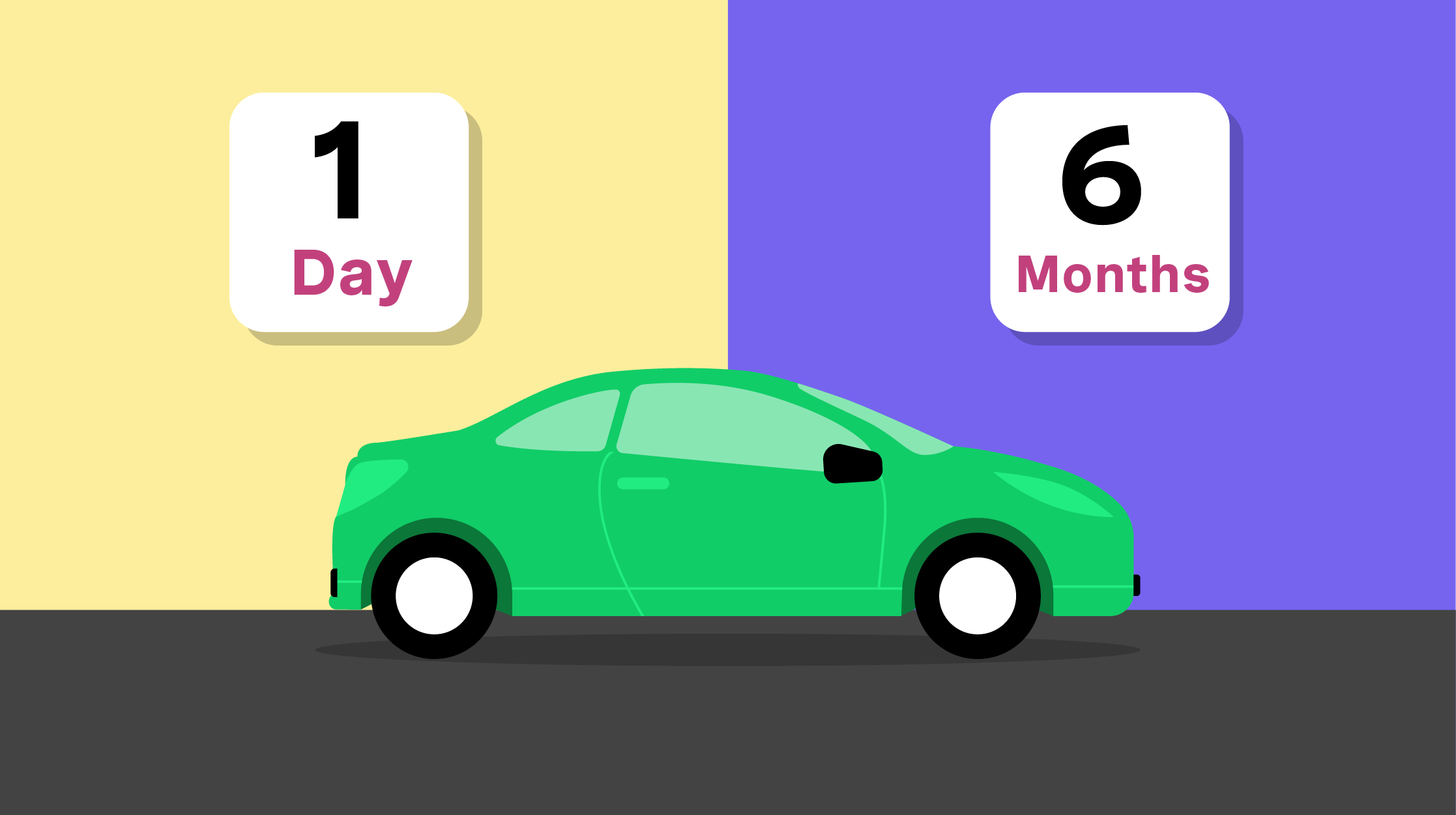
Here's something we see too often: someone buys a six month policy, drives for a few days, then cancels thinking they've hacked the system for cheap temporary coverage. Don't do this.
Most insurers calculate short-rate cancellations, meaning they keep more than just the prorated amount for the days you used. For example, cancel a $1,200 six-month policy after seven days and you might expect a refund of roughly $1,154. In reality, cancellation fees and non-refundable portions could eat up a significant chunk, which is why no-deposit car insurance options from OCHO focus on financing the upfront cost instead of encouraging constant cancellations. The effective cost per day ends up far higher than keeping the policy active.
The bigger problem is long-term damage. Frequent cancellations create gaps in continuous coverage, which most insurers treat as a risk factor. That gap can push you into a high-risk category, limiting your access to standard car insurance policies and increasing your car insurance cost for years.
State minimum requirements and proof of insurance expectations, especially when financing a car, assume a stable, ongoing insurance policy. Coverage gaps can occur if a short-term policy expires before subsequent driving, leaving you exposed legally and financially.
Instead of chopping policies into informal daily chunks, use flexible payment plans like OCHO's paycheck-aligned model or its zero down car insurance with $0 upfront to keep coverage affordable and consistent.
Traditional U.S. auto insurance policies typically last 6 to 12 months, but insurers calculate premiums using daily or monthly rates under the hood.
A $1,200 six month policy breaks down to roughly $200 per month or about $6.58 per day. Cancelling mid-term triggers a prorated refund based on unused days minus fees. But here's the part most people miss: claims, tickets, and lapses during even a short period still count against your long-term profile. "Only driving for a day" does not mean "no impact" on your overall auto insurance history.
Most insurers require payment before coverage starts, so there's no way to drive first and pay later.
Understanding this per-day math helps with budgeting. If you typically pay $6.58 per day for insurance anyway, splitting that into manageable amounts through biweekly monthly payments makes far more sense than chasing true daily car insurance. OCHO's split-payment structure lets you see what you're paying in real terms, aligned with how many miles you drive and how often you get paid.
Here's the reframe: drivers rarely want insurance for just one day. They want to pay for car insurance in a way that matches how often they drive and how they get paid.
Maintaining continuous coverage with no lapses is one of the biggest factors that keep future premiums low. Most insurance companies reward uninterrupted histories and penalize gaps, even short ones.
Lapses can push drivers into high-risk categories, limit access to standard car insurance policies, and make it harder to qualify for low-cost liability insurance. For working-class drivers with tight budgets, stretching to pay a huge down payment often causes accidental cancellations later, which end up costing more than a well-structured plan.
Pay-as-you-go insurance charges based on actual mileage driven, with base rates typically ranging from $20 to $40 monthly and per mile rates usually costing between $0.05 and $0.10 per mile. Understanding the difference between pay-as-you-go and pay-per-mile insurance helps drivers choose the right structure for their habits. Pay-as-you-go insurance can also help avoid gaps in coverage by keeping a policy active even during periods of low mileage.
OCHO's model is built around continuous coverage with smaller, predictable payments aligned with paychecks, similar to its no deposit, $0 down instant coverage, giving daily life flexibility without unstable daily insurance policies.
OCHO exists because the old system punishes people for not having enough cash on hand. High down payments, rigid billing, and misleading "daily car insurance" offers all push drivers toward gaps and higher costs.
Here's what OCHO actually does (and you can find more details in its How OCHO Works FAQs):
OCHO's pay-as-you-go insurance offers biweekly payments aligned with paychecks, and same-day insurance can be customized to your needs. By keeping one continuous policy, customers can build better credit, unlock discounts, and lower car insurance cost over time, and OCHO's broader FAQ resource on coverage and payments walks through how to manage those policies day to day. Safe driving habits and consistent history compound into real savings.

You can get same-day car insurance online and be legally insured before you leave the house. The policy term is longer than one day, but your coverage starts today.
Here's the process:
You can buy coverage online quickly, and OCHO's car insurance calculator helps you estimate the right policy before you commit.
Is it legal to drive just for one day with no insurance if I "won't go far"? No. In most states, all registered vehicles must carry at least minimum liability coverage. Only New Hampshire and Virginia have alternative arrangements. In New Jersey, for example, liability, PIP, and uninsured-motorist coverage are legally required for operating a vehicle. Driving uninsured exposes you to fines, license suspension, and massive financial liability in an accident.
Can I get daily car insurance for a learner driver or teen? True one-day cover for teens is virtually non-existent and would be extremely expensive given higher risk profiles. The realistic approach is being listed on a parent's existing policy or, where allowed, getting a non-owner policy. Both options provide more reliable protection than any temporary insurance product.
How does daily car insurance compare to pay-per-mile or usage based insurance? Pay-per-mile programs adjust cost by mile driven rather than policy term length. A telematics device tracks usage, and you pay a base rate plus a per mile rate. OCHO focuses on payment timing flexibility without tracking. Daily car insurance is useful for genuinely temporary driving needs like borrowing or rental situations, but for ongoing, low mileage drivers, usage-based insurance or OCHO's flexible plans typically save more money.
How do I keep car insurance cost low over time? Focus on continuous coverage with no lapses, maintain a clean driving history, select reasonable liability limits, and compare options at every renewal. Availability of daily car insurance varies by state and insurer, but many drivers save money long-term by sticking with a stable policy rather than bouncing between temporary options. Use OCHO's comparison tools and review real OCHO customer experiences to find the right fit among insurers that offer competitive rates for customers in your situation.
Stop chasing one-day policies that don't exist. The real way to save is coverage that starts today and stays active, with payments that fit your life.
Ready to get insured today? Get a quote with OCHO and see what $0 down coverage looks like for you.
Compara y obtén cobertura rápido
Encuentra y compara seguros de auto en minutos y obtén su puntaje de crédito gratis.
Elige cuando pagar
Selecciona fechas de pago que coincidan con tu día de pago de sueldo.
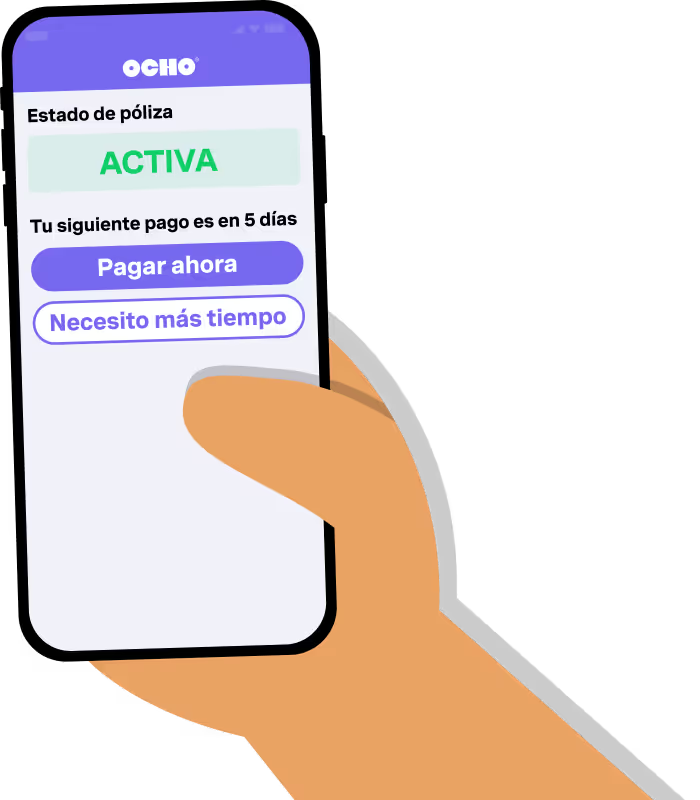
Gestiona todo en un solo lugar
Realiza un seguimiento de tu póliza, administra los pagos y solicita una extensión de pago directamente desde tu perfil.




.svg)