
There’s no two ways about it, car insurance just keeps rising. In 2025, the average cost of car insurance in the U.S. increased by approximately 12% compared to 2024, with some states experiencing much higher hikes. The average annual cost for a full coverage policy reached approximately $2,638.
Finding affordable auto insurance doesn’t mean you have to sacrifice quality coverage or customer service. Cheap auto insurance refers to policies that provide legally required protection at low premium rates, making car insurance accessible to budget-conscious drivers. The key is finding the sweet spot between affordability and adequate coverage that protects your financial interests.
That’s where OCHO comes in!
We help you find and compare car insurance AND we help you pay for it, interest-free!
That means you get incredible benefits you won’t find anywhere else:
Companies like GEICO, Progressive, and State Farm offer competitive rates for budget-conscious drivers, with some policies starting as low as $350 annually for low-risk drivers in certain states. Most of our customers are high-risk, who want to pay for their car insurance, but the system has been stacked against them. We believe everyone has the right to great coverage.
Online comparison tools have revolutionized how drivers shop for insurance coverage. These platforms can help you find car insurance rates that are 20-40% lower than your current policy by comparing real-time quotes from multiple insurance companies. The process takes just minutes and can result in substantial savings on your auto policy.
OCHO has a special AI feature, called PriceCheck AI. Ever found what you think is a great deal, but it spikes up at the last minute? We hate that too, that’s why we developed this clever AI! It automatically double checks your final quote for you, to make sure you are getting our cheapest auto insurance deal. Sometimes you already picked the best deal, but that peace of mind, knowing you got the cheapest car insurance coverage is priceless.
Understanding your state’s minimum requirements is crucial when shopping for cheap car insurance. Minimum liability coverage requirements vary significantly by state, ranging from $25,000 to $50,000 per incident for bodily injury liability. While these minimums provide the legal baseline, they may not offer sufficient protection for serious accidents where medical expenses and property damage can far exceed these limits.

Smart drivers aren’t out here paying more than they have to. They stick to a few easy money-saving habits to stay protected for less. Insurers won’t always tell you how to save, so we will.
🛍️Compare: Shopping around every 6-12 months is one of the most effective ways to save money on car insurance. Insurance rates change frequently as companies adjust their pricing models and compete for customers. What was once the cheapest option might no longer offer the best value, making regular comparison shopping essential for maintaining low rates.
OCHO Solution: Don’t forget to use OCHO PriceCheck AI to ensure you always get the best rate.
💸Steady payment history: Our data experts tell us that having a history of missed payments can increase your insurance premium by 50-200%. That is crazy! It can get you labelled as a high-risk customer, and disqualify you from continuous coverage discounts. This means you will also get hit with having to pay a bigger downpayment, sometimes 40% of your total policy.
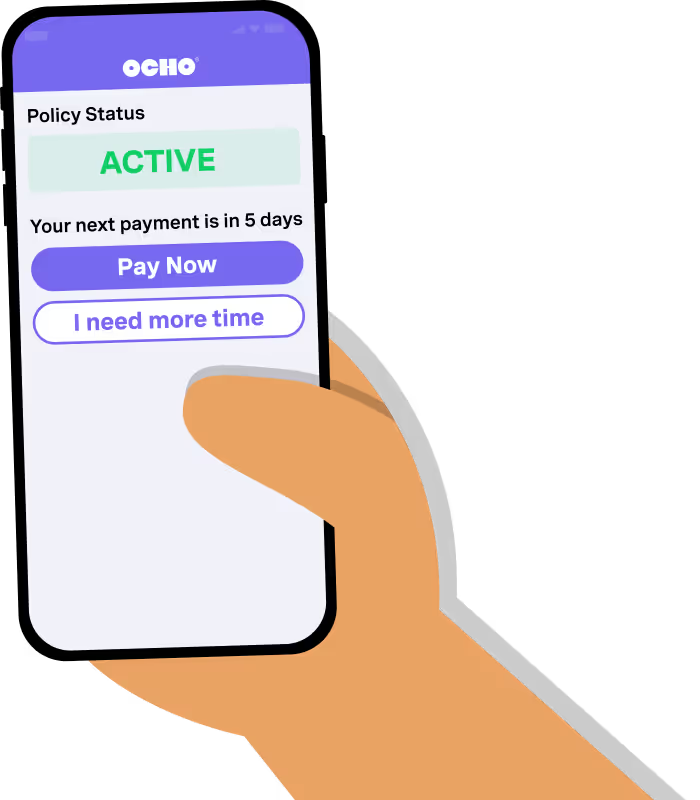
OCHO Solution: That’s why we finance your policy for you (interest-free), so we make sure you always pay on time. And, you can get more time to pay (for free!) whenever you need it.
🪙Payment plans: Most of the time, you can afford your policy, you just can’t afford to pay it all in one go, or in an awkward payment schedule that doesn’t fit your life. The most insurance companies will do is split your payments into monthly payments, and charge you an extra 3-5% on top of each transaction.
OCHO Solution: We give you a custom payment plan that lines up to your paycheck cycle, so you never have to worry about missing a payment again.
🚗Clean driving record: Maintaining a clean driving record delivers safe driver discounts up to 15% and prevents premium increases that can last for years. Traffic violations and accidents can significantly impact your car insurance rates, with some violations affecting your premiums for 3-5 years. The investment in safe driving pays dividends through lower insurance costs over time.
OCHO Solution: OK we can’t help you here, this one’s on you.
💰Pay-in-full: Paying for your full policy can save you up to 14% on your premiums, according to our experts. This has been a luxury out of reach for many, until now.
OCHO Solution: We pay your full policy for you, interest-free! You get the discount, AND get to keep your every two weeks payment plan. It’s only available in select states and with select carriers for now, but we are working hard to expand this offer.
💳Credit score: Having a low credit score can make your premiums jump as insurers see you as high-risk and more likely to claim from them or miss payments. It can be difficult to build your score, that’s why we’re here to help with that too.
OCHO Solution: With every on-time payment you make with us, you can build your credit score! That’s because we are giving you a loan to buy your car insurance. Each time you complete a policy with us, you get approved for a new credit line, increasing your credit score.
You can consider usage-based insurance programs that monitor your driving habits through telematics devices or mobile apps. These programs can provide savings of 10-30% for drivers who demonstrate safe driving behaviors, maintain reasonable speeds, and avoid hard braking. The data collected helps insurance companies offer more personalized pricing based on actual driving patterns rather than demographic assumptions. However, it has been evidenced that this can actually increase rates for some people, so just be careful. Read more about pay-as-you-go car insurance in our extensive article.
Bundling your home and auto insurance can provide substantial savings, typically offering discounts of 10-25%. Most major insurance companies offer multi-policy discounts that reward customers for consolidating their coverage. This approach not only saves money but also simplifies your insurance management by dealing with a single insurance company for multiple policies.
Insurance companies compete by offering discount programs that can significantly reduce your policy premium. Understanding available discounts helps you maximize your savings while maintaining quality car insurance coverage.
The multi car discount applies when you insure more than one car on the same policy, providing savings of 5-25%. This discount recognizes that multi-vehicle households often represent stable, long-term customers. If you have several factors working in your favor, such as multiple vehicles and a clean driving record, you can stack discounts for even greater savings.
Good student discounts reward young drivers who maintain good grades with savings up to 20%. Students who maintain a B average or higher demonstrate responsibility that insurance companies correlate with safer driving habits. This discount can provide significant relief for families facing high premiums for teen drivers.
Completing a defensive driving course can earn you a 5-10% discount while also improving your driving skills. Many states offer approved courses that satisfy insurance company requirements, and some courses can even remove points from your driving record. The time investment often pays for itself through reduced premiums.
Military and federal employee discounts provide savings up to 15% for those who serve or have served in the armed forces or government. Companies like USAA specialize in serving military families, while other insurers offer competitive rates to recognize the service of these customers.
Low mileage discounts benefit drivers who travel under 7,500 miles annually. If you work from home, live in a walkable area, or simply don’t drive much, this discount recognizes your reduced risk exposure. Some companies now use telematics to verify mileage automatically rather than relying on annual estimates.
Safety features discounts apply to vehicles equipped with anti-theft devices, airbags, electronic stability control, and other safety features. Modern cars often qualify for multiple safety discounts, as manufacturers increasingly include these features as standard equipment. When shopping for a new vehicle, consider how safety features might impact your insurance costs.
Understanding what drives insurance pricing helps you make informed decisions about coverage and identify opportunities to save money. Insurance companies use sophisticated algorithms that consider numerous factors when calculating your car insurance rate.
Age and gender significantly influence insurance rates, with drivers under 25 paying 50-100% more than older drivers. Young drivers lack experience and statistically have higher accident rates, leading to higher premiums. Rates typically decrease notably after age 25 and remain relatively stable until drivers reach their 70s, when rates may begin to increase again.
Your location affects insurance costs due to varying rates of accidents, theft, vandalism, and litigation. Urban areas typically cost 15-30% more than rural locations because of higher traffic density, crime rates, and repair costs. Even moving to a different zip code within the same city can impact your premiums.
Vehicle type plays a major role in insurance pricing. Sports cars and luxury vehicles cost more to insure due to higher repair costs, theft rates, and the driving behaviors they may encourage. Conversely, sedans, minivans, and compact cars associated with lower risk profiles typically offer more affordable coverage options.
Credit score impacts insurance rates in most states, with poor credit potentially increasing rates by 50-100%. Insurance companies have found statistical correlations between credit scores and claim frequency, though some states have restricted or banned the use of credit in insurance pricing. Maintaining good credit helps keep insurance costs manageable.
Your driving history remains one of the most significant factors affecting rates. Accidents and traffic violations can increase your premiums for 3-5 years, with serious violations like DUI having even longer-lasting effects. A single at-fault accident can increase your rates by 20-40%, making safe driving crucial for affordable car insurance.
.png)
Whether you need basic auto coverage or full coverage car insurance, OCHO's cheap auto insurance model offers:
💰 No Coverage Gaps: OCHO’s policies stay active, so you’re always protected, even during tough times.
💰 Smaller Payments, Every Two Weeks: Avoid the stress of lump-sum premiums with manageable, predictable payments that sync with your pay day.
💰 Path to Lower Rates: Insurance companies penalize drivers with lapses in coverage by categorizing them as high-risk, leading to inflated premiums. OCHO helps you break free from this cycle by keeping you consistently covered. After 12 months of uninterrupted coverage, you can graduate out of the high-risk category, unlocking access to better premiums and long-term savings—an industry secret designed to keep people with limited resources stuck in higher-cost plans.
It’s not just about staying insured today—it’s about creating a better future for your finances.
Several major insurers consistently offer competitive rates for drivers seeking affordable auto insurance. While the cheapest option varies based on individual circumstances, these companies frequently appear among the most affordable choices for budget-conscious drivers.
GEICO maintains its reputation for competitive pricing with an average annual rate of $1,245. Known for their direct-to-consumer model and 24/7 customer service, GEICO offers extensive discount programs and digital tools that make managing your policy convenient. Their advertising emphasizes savings, and they often deliver on that promise for many driver profiles.
Progressive offers an average rate of $1,312 and stands out with innovative tools like their Name Your Price feature and Snapshot usage-based insurance program. Progressive’s comparison tool shows competitors’ rates alongside their own, demonstrating confidence in their pricing. Their roadside assistance and flexible payment options add value beyond just low rates.
State Farm, with an average rate of $1,355, combines competitive pricing with the largest market share and extensive local agent network. While slightly higher than some competitors, State Farm’s financial stability, comprehensive coverage options, and personalized service through local agents provide value that many customers appreciate.
USAA offers the lowest average rates at $1,124, but availability is restricted to military members and their families. For those who qualify, USAA consistently provides exceptional value, superior customer service, and specialized coverage options designed for military lifestyles. Their long-term commitment to serving military families shows in their competitive rates and great customer service.
Nationwide rounds out the top affordable options with an average rate of $1,398. They offer unique programs like vanishing deductible, which reduces your deductible for every year of safe driving. Their broad coverage options and local agent network provide personalized service while maintaining competitive rates.
Choosing the right combination of coverage types ensures you have adequate protection while managing costs effectively. Understanding what each type of coverage protects helps you make informed decisions about your auto insurance coverage needs.
Liability coverage forms the foundation of auto insurance and is required in all states except New Hampshire. This coverage pays for bodily injuries and property damage you cause to others in an accident. However, state minimum requirements often fall short of providing adequate protection, as the average bodily injury claim was $22,734 in 2021, far exceeding many state minimums.
Collision coverage pays for damage to your vehicle regardless of fault, protecting your investment in accidents with other vehicles or objects. While not legally required, lenders typically mandate collision coverage for financed or leased vehicles. The coverage pays up to your car’s actual cash value minus your deductible.
Comprehensive coverage protects against non-collision events like theft, vandalism, weather damage, and animal strikes. Like collision, it’s often required by lenders but becomes optional once you own your car outright. For older vehicles with low value, dropping comprehensive might make financial sense.
Uninsured and underinsured motorist coverage protects you when the other driver lacks adequate insurance. Given that a significant percentage of drivers carry only state minimums or drive without insurance entirely, this coverage provides crucial protection for medical expenses and vehicle damage when other drivers can’t pay.
Personal injury protection (PIP) covers medical expenses for you and your passengers regardless of fault. Required in no-fault states, PIP can cover medical bills, lost wages, and other accident-related expenses. Even where not required, PIP can provide valuable protection against high medical costs following serious accidents.
Insurance requirements vary dramatically across states, affecting both the cost and adequacy of cheap auto insurance options. Understanding your state’s requirements helps ensure you meet legal obligations while identifying opportunities to enhance protection.
Florida requires $10,000 in personal injury protection and $10,000 in property damage coverage but notably doesn’t require bodily injury liability unless you’ve had certain violations. This unique structure can make Florida insurance relatively inexpensive for clean-record drivers but may leave gaps in protection.
California mandates $15,000 per person and $30,000 per accident for bodily injury liability, plus $5,000 for property damage. While these minimums are relatively low, California’s high cost of living and expensive medical care mean actual claims often exceed these amounts significantly.
Texas requires higher minimums with $30,000 per person and $60,000 per accident for bodily injury, plus $25,000 for property damage. These more substantial requirements provide better protection but result in higher minimum premiums compared to lower-requirement states.
New York takes a comprehensive approach requiring $25,000/$50,000/$10,000 liability coverage plus personal injury protection and uninsured motorist coverage. While this increases the cost of minimum coverage, it provides more comprehensive protection for drivers and accident victims.
Most states fall somewhere between these examples, with minimum requirements that provide basic protection but may not cover the full cost of serious accidents. Drivers should consider their assets, potential liability exposure, and local costs when deciding whether state minimums provide adequate coverage.
While saving money on car insurance is important, choosing the absolute cheapest option can expose you to significant risks that outweigh the premium savings. Understanding these risks helps you make informed decisions about balancing cost and coverage.
Poor customer service and slow claims processing often characterize ultra-cheap insurance providers. When you need to file a claim, responsive service becomes crucial for getting your life back to normal quickly. Companies that compete solely on price may cut costs by reducing customer service staff or claims processing resources.
Limited coverage options and extremely low policy limits can leave you financially vulnerable in serious accidents. The average property damage claim was $5,314 in 2021, and bodily injury claims averaged $22,734, far exceeding many state minimum requirements. Choosing bare-minimum coverage saves money upfront but can result in massive out-of-pocket expenses after accidents.
Financial instability poses another risk with some budget insurers. Checking AM Best ratings before choosing an insurance company helps ensure they have the financial strength to pay claims when needed. A company’s low rates won’t help if they can’t fulfill their obligations during claim time.
Hidden fees and unexpected premium increases at renewal can make initially cheap policies expensive over time. Some companies offer attractive introductory rates but implement significant increases after the first term, counting on customer inertia to maintain business despite higher costs.
Difficulty reaching agents or getting support when needed frustrates customers and can delay important policy changes or claim processing. Quality car insurance includes accessible customer support when you need assistance with your policy or have questions about coverage.

Effective comparison shopping requires more than just looking at the bottom-line premium. A systematic approach to comparing insurance quotes ensures you find the best combination of price, coverage, and service for your needs.
Getting quotes from at least 3-5 different insurance companies provides a good sample of available rates and coverage options. Each company uses different underwriting criteria and risk models, so rates can vary significantly even for identical coverage. Online quote tools make this process quick and convenient.
Comparing identical coverage limits and deductibles ensures you’re making apples-to-apples comparisons. Insurance companies may suggest different coverage levels, but standardizing these factors across quotes helps you focus on actual price differences rather than coverage variations.
Looking beyond price to consider customer service ratings and financial strength helps ensure you choose a company that will serve you well long-term. Resources like J.D. Power customer satisfaction ratings and AM Best financial strength ratings provide objective measures of company quality.
Reading policy details carefully reveals important exclusions and limitations that might not be obvious from basic quote information. Some companies exclude certain types of damage or have stricter definitions of covered events, affecting the actual value of the coverage.
Checking available discounts and how they apply to your specific situation can reveal additional savings opportunities. Some companies may offer better base rates while others excel at discount programs, so understanding the full picture helps identify the best deal for your circumstances.
Using reputable online comparison tools like Insurify, Compare.com, or NerdWallet streamlines the shopping process while providing access to multiple insurers. These platforms often show real-time rates and can highlight discounts you might not know about.
Drivers with poor credit, accident history, or other risk factors face higher premiums but can still find affordable coverage options. Specialized strategies help high-risk drivers minimize costs while meeting legal requirements and protecting their financial interests.
The first one? Choose OCHO! We specialize in supporting high-risk drivers to buy and keep the coverage they need. Our whole company is built around the needs of high-risk drivers, because we believe everyone has the right to protect themselves properly.
Consider non-standard insurers like The General or Safe Auto that specialize in high-risk drivers. While these companies may not offer the lowest rates for preferred customers, they often provide competitive options for drivers who struggle to find affordable coverage with traditional insurers.
State-sponsored high-risk insurance pools provide coverage for drivers who can’t obtain insurance in the voluntary market. While typically more expensive than voluntary market coverage, these programs ensure that all drivers can meet state requirements for insurance coverage.
Taking defensive driving courses can improve your driving record and qualify you for discounts while potentially removing points from your license. Many states offer approved courses that satisfy both court requirements and insurance company discount programs.
Considering older, less expensive vehicles can reduce coverage costs significantly. High-value cars require expensive comprehensive and collision coverage, while older vehicles might only need liability coverage once loans are paid off. The money saved on premiums might outweigh the reduced protection for low-value vehicles.
Working on improving your credit score over time can lead to substantial premium reductions in states that allow credit-based pricing. While credit improvement takes time, the long-term benefits extend beyond insurance to all areas of financial life.
Regular review of your insurance coverage ensures you maintain appropriate protection while identifying opportunities to save money. Several life events and time intervals trigger the need for coverage evaluation.
Reviewing coverage annually or during major life changes helps ensure your policy remains aligned with your current needs and circumstances. Insurance rates change frequently, and your personal situation evolves, making regular review essential for optimal coverage and pricing.
After paying off a car loan, you gain the freedom to adjust comprehensive and collision coverage based on your vehicle’s current value. If your car’s value has dropped significantly, the cost of full coverage might exceed the potential benefit, making liability-only coverage more economical.
Moving to a new state or zip code can dramatically affect your insurance rates due to different requirements, accident rates, and costs. Some moves result in savings, while others increase premiums, making rate shopping important after relocation.
Major life events like marriage, divorce, or adding teen drivers change your household risk profile and coverage needs. Marriage often results in discounts, while adding young drivers typically increases premiums significantly. Understanding these impacts helps you budget appropriately and explore available discounts.
When your vehicle’s value drops below $4,000-$5,000, consider whether comprehensive and collision coverage remain cost-effective. If annual premiums exceed 10% of the vehicle’s value, dropping these coverages might make financial sense, especially if you have savings to replace the car if needed.
Before policy renewal, shop for better rates to ensure you continue getting the best deal available. Loyalty doesn’t always pay in insurance, and companies regularly adjust their pricing strategies, potentially making competitors more attractive options.
What is the cheapest car insurance company?
If you’re high-risk, the cheapest car insurance is to get it through OCHO. We do everything to help you buy your car insurance, from low or no deposits, to flexible payments and more time to pay when you need it. If you stay with us, you’ll get even more great benefits like no deposit on your next policy and a lot of our customers find their insurance prices actually go down after their first policy.
The cheapest car insurance company varies significantly based on individual factors like age, location, driving record, and vehicle type. USAA typically offers the lowest rates but is only available to military members and families. Among companies available to all drivers, GEICO and Progressive frequently offer competitive rates, though State Farm, Nationwide, and regional insurers may be cheaper for specific driver profiles. The key is comparing quotes from multiple companies since the cheapest option changes based on your unique circumstances.
How much car insurance do I actually need?
While state minimums provide legal compliance, they often fall short of adequate protection. Most financial experts recommend liability limits of at least $100,000 per person and $300,000 per accident for bodily injury, plus $100,000 for property damage. If you have significant assets to protect, consider even higher limits or an umbrella policy. For vehicle coverage, comprehensive and collision make sense for newer cars or when required by lenders, but may not be cost-effective for older vehicles worth less than $4,000-$5,000.
Can I get car insurance with bad credit?
Yes, you can get car insurance with bad credit, though you’ll likely pay higher premiums in states that allow credit-based pricing. Some companies weigh credit scores less heavily than others, making comparison shopping especially important for drivers with poor credit. Companies like The General and Safe Auto specialize in non-standard risks, while some traditional insurers offer competitive rates despite credit issues. A few states, including California, Hawaii, Massachusetts, and Michigan, prohibit or limit the use of credit scores in insurance pricing. Most of our OCHO customers have no or bad credit ratings, but we still approve them for our interest-free loans. Try us today!
Is it worth paying for full coverage on an old car?
Full coverage on an old car may not be cost-effective if annual premiums exceed 10% of the vehicle’s value. For example, if your car is worth $3,000 and comprehensive/collision coverage costs $400 annually, you might consider dropping these coverages. However, keep liability coverage as required by law. Consider your ability to replace the vehicle out-of-pocket, the car’s importance to your daily life, and whether you have savings for a replacement when making this decision.
How often should I shop for new car insurance?
You should shop for new car insurance at least annually, preferably 30-60 days before your current policy expires. Additionally, compare rates after major life changes like moving, marriage, divorce, adding drivers, or significant changes in your driving record. Insurance companies regularly adjust their pricing strategies and may offer new discounts, making regular comparison shopping essential for maintaining the best rates. Even if you’ve been satisfied with your current insurer, competitor rates may have become more attractive since your last shopping period.
Compare & get covered fast
Find and compare auto insurance in minutes, and get your free credit score.
Choose when you pay
Select payment dates that line up with your payday.
Manage everything in one place
Track your policy, manage payments, and request a payment extension right from your dashboard.




.svg)