
If you’ve just been told you need an SR22, you’re probably staring at your new insurance quote wondering if there’s been some kind of mistake. That number can’t be right, can it?
Unfortunately, it probably is. SR 22 insurance is one of those things that sounds simple on paper, just a form your insurer files with the state, but in reality, it’s the gateway to a whole new world of higher premiums and limited options.
Here’s the thing most people don’t realize: the SR22 form isn’t what’s costing you money. It’s what that form represents to every car insurance company out there. You’ve been flagged as a higher risk, and insurers are going to charge you accordingly.
But don’t panic yet. Understanding exactly how SR22 insurance cost works, and what you can do about it, can save you thousands over the next few years. Let’s break it all down.
Let’s clear up the biggest misconception first: an SR22 is not an insurance policy. It’s a certificate of financial responsibility that your insurance provider files with the state’s DMV after certain driving violations. Think of it as a digital handshake between your insurer and the department of motor vehicles, proving you’ve got at least the state’s minimum requirements for liability coverage.
The SR22 filing itself is cheap, a one time fee of around $15 to $50 in most states during 2024. That’s it. The form isn’t the problem.
The problem is what triggered it. When your insurer files an SR 22, they’re essentially putting a flag on your account that says “this driver had a serious issue.” Common triggers include:
Each of these situations tells insurance companies that you’re statistically more likely to file expensive claims. And when insurers see risk, they see dollar signs.
Here’s another wrinkle: because your insurer files the SR22 with the state, they’re also legally required to notify the state’s department of motor vehicles immediately if your policy lapses or gets canceled. This is done through a form called an SR-26. The moment that notification hits the DMV, your license is at risk of suspension.
This monitoring arrangement makes insurers extra cautious. They know that if you cancel, they have to report it, and that paperwork creates liability and administrative costs. So they price SR22 policies accordingly.
One more thing to know: not every insurance company offers SR 22 filings. Some major carriers simply won’t deal with the paperwork or the risk profile. If your current car insurance company doesn’t file SR22s in your state and insurance company options are limited, you may be forced to switch to a high-risk specialist. That transition alone can bump your costs up even further.
Let’s talk real numbers. In 2026, typical SR22 drivers pay somewhere between $1,800 and $5,600 per year for liability-only coverage. The average lands around $3,000 annually after a DUI, though your mileage will definitely vary depending on where you live, who you’re insured with, and exactly what you did to end up here.
You can potentially get SR22 insurance with no downpayment via OCHO, it's just available in selected states for now, so be sure to check availability when you get the quote.
The SR22 filing fee? That’s still just $25–$50 once per policy term. It’s almost nothing compared to what you’re paying in increased premiums, which will follow you for the entire 3–5 year SR22 period.
Here’s how this plays out in real scenarios:
And those are liability-only numbers. If you’re driving a financed or leased vehicle (say, a 2021 model that your lender requires full coverage on), you’re adding collision and comprehensive to the mix. In high-cost states, that full coverage SR22 policy can easily exceed $6,000–$7,000 per year.
The spread is enormous, which is exactly why shopping around matters so much. The difference between the cheapest and most expensive quote for the same driver can be $1,500+ annually.

State regulations, local claim costs, and legal requirements create massive differences in what you’ll pay for SR22 insurance across the U.S. What’s considered a “reasonable” rate in Idaho would be a bargain in California, and what Californians pay would shock drivers in the rural Midwest.
Here’s the general pattern:
Low-cost states like Idaho, Maine, and Ohio typically see average SR22 costs just above $2,100 per year for liability coverage after a DUI. These states tend to have lower population density, fewer uninsured drivers, and less aggressive litigation environments.
Mid-range states such as Texas, Illinois, and Pennsylvania usually fall in the $2,800–$3,500 range. You’re dealing with larger urban areas, more traffic, and higher claim frequency.
High-cost states like California, Florida, and Michigan can push well beyond $5,500 annually. These states combine strict DUI laws, dense urban traffic, heavy litigation, and expensive medical costs into a perfect storm of insurance premiums.
Some states don’t use the SR22 at all, or use alternatives that cost even more. Virginia and Florida, for example, may require an FR-44 instead of an SR22 for certain serious driving violations. The FR-44 mandates much higher liability coverage. Iin Virginia, that means $50,000 per person, $100,000 per accident for bodily injury, and $40,000 for property damage. That’s double the state’s minimum requirements, and your insurance rates reflect it.
Regional patterns at a glance:
Requirements vary significantly, so always check your state’s specific rules before assuming what you’ll pay.
Here’s where things get interesting: the same driver with the same violation can see quotes that differ by $1,000 or more per year depending on which auto insurance company they call. Insurance pricing isn’t standardized, each insurer uses its own formula, and some are simply more forgiving of certain risk profiles than others.
Based on 2024 market data, here’s roughly what you might expect from major carriers for an average DUI-related SR22 policy:
Some mainstream companies may non-renew or decline drivers who need an SR22, forcing you to look at high-risk specialists. These carriers, companies that specifically focus on drivers with serious driving violations, may have higher base rates, but they also offer more flexible approval processes when other doors have closed.
What should you actually do?
First, check with your current insurer about adding an SR22 to your existing auto insurance policy. If your rates jump more than 50–80%, it’s time to get fresh quotes. Aim to collect quotes from at least 5–10 other carriers that explicitly offer SR 22 filings.
Don’t just chase the absolute lowest rate, either. An insurance company with experience handling SR22 filings can save you headaches: faster electronic filing, fewer delays with the DMV, and smoother renewals. Sometimes paying an extra $100 per year for better service is worth it when you’re dealing with the stress of maintaining driving privileges.
Check if you can get covered through OCHO. We offer low down payments and easy installment plans, so you can stay on top of your payments - essential if you need to make sure your policy doesn’t lapse.
The violation that landed you here is just one piece of the puzzle. Insurers use a complex formula with several factors to calculate your SR22 insurance premiums. Understanding what goes into that equation can help you identify where you might be able to save.
Violation-related factors:
Demographic factors:
Vehicle-related factors:
Geographic and credit factors:
Each insurer weighs these factors differently, which is exactly why quotes vary so much. Two insurance companies looking at the same driver might reach completely different conclusions about how risky you are.
Let’s be crystal clear: the premium increase comes from the underlying violation, not from the SR22 form itself. The SR22 is just the state’s way of keeping tabs on you—it’s the DUI, the reckless driving charge, or the multiple traffic violations that really move the needle.
That said, the increases can be substantial. Many drivers see their insurance rates jump by 60–80% after a serious offense requiring an SR22. In extreme cases, like a DUI in North Carolina premiums can spike by more than 300%.
Here’s a concrete example:
A driver paying $120 per month for standard car insurance in 2023 might see that jump to $250–$350 per month once a 2024 DUI and SR22 requirement are added. That’s an extra $1,500 to $2,700 per year.
Not every situation is that dramatic. Smaller violations can produce more modest, though still painful—increases:
The good news? These surcharges don’t last forever. As time passes without new violations—say, three claim-free years after the SR22 starts, many insurers gradually remove surcharges and lower your rate closer to standard pricing. By year five with a clean driving record, you may see your rates drop significantly.
Not everyone who needs an SR22 actually owns a car. Maybe you sold your vehicle after a DUI, or you live in a city where owning a car doesn’t make sense. Perhaps you drive occasionally using a borrowed car or rental. Whatever the reason, you still need to satisfy the SR22 requirement to restore or keep your license.
That’s where non owner SR22 policies come in. These are liability-only policies designed for people who don’t own a vehicle but still need proof of financial responsibility on file with the state.
The cost advantage: Non owner car insurance with an SR22 is typically cheaper than a standard owner policy. You’re looking at roughly $600–$1,800 per year in many states, depending on the severity of your violation. That’s potentially $1,000+ less than what you’d pay if you owned a car.
Who’s this right for?
Important limitations to understand:
Non owner SR 22 policies are a smart solution for the right situation, but they’re not a loophole. Be honest about your driving habits when applying, or you could end up with coverage gaps when you need protection most.
Nobody wants to pay more than necessary, especially when you’re already facing higher premiums for the next three years. Here’s a practical checklist for reducing your SR22 insurance cost over the required period.
Shop aggressively and often:
Adjust your coverage strategically:
Pursue every available discount:
Learn more about ways to save on car insurance
The most powerful cost-reduction strategy:
Keep a clean driving record after the violation. No speeding tickets, no at-fault accidents, and every payment on time. This is the single most effective way to lower SR22 costs year over year. Insurance companies reward consistent, responsible behavior—even from drivers who made a mistake in the past.
Getting a free auto insurance quote from multiple providers takes maybe 30 minutes and could save you hundreds of dollars. It’s worth the effort.
Most states require SR22 filings for about three years from the date of license reinstatement or conviction. Some states or offenses extend that to five years or more. The exact time period depends on state laws and what you did to trigger the requirement.
Here’s an important distinction that trips people up: the SR22 requirement and the violation’s impact on your driving record aren’t always the same length. For example, a DUI might stay on your motor vehicles record for up to 10 years in California, even after the SR22 filing requirement ends at year three. That lingering record can still affect your rates, though typically less severely once the SR22 itself is gone.
When your SR22 period ends:
Let’s say you got a DUI in 2024 and your state requires three years of continuous coverage. In 2027, assuming you’ve maintained your insurance policy without any lapses:
The critical warning:
Whatever you do, don’t cancel or let your policy lapse before the SR22 period ends. If your coverage terminates even briefly, your insurer files an SR-26 with the DMV. That triggers a driver’s license suspension and can restart your SR22 timeline from zero. All that time and money you invested? Potentially wasted.
The light at the end of the tunnel:
After the SR22 is removed and several violation-free years pass, many drivers eventually qualify again for standard or even preferred auto insurance rates. It takes patience, but the system does allow you to work your way back to normal pricing. Drive legally, pay your premiums on time, and the insurance industry will gradually start to trust you again.
Can I switch insurance companies while I still have an SR22 requirement?
Yes, you absolutely can, and it might save you money. However, timing is critical. You must ensure your new insurance provider files a replacement SR22 with the state before your old policy cancels. Even a one-day gap in coverage can trigger an SR-26 notification to the DMV, leading to license suspension and potentially restarting your SR22 period. Coordinate the transition carefully: have your new policy active and the new SR22 filed before canceling anything.
Does paying my SR22 insurance in full for 6 or 12 months lower the cost?
Often, yes. Many insurers offer a paid-in-full discount or waive installment fees when you pay for the entire term upfront. This can save 5–10% compared to monthly payments. If you have the cash available, paying in advance is one of the easiest ways to reduce your overall SR22 insurance cost. Just make sure you’re comfortable committing to that insurer for the full term.
Will my SR22 insurance cost go down if I move to a different state?
It can, but it’s not automatic. Moving from a high-cost state like California to a lower-cost state in the rural Midwest could reduce your premiums significantly. However, the SR22 obligation usually follows you. You’ll need to file an SR22 in your new state (and potentially maintain one in your old state until their requirements are met). Both states’ rules apply, and you’ll need to work with your new insurer to ensure compliance with each state’s department requirements.
Does SR22 insurance cost more if I add another driver to my policy?
It depends on the driver. Adding someone with their own tickets, accidents, or young age will likely raise your total premium - possibly by a lot. In some cases, it’s actually cheaper to keep high-risk household members on separate policies rather than combining them. Get quotes both ways before deciding. Adding a spouse with a clean driving record, on the other hand, might actually help your rates through multi-driver discounts.
How soon after my violation will my SR22 rates start to drop?
Most insurers begin easing surcharges after about 3 years of clean driving, with more significant drops around years 3–5 post-violation. The exact timeline varies by company, state, and whether any new violations or other penalties appear on your record during that time. The best thing you can do is drive carefully, avoid any additional fees or tickets, and shop for new quotes annually. Each year without an incident moves you closer to normal rates.
Compare & get covered fast
Find and compare auto insurance in minutes, and get your free credit score.
Choose when you pay
Select payment dates that line up with your payday.
Manage everything in one place
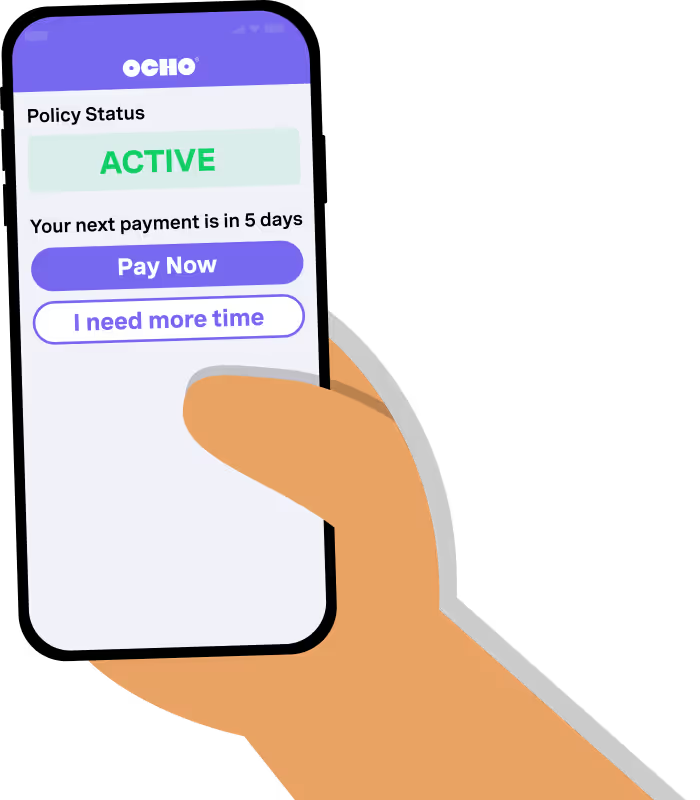
Track your policy, manage payments, and request a payment extension right from your dashboard.




.svg)