
If you've recently been in a crash or filed a claim, you're probably wondering how long it's going to follow you around. Here's everything you need to know about how long insurance claims stay on your record and what you can do about it.
Most auto and home insurance claims stay on your insurance record for five to seven years, not just three. The clock starts on the date of the incident-whether that's a car accident or property loss-whether the damage was covered by the policy or not, not when the claim is fully paid out.
Here's the breakdown: minor car accidents and small claims often affect pricing for three to five years, while bodily injury or large property losses typically stay relevant for the full five years or more. Different insurance providers may look back different periods. Some only apply surcharges for three years but still underwrite based on five to seven years of claims history.
Your driving record and your insurance claims record are separate systems with different rules and different retention periods. Driving records are managed by state departments like the DMV and show traffic violations, moving violations, and reportable car accidents. Insurance records reflect claims filed and their impact on rates, tracked through industry databases.
Here's a concrete example: in many states, a speeding ticket or minor crash may stay on dmv records for three years. But that same car insurance claim may be visible to insurers for up to seven years. Insurance companies may keep accident records longer than DMV records, which is why an accident can drop off your driving record but still influence new quotes.
If most accidents fall off your driving record after three years, why do insurers still ask about the past five to seven? Because they use broader claims databases, not just DMV records. Insurance companies may review accident history for up to seven years through these systems.
Many insurance companies surcharge only for the first three years after a crash but still consider older claims for risk profiling and eligibility. Applications often ask about "any accidents, claims, or violations in the last five years" to match what they'll find when they pull your history. Failing to disclose prior claims can lead to denial or policy cancellation for misrepresentation.
Insurers don't rely only on your word-they access national databases. Insurers track personal claims history using databases like CLUE and A-PLUS. Insurance claims are recorded in the CLUE database for up to seven years.
The CLUE report tracks auto, home, and other personal lines claims. Typical data stored includes: policyholder name, address, insurance company, policy number, date of loss, type of loss, amount paid, and fault determination. The A-PLUS database serves a similar function for car insurance claims and property losses.
You're entitled to one free copy of your clue report every 12 months from LexisNexis. Review it before shopping for new coverage.
Not all car accidents and insurance claims affect your record the same way, and most car accidents are rated for a shorter period than major losses. Here's how different claim types break down:
Collections of claims may result in denial of insurance coverage. While the clue database may hold records for seven years, many insurers only charge surcharges for the most recent three to five years. Some companies will ignore a single small claim older than three years if you have a clean record, but multiple claims over five years can flag you as higher risk.

Insurers use prior car accidents to predict future claims and set car insurance premiums. At-fault accidents generally lead to higher premiums than not-at-fault ones, and multiple accidents can significantly increase insurance premiums, especially if you already face higher costs because of how your credit score affects car insurance rates. Claims can disqualify you from accident-free discounts for up to five years.
A clean driving history before the accident keeps the increase smaller, so drivers typically pay less than someone with prior incidents. Beyond price, an accident affects eligibility for certain types of coverage, discounts, or can even lead to nonrenewal. Ask your insurance company which claims are still raising your rates and when those surcharges expire.
Both at fault accidents and not-at-fault collisions appear on your claims history, but insurers treat them very differently when pricing coverage. Accidents typically stay on insurance records for three to five years for rating purposes.
Some states restrict surcharges for not-at-fault accidents where the other driver was responsible, but insurers may still track frequency. Example: an at-fault crash in 2022 might affect premiums through 2025–2027, while a not-at-fault claim from a rear-end collision by the other party may stop affecting price sooner but still appear in databases until 2028. Fault can be disputed and sometimes adjusted, which can change how long the accident stay impacts your rate.
Certain types of violations-especially those like DUI or reckless driving-can affect car insurance for much longer than a typical claim. In many states, a DUI can influence your insurance rates for up to 10 years, with rate increases of roughly 70–100%.
A DUI triggers added risk factors like mandatory SR-22 or FR-44 filings and placement with high-risk insurers. Drivers facing a DUI-related insurance issue should consider seeking a free consultation with a lawyer to understand the exact length of long-term impacts on insurance costs.
The question of how long accidents stay on your record also applies to property policies. Home insurance claims stay on record for five to seven years-fire, water damage, theft, liability-all appear on CLUE or A-PLUS reports.
Multiple small home claims in three to five years can raise premiums or cause nonrenewal. Renters and condo insurance claims are also reported and follow the policyholder, not just the address. Before filing small property or minor car insurance claims, weigh the potential five-year effect on rates versus paying out of pocket instead of filing an insurance claim.
Insurance rates may return to normal after three years without incidents, though it depends on your insurer's policies. Some insurers fully remove surcharges after three claim-free years; others gradually reduce the extra charge each policy renews.
A 2023 at-fault car accident might stop raising your price in 2026 or 2028, depending on whether your insurer uses a three- or five-year rating window. "Normal" doesn't always mean your old price-market changes and inflation play a role. Shop around once a major claim ages beyond three to five years, as other companies may treat older claims more leniently.
Before you apply for new coverage, know what's listed under your name. A clue report shows every claim filed under your identity: date, type, amount paid, fault, and the insurance company involved.
Request one free report every 12 months from LexisNexis online, by phone, or by mail. Review carefully for claims that don't belong to you (previous homeowners, relatives at a former address), duplicate entries, and incorrect loss dates, amounts, or fault determinations. Checking your claims record does not count as a claim and does not affect your insurance premiums.
You generally cannot erase legitimate insurance claims before the normal five to seven year retention period. However, you can dispute inaccurate information under the Fair Credit Reporting Act by providing documentation to LexisNexis.
If the reporting company agrees an entry is wrong, they must update or delete it. Even when a claim is valid, insurance companies may stop counting it for rating after five years. If a past claim is still causing coverage problems after that point, a free consultation with an attorney may help determine your options.
You can't erase past incidents, but you can manage how future claims affect your record and premiums by understanding why car insurance is important in real-life situations:
Talk with your insurer before filing small claims to understand how another loss could affect your overall claims history. Bundling car insurance with home or renters coverage can sometimes soften the difference a single claim makes, while knowing how to cancel car insurance properly helps you avoid costly coverage gaps when switching. Always document car accidents thoroughly-photos, police report, witness statements-so fault is assessed correctly, which can determine how long accidents stay on your record.
Most straightforward claims resolve without legal help, but complicated situations may require professional guidance. Scenarios where a free consultation is especially valuable include serious car accidents with injuries or wrongful fault assignment, denied or underpaid claims, and accidents incorrectly listed on your record that are blocking coverage or causing rate increases.
Seek advice early-before giving detailed recorded statements to the other driver's insurance company if you were injured in a serious crash. Many personal injury attorneys offer no-cost consultations to explain options and timelines. Even if you don't need representation, a professional can help you decide how to improve your record over the next three to five years and contact the right parties to resolve disputes.
Claims aren't the only thing insurers look at when they pull your history. Your payment record matters too. If a payment is missed and your policy is canceled for nonpayment, that cancellation and the gap in coverage that follows can show up in your insurance history, much like a claim does. When you go to buy a new policy, insurers can see that lapse, and many will charge you more for it.
A coverage gap can cost you in several ways. You may lose continuous coverage discounts, face higher quotes as a "higher risk" driver, and in some states, driving uninsured can lead to fines, license or registration suspension, or an SR-22 requirement. And if you're in an accident during a lapse, you're paying for the damage yourself. One missed payment can end up costing far more than the payment itself.
That's where OCHO comes in. OCHO is a licensed insurance broker and premium finance lender, built to help you get covered and stay covered.
Lower upfront costs. A high down payment is one of the biggest reasons people delay getting insured or let coverage slip. OCHO offers interest-free loans to cover your insurance deposit, so you can get covered without a large upfront cost.
Payments that match your payday. Instead of trying to line up your bills with a due date that doesn't fit your life, you can choose a flexible payment plan that works around when you get paid, biweekly or monthly.
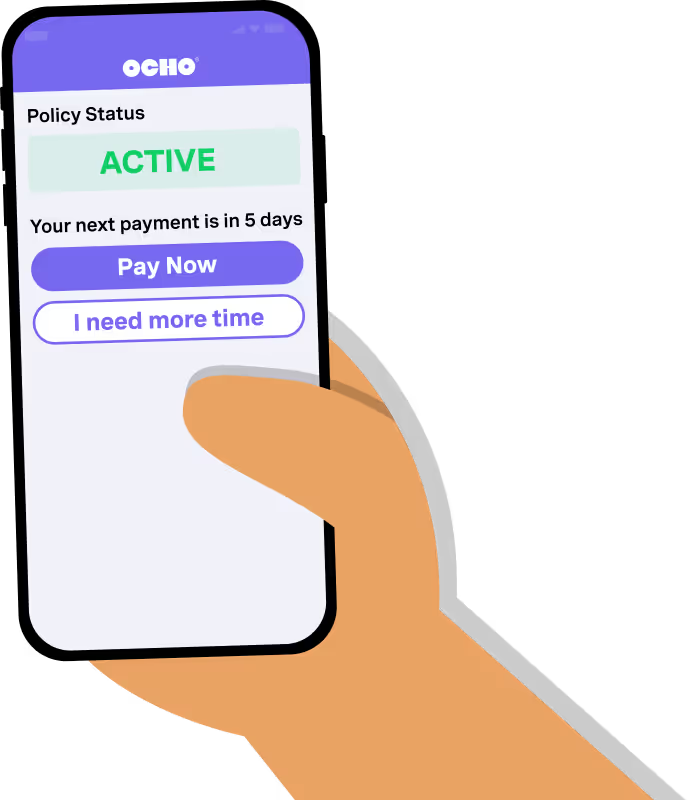
Extra time when you need it. Life happens. If you need more time to make a payment, you can request a payment extension through the OCHO app or the link we send you, so a tight week doesn't turn into a canceled policy.
Build your credit as you go. Every on-time payment helps build your credit, which can work in your favor down the line, including when it comes to your insurance rates.
Find a better rate. Our PriceCheck tool compares options for you, and 58% of customers save $600 using it.
You can't always control when an accident happens, but you can protect yourself from a coverage gap that follows you for years. Staying insured keeps your record cleaner, your rates lower, and you protected on the road.

Insurers usually see only a five to seven year look-back window through databases like CLUE and A-PLUS. Very old claims beyond this period drop off and are no longer used for pricing. However, each insurance company may maintain internal files on past policies you held with them, which can go back further.
Yes. Even if a car accident no longer appears on your DMV driving record, any related insurance claim may still be visible for up to seven years in claims databases. Private settlements with no claim filed may leave no insurance record, but you also lose coverage if injuries appear later. Always be honest on applications-insurers will compare your answers with the claims history they pull.
Changing insurers does not erase your claims record. New insurance providers pull your history from shared databases. However, different companies weigh older accidents differently, so shopping around once your last accident is three to five years old can lead to better rates.
Only incidents reported to an insurance company and opened as a claim end up in claims databases. Police-only reports or minor incidents fixed privately don't automatically show up. But not filing to "protect your record" can backfire if hidden injuries or additional damage surface later.
Some states restrict insurers from surcharging for not-at-fault accidents, but insurers may still track these claims. Even in those states, a pattern of many not-at-fault accidents in five years could influence underwriting decisions. Check your state's regulations or speak with a licensed local agent for specifics.
Compare & get covered fast
Find and compare auto insurance in minutes, and get your free credit score.
Choose when you pay
Select payment dates that line up with your payday.
Manage everything in one place
Track your policy, manage payments, and request a payment extension right from your dashboard.




.svg)