Online car insurance companies let you get quotes, buy a car insurance policy, file claims, and manage coverage entirely through websites and mobile apps. Whether you're looking for affordable coverage with low down payments or want to compare car insurance coverage options from multiple insurers, the digital marketplace makes it faster and less complicated than ever to find the right coverage at a competitive price.
With over 3 million drivers having switched their car insurance in recent years and consumer auto policy shopping up roughly 9.4% year-over-year in mid-2025, the shift toward digital insurance is accelerating. Buying car insurance online saves time and removes high-pressure sales tactics-instant quotes and policy purchases are available 24/7 online, so you can compare on your own terms, without obligation.
Online car insurance companies break down into three meaningful categories, each with a different approach to how you shop, pay, and manage your auto insurance.
These are companies like Root, OCHO, Metromile, and Lemonade that were built for digital from day one. Their focus is on app-based experiences and usage-based pricing models that reward safe driving and low mileage. The Root app measures driving habits to determine insurance rates, while Metromile pioneered pay-per-mile auto insurance using an OBD-II device to track mileage-ideal for drivers who don't put many miles on the road. Lemonade has pushed further, launching an Autonomous Car Insurance product in January 2026 for self-driving vehicles. These insurers often deliver cheaper insurance quotes due to reduced overhead costs, though availability can vary by state.
Established car insurance companies like Geico, Progressive, and State Farm have invested heavily in comprehensive online platforms and digital tools. State Farm's mobile app, for example, lets customers upload photos of damage, access digital ID cards, pay bills, file and track claims, request roadside assistance, and use its "Drive Safe & Save" telematics program. These insurers benefit from broad state licensing, large repair networks, and decades of claims-handling experience. Liberty Mutual offers additional options to customize your protection, and most traditional carriers provide bundling discounts and extensive car insurance coverage options that digital-first companies may lack.
Companies like Esurance sell primarily online, streamlining the digital purchasing and management process by bypassing traditional agents. Esurance, owned by Allstate since 2011, offers features like usage-based insurance through its DriveSense program and SR-22 filings, though its range of optional features is more limited than some competitors and it carries a relatively high level of customer complaints.
OCHO is changing the landscape by offering a fully online experience-from easy, free car insurance quotes to helping you pay for it. Rather than underwriting policies itself, OCHO partners with established carriers and acts as a comparison and binding platform. Its standout innovation is financing the down payment at no interest, enabling drivers to start coverage with little or no upfront cost and flexible payment schedules that align with pay periods. About 58% of users who compare quotes via OCHO's PriceCheck tool save over $600 on average, and real customer reviews highlight how this makes insurance more accessible to real customers who might otherwise struggle with large deposits.
Several reputable companies offer online car insurance, but the key digital features and capabilities below signal a genuinely high-quality online experience. Online car insurance allows you to get quotes and manage claims digitally-here's what separates the best from the rest.
A comprehensive mobile app should let you manage your entire car insurance policy from your phone. Look for apps that provide policy details (coverage limits, deductible amounts, renewal dates), digital ID cards valid in most states, payment processing with autopay options, and claims filing with photo upload. State Farm's app, for instance, includes all of these plus accident detection ("Accident Assistance") and push notifications on claim status. The best apps make it easy to manage coverage for more cars on a single account.
How streamlined the claims filing process is can make the difference between a minor inconvenience and a major headache after a fender bender or serious accident. The best online insurers let you file claims through FNOL (First Notice of Loss) via the app, upload photos or video of damage, and receive real-time claim tracking updates. In 2025, over 26% of repairable auto insurance claims were handled via photo estimating, with results often delivered within 24 hours versus 5–7 days for in-person inspections. Some digital insurers like Clearcover report paying eligible covered claims in as little as 13 minutes.
Digital-specific discounts can lead to significant savings. Safe drivers can save up to $1,200 per year through telematics and safe driving programs that monitor habits like speeding and harsh braking. Multi-car discounts lower premiums for insuring multiple vehicles on one policy. Violation-free drivers receive discounts on their premiums as well. Other opportunities include paperless billing discounts, bundling auto insurance with home or renters coverage, and pay-per-mile pricing for low-mileage drivers. Flexible payment terms and low down payments-like zero down car insurance options from OCHO-can also reduce the financial barrier, even if they don't change the overall price.
The importance of 24/7 digital support options cannot be overstated-accidents don't happen only during business hours. Look for companies that balance self-service tools (chatbots, FAQ centers, app-based claims filing) with the availability of human assistance when things get complicated. Roadside assistance covers towing and jump-start services through many online insurers' apps, accessible any time of day. State regulators require insurers to acknowledge claims communications within specific time windows, so check complaint ratios through your state's insurance department to verify responsiveness.

Comparing quotes helps find the right coverage at the right price, but the decision goes beyond premium alone. Online comparison tools allow viewing quotes from multiple providers simultaneously-just ensure you compare similar coverage levels for accurate quotes.
Financial strength ratings from A.M. Best ensure insurers can pay claims-always verify a company's rating before binding a policy, particularly with newer digital insurers that may still be operating at a loss.
Digital insurers offer cheaper insurance quotes due to reduced overhead costs-no agent commissions, fewer physical offices-and can pass those savings on to drivers. Usage-based and telematics models further reduce premiums for safe, low-mileage drivers. Drivers can save up to $1,200 per year based on driving habits. However, traditional insurers sometimes offer better rates through bundling, loyalty discounts, or broader risk pools. The data shows pricing varies significantly: in one comparison, Root's full coverage premiums came in at roughly $84/month versus Metromile's $201 for a similar profile. The best approach is to compare quotes across both categories with similar coverage levels to see where genuine savings exist.
In most cases, yes. Core auto insurance coverage-liability coverage, collision, comprehensive, and uninsured motorist-is available through online platforms. However, some digital-first insurers carry fewer optional add-ons like accident forgiveness, new car replacement, or diminishing deductibles. Esurance, for example, offers fewer optional features compared to its parent company Allstate. If you need enough insurance to cover specific situations-rideshare driving, classic vehicles, or extensive medical expenses-verify that the online company offers those coverage options before purchasing.
Filing is typically straightforward: (1) Report the incident via app or website, providing date, time, location, and a description. (2) Upload photos or video of the damage from multiple angles, plus a police report if applicable. (3) Receive a claim number and digital assessment-many insurers use AI-powered photo estimation. (4) Track your claim status through the app or portal with real-time updates. (5) Receive payment settlement or coordinate repair through partner shops. Simple claims like a fender bender can be resolved in hours; serious accidents involving injuries, fault disputes, or total loss take longer.
Most online car insurance companies offer 24/7 self-service tools, including app-based claims filing, chatbot assistance, digital ID cards, and roadside assistance requests. State Farm's app, for instance, lets you file and track claims, get towing, and access policy information at any hour. If a company lacks round-the-clock support, you'll likely need to submit a ticket and wait for a response during business hours-a significant drawback when dealing with an accident or theft that happens at night.
The right online car insurance company depends on how you drive, what you need to cover, and how you prefer to manage your policy. Whether you prioritize low rates, no down payment car insurance with $0 upfront, a no obligation quote process, or comprehensive coverage with all the add-ons, the online marketplace gives you the tools to compare side-by-side and make an informed decision. Start by getting quotes from multiple providers, verify that coverage levels match, and choose the insurer that balances price, protection, and digital convenience for your situation.
Compare & get covered fast
Find and compare auto insurance in minutes, and get your free credit score.
Choose when you pay
Select payment dates that line up with your payday.
Manage everything in one place
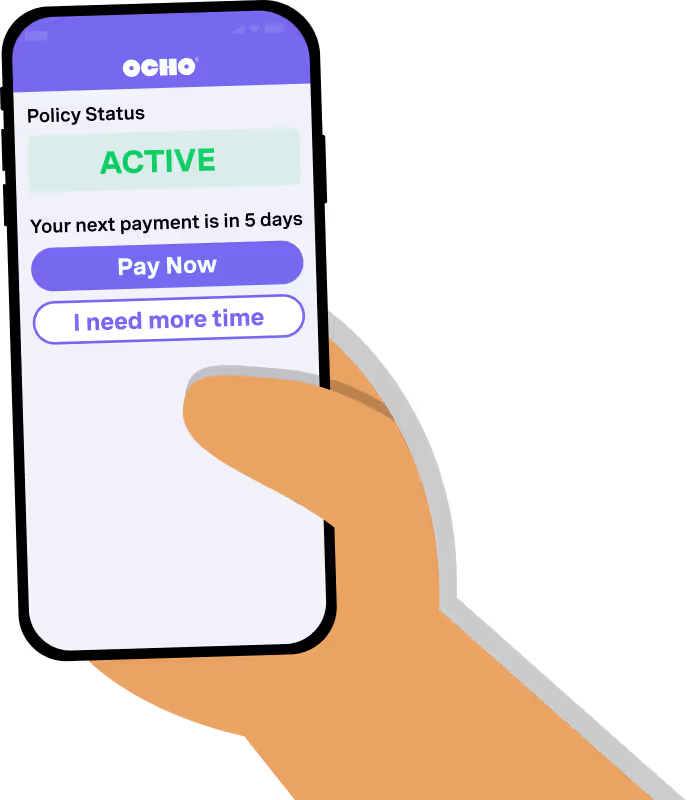
Track your policy, manage payments, and request a payment extension right from your dashboard.




.svg)