A $29 down payment gets your attention. When you’re balancing groceries, gas, rent, and insurance, every dollar matters. Car insurance is legally required in most places, so in an OCHO vs Insurify comparison, the real question for drivers on a tight budget is which option makes it easier to not only get covered, but to stay covered. If you’re balancing groceries, gas, rent, and insurance, every dollar matters—especially if you have an irregular pay schedule, limited savings, or less-than-perfect credit.
But your down payment is only part of the picture. What happens when your next payment is due? Do you have flexibility if payday comes a little later than expected? And how much extra time do you get to catch up if money is tight? This comparison looks at the differences that actually affect affordability and coverage continuity: down payments, payment schedules, grace periods, coverage options, and whether financing can help you avoid a lapse.
That’s where the difference between insurance options really matters. A low starting payment doesn’t necessarily mean more flexibility throughout your policy. For most drivers choosing between OCHO and Insurify, OCHO has the edge because it’s built to help drivers with tight budgets or imperfect credit histories stay covered, with payments every two weeks that line up with payday and up to 14 extra days to pay when you need them.
Because getting covered is one thing. Being able to stay covered is what really counts. And keeping your coverage continuous may also help protect what you pay for insurance in the future.
In this OCHO vs Insurify guide, we compare the two companies side by side, so you can feel confident choosing the car insurance payment plan that fits your life.

Insurify is best known as an insurance comparison website. You enter details about your car and driving history, and it returns auto insurance quotes from multiple insurance companies so you can compare rates in one place. Insurify Car is its weekly-pay car insurance offer, built around a low initial payment.
OCHO is an online car insurance agency and premium finance company, built around a mission to make coverage more fair and accessible for working drivers, as outlined on our About OCHO page. As a licensed broker, OCHO shops top insurance companies for your auto insurance policy. As a lender, it finances your down payment so you can spread the cost in line with payday. OCHO doesn't insure you directly. Your insurance policy is issued by the carrier, and OCHO helps you get it and keep it.
Before you commit, OCHO's PriceCheck AI automatically gets you multiple real final quotes from another top carrier, so you can see whether there's a better deal. It's a smart way to save money without extra shopping on your part.
Both companies let you get car insurance quotes online within minutes, without needing to speak to an agent over the phone. The real difference shows up after you buy.
Insurify Car’s advertised $29 is based on the average of its lowest 10% of initial payments. It isn’t what every customer pays.
OCHO’s comparable $39 figure is also based on the average of its lowest 10% of down payments for liability-only policies. These figures come from different historical samples, so they aren’t identical-driver quotes or guarantees of what you’ll pay.
Your actual quote will depend on your individual circumstances. And while Insurify Car’s lower advertised down payment may make getting insured more affordable upfront, there’s more to consider when choosing a policy. The payment schedule, flexibility when you’re running behind, and the length of your coverage all matter. That’s where OCHO takes a different approach: making it easier to manage a full six-month policy, not just get started with a low initial payment.
In the example below, Insurify Car’s next payment comes seven days after purchase. The OCHO example gives you 11 days before your first scheduled installment.
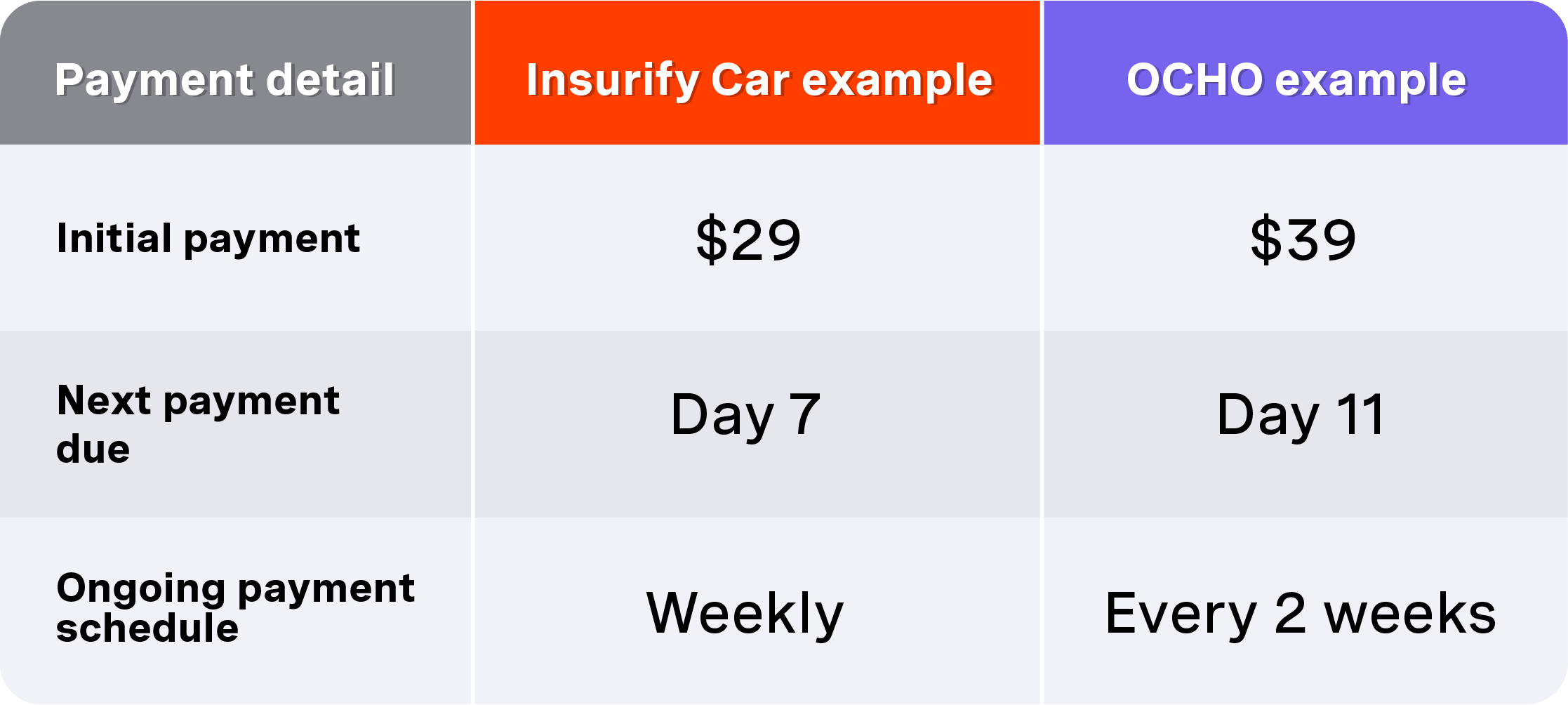
Those extra days can matter if you’re waiting for payday. Always check the dates and amounts in your own payment schedule.
Two policies can have similar upfront costs but very different payment terms. The real difference becomes clear when you can’t make your next payment on time.
Under the weekly-pay arrangement described here, coverage ends after the paid period if the next payment isn’t made. With OCHO, the example includes a 10-day grace period after the scheduled payment date, plus the ability to request up to four additional days.
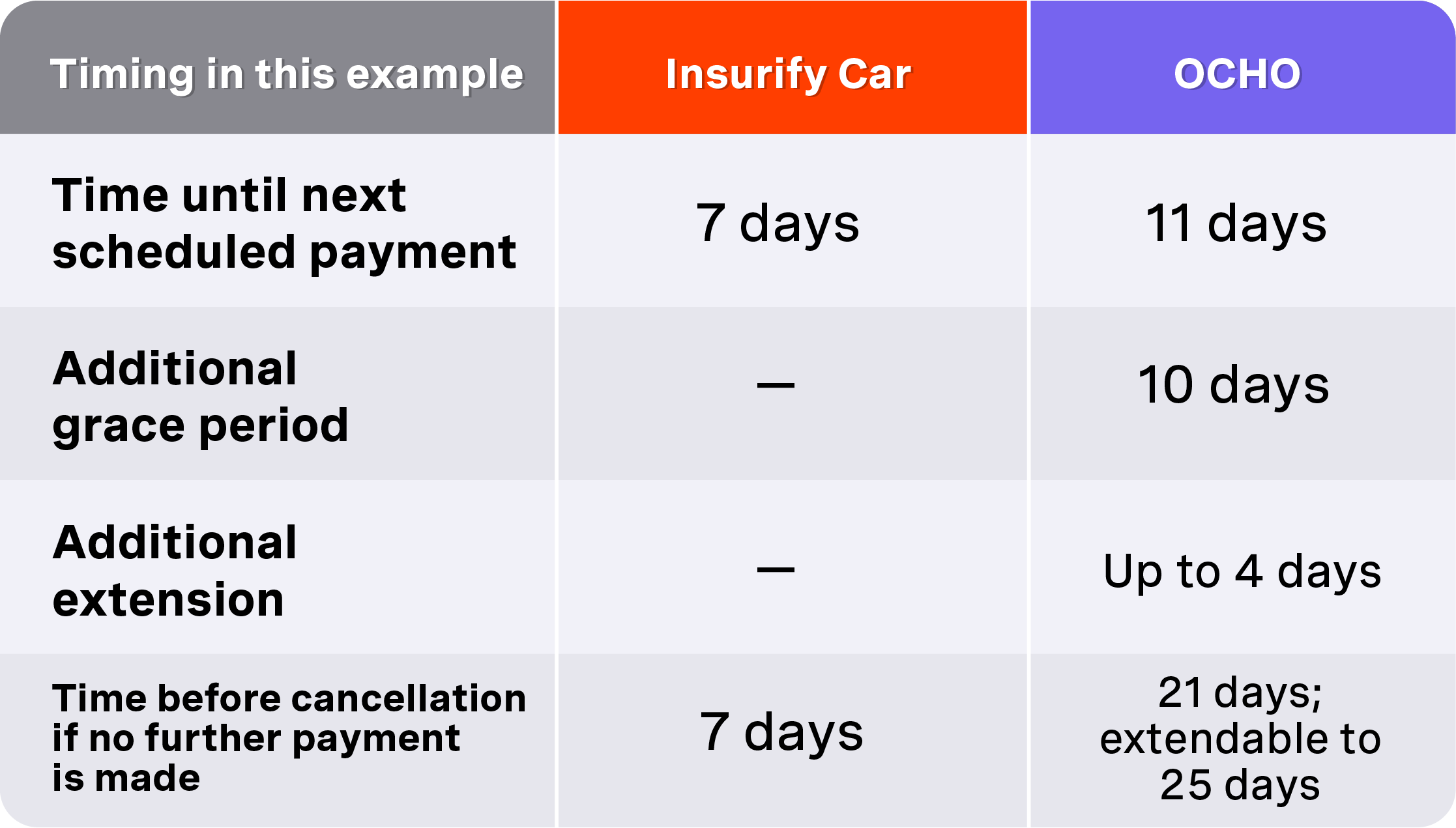
That means $10 more upfront can provide 14 additional days before cancellation—or up to 18 additional days with an approved extension.
The value is time: time for your paycheck to arrive, time to catch up, and time to keep your coverage active while you resolve a missed payment.
Your payment remains owed. A grace period or extension does not turn those additional days into free insurance, and your agreement and cancellation notice determine your actual deadlines.
If your insurance ends before you can make your next payment and you do not have replacement coverage, the consequences can extend beyond losing protection that day.
Insurers can review previous coverage and identify possible gaps using reports such as LexisNexis’s Current Carrier. Depending on the insurer and state, a lapse can mean higher rates or the loss of a continuous-insurance discount when you buy your next policy. [1, 2]
Along with your vehicle and driving history, your record of continuous insurance is one of the things insurance companies may look at when they price your next policy.
Insurify Car’s weekly payment model comes with a much tighter payment deadline. When you sign up, you agree to automatic cancellation if you don’t make your next payment on time. That means missing the Friday 7 p.m. payment deadline could leave you without coverage.
If this happens repeatedly, you could find yourself caught in a cycle of cancelled and restarted policies. Every new application is another opportunity to face higher premiums, particularly if insurers see gaps in your previous coverage history.
Time to catch up can help you protect both today’s coverage and the continuous insurance history that may help you qualify for better prices later. OCHO’s grace period and available extensions give you an opportunity to make the payment before coverage ends. They do not guarantee that a lapse will be avoided or that future premiums will be lower.
Changing insurers is not itself a lapse. The important thing is to arrange replacement coverage before your existing coverage ends.
When comparing a weekly-pay plan, ask:
“Am I signing a request now that authorizes cancellation later if I don’t make another payment?”
An advance cancellation request can affect what happens after a missed payment. Ask the provider to explain the cancellation date, what notifications you’ll receive, and whether you can request extra time.
Two offers can involve the same insurance carrier and still have very different payment and cancellation arrangements, so if you’re unsure, check OCHO’s customer support FAQs for help with billing and policy questions.

Make sure both quotes protect you in the same way. Check:
· Liability limits.
· Whether comprehensive and collision are included.
· Deductibles.
· Any coverage your vehicle lender requires.
· Policy, installment, and financing fees.
· Extras like roadside assistance or rental car reimbursement.
A state-minimum liability quote and a quote that includes comprehensive and collision are different products. Their down payments alone won’t tell you which offers better value for your needs.
A lower initial payment doesn’t necessarily mean a lower total cost.
Compare the down payment, every scheduled installment, applicable fees, and the total amount you’ll pay over the policy term.
OCHO also offers financing options that can make a carrier’s pay-in-full discount available without requiring you to pay the entire premium upfront. OCHO pays the carrier, and you repay OCHO over time, similar in spirit to its pay as you go car insurance approach with predictable installments. That option may require a higher initial payment, so compare the complete payment schedule to see which choice works best for you.
Here's another difference worth checking in any Insurify vs OCHO comparison. Because OCHO is a lender (in addition to your broker), it reports all of your payments to the major credit bureaus, so paying on time can help you build or improve your credit score.
That matters beyond your loan. In many states, insurance companies can consider credit-based information when they set car insurance prices, so a stronger credit history may help you save on future auto insurance plans. OCHO's interest-free financing helps you pay for your car insurance, stress-free, while your on-time record works in your favor.
A weekly payment schedule may fit your budget. But if you’repaid every two weeks—or sometimes need a little extra time—consider the valueof a payment plan that gives you room to catch up.
Before buying, use this checklist:
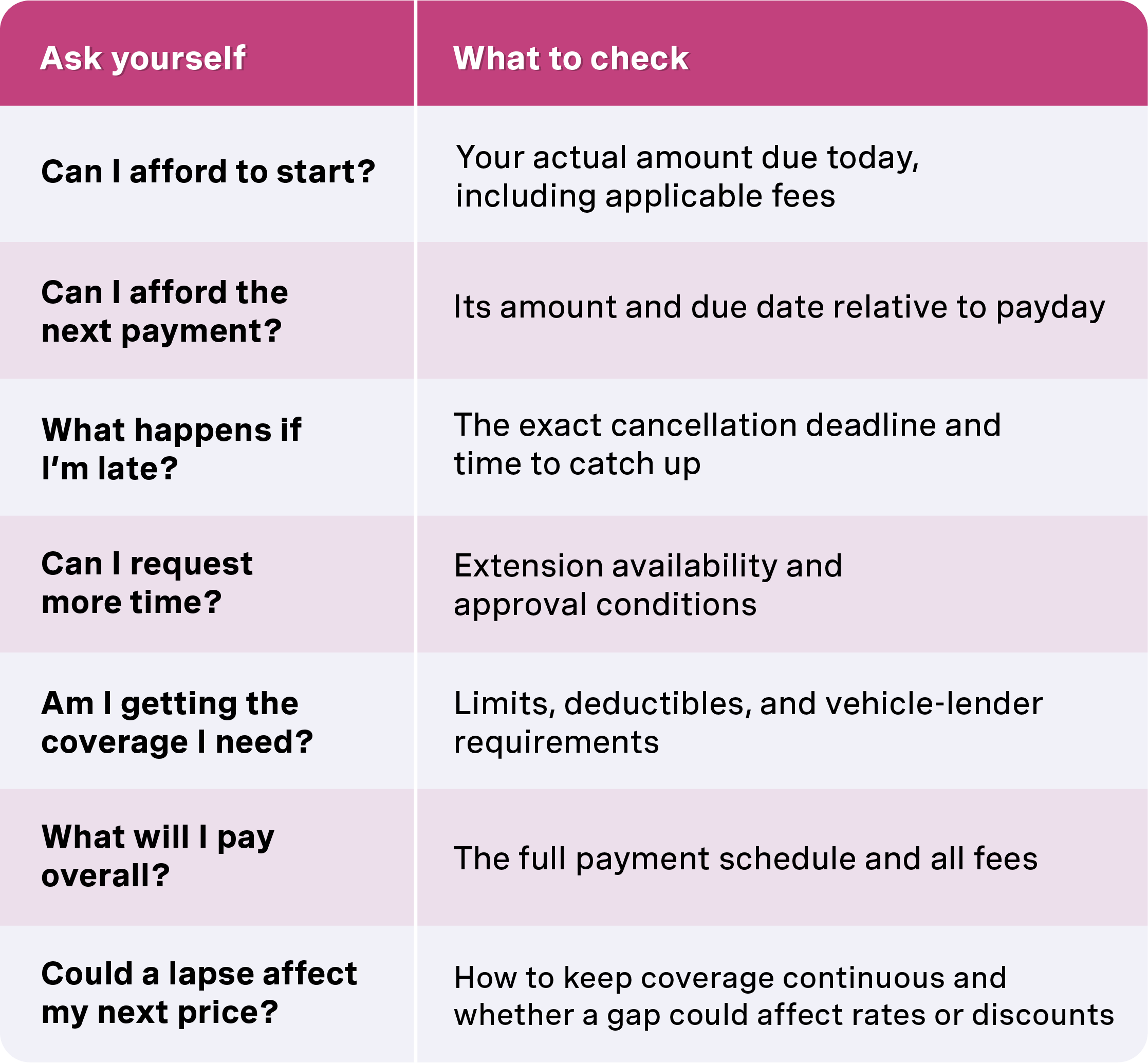
Getting insured is just the beginning. What matters is having a payment plan that helps you stay covered, even when payday doesn’t arrive exactly when you expect.
A low down payment, including options like zero down car insurance with $0 upfront, can help you get started. Options like no deposit car insurance that uses interest-free loans to reduce upfront costs can make that first step easier. But the right coverage, manageable payments and extra time when you need it can make all the difference over the life of your policy.
Whichever company you choose, the best auto insurance is the one you can keep. Compare rates, read real customer reviews from drivers using OCHO’s flexible plans before you sign. Then choose the insurance plan that gives you peace of mind that your car stays insured between paydays.
Offer figures reflect historical lowest-10% samples, not typical or guaranteed results. The OCHO $39 figure uses liability-only policies from April 1–September 30, 2026; Insurify’s supplied disclosure uses May 18–September 15, 2026. Timing shown is illustrative. Actual prices, schedules, coverage, cancellation terms, and extension eligibility vary. Extensions require approval, and payments remain owed.
[1] LexisNexis Risk Solutions — Current Carrier. Identifies current and previous insurance and possible coverage lapses. https://risk.lexisnexis.com/products/current-carrier
[2] Progressive — Car Insurance Lapse and Grace Periods Explained. Explains potential rate increases and continuous-insurance discount implications. https://www.progressive.com/answers/car-insurance-lapse/
Compare & get covered fast
Find and compare auto insurance in minutes, and get your free credit score.
Choose when you pay
Select payment dates that line up with your payday.
Manage everything in one place
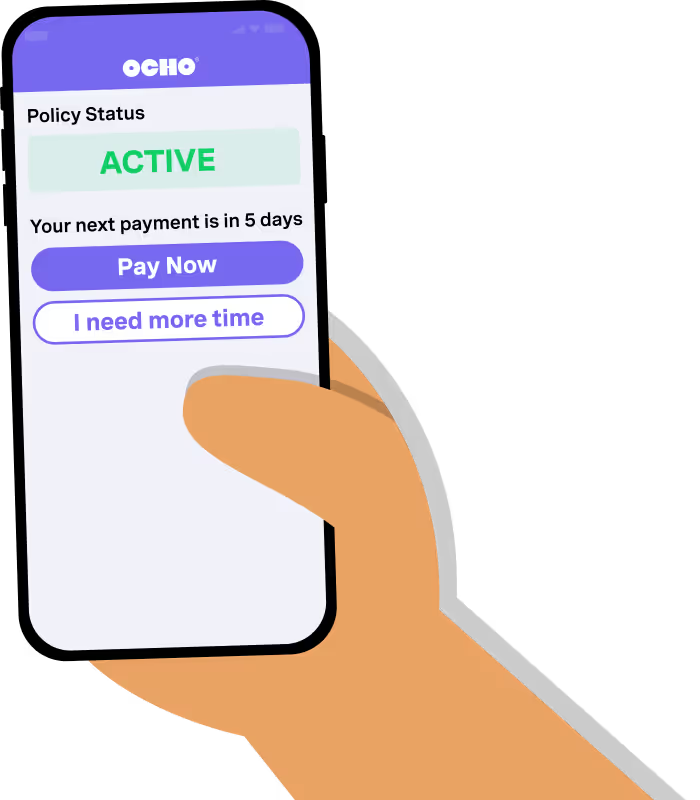
Track your policy, manage payments, and request a payment extension right from your dashboard.