Roadside Assistance: Coverage, Plans & How To Get Help Fast
Car breaks down, battery dies, tire goes flat - and suddenly your whole day is derailed. Roadside assistance exists to get you moving again, fast. Here's everything you need to know about coverage, plans, costs, and how to actually get help when you need it.
Need roadside assistance right now?
Roadside assistance services provide 24/7 access to help for breakdowns, flat tires, dead batteries, and lockouts - no collision required. If you're stranded right now, contact your roadside assistance plan provider or car insurance company immediately.
Most major providers let you request service calls by phone, mobile app, or website. Many include real-time tracking so you can see the tow truck en route. Even drivers without a current plan can often access pay-per-use help from insurers, membership clubs, or local towing companies.
Response times vary by location, weather, and demand, but many providers aim to arrive within 30–60 minutes in urban areas. 24/7 availability is important for emergency roadside assistance services, so expect coverage on nights, weekends, and holidays.
Before you call, do this:
Move your vehicle off the road if safe, then turn on hazard lights
Note your exact location - GPS coordinates, mile marker, or nearest landmark
Have your vehicle make, model, license plate, and the nature of the problem ready
Make sure your phone is charged
What does roadside assistance cover?
Roadside assistance cover is designed to handle common non-collision breakdowns so drivers aren't left stranded. Roadside assistance covers services like towing and flat tire changes, but the full list goes deeper than most people realize.
Here's what typical roadside services include:
Towing - roadside assistance includes towing services for vehicles to the nearest repair shop or a location you choose, within plan limits. For EVs, many plans now tow to the nearest charging station.
Battery jump-starts - dead battery on a Monday commute? A technician arrives and gives your car a jump start on the spot. Services often include battery jump-starts and flat tire changes as core offerings.
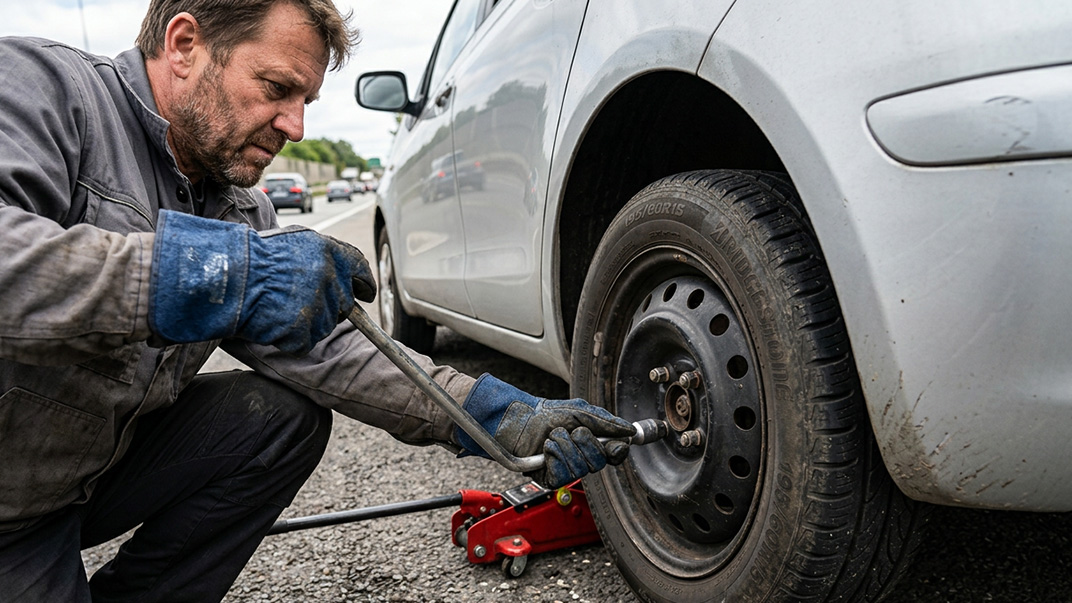
Flat tire changes - got a flat tire during a road trip? If you have a spare, the tech swaps it. No spare? You get a tow.
Fuel delivery - emergency fuel delivery is a common roadside assistance service. You'll get enough gas (or a tow to a charger for EVs) to reach the nearest station.
Lockout assistance - lockout assistance is provided if you are locked out of your vehicle, with locksmith services dispatched to get you back in.
Winching/extraction - winching/extraction service pulls vehicles stuck in mud, snow, or ditches back onto the roadway.
Each plan sets limits on towing distance, number of annual service calls, and maximum labor time at the scene.
Types of roadside assistance plans
Roadside assistance plans can be purchased as standalone memberships or bundled with other products like auto insurance, manufacturer warranties, or credit cards. Plans vary in coverage and cost, so understanding how car insurance coverage works and the different roadside options matters before you pay for anything.
Annual memberships - a flat yearly fee per driver or household, with set benefits and service call limits. Think membership tiers like "basic," "plus," and "elite."
Pay-per-use - no ongoing membership. You pay a one-time fee per incident when you actually need help. Convenient, but typically more expensive per event.
Premium tiers - higher levels increase towing miles, add trip interruption benefits like lodging reimbursement, and bump up the number of covered service calls per year.
Vehicle-based vs. member-based - insurance and manufacturer plans typically cover a specific car. Auto club memberships follow you, covering you even when you're not in your own car.
Coverage limits - towing often ranges from 3 miles to unlimited miles depending on the plan and tier you select.
Where can you buy roadside assistance cover?
Roadside assistance can be obtained through insurance policies, car manufacturers, and clubs - plus credit cards and other providers. It's common to combine multiple sources over time. For example, free manufacturer roadside cover for the first three years, then an insurance add-on afterward.
Before you purchase a new plan, review what you already have. Overlap is incredibly common, and having multiple car insurance policies or roadside plans can mean you end up paying twice for similar services.
Roadside assistance plans from car insurance companies
Many car insurance companies offer optional coverage for roadside assistance as an inexpensive add-on to an existing auto policy. Roadside assistance can be added to auto insurance policies with minimal hassle.
Coverage typically follows the insured vehicle and includes towing, jump-starts, flat tire help, and lockout assistance
Most plans allow 3–5 service calls per policy term
Cost is usually low - often under $40 per year per vehicle, with many insurers charging $10–$25 annually
Allstate roadside assistance plans cost between $78 and $111 per year for their standalone options, while pay-per-use roadside assistance from Allstate costs $154 per incident
Ask your service provider whether roadside calls are treated as insurance claims - most companies don't count them like collision claims, but frequent use could flag a review
These plans work well for families insuring multiple cars on one policy, and can complement multi-car insurance for households, with limits like up to 15 miles of towing and 4 service calls per year being typical
Roadside assistance plans from a car manufacturer
Some new cars include free roadside assistance for three years - typically 3 years or 36,000 miles - as part of the factory warranty. Some car manufacturers offer free roadside assistance for up to five years, particularly luxury and EV brands.
A car manufacturer plan usually tows your vehicle to the nearest authorized dealership rather than a repair shop you pick
Common services: towing after mechanical breakdown, flat tire changes, fuel delivery, and jump-starts for vehicles under warranty
Cover expires based on time or mileage, so a passenger vehicle built before a specific model year may no longer qualify
For EVs, manufacturer plans like Ford's BEV warranty cover towing to a public charger or dealership if the battery runs out
Check your owner's manual or visit the manufacturer website with your VIN to confirm if coverage is still active - this is especially important for used-car buyers
Full-service roadside assistance and auto clubs
Auto clubs sell full-service roadside assistance memberships that follow the member, not just a single car. Standalone clubs often offer higher coverage limits compared to auto insurance add-ons.
AAA offers multiple membership tiers for roadside assistance - Classic, Plus, and Premier - with towing distances from about 5 miles up to 200 miles
AAA membership costs range from $40 to over $160 annually depending on tier and region
Organizations like Better World Club and Good Sam provide similar services with their own membership tiers and pricing
Membership organizations often provide additional discounts and perks including savings on hotels, rental cars, attractions, and travel planning tools
These plans appeal to frequent travelers, owners of older cars, and anyone planning long road trips through remote or rural areas
Compare annual fees, how many miles of towing are included, and add-on benefits when evaluating auto club plans against insurance add-ons
Roadside assistance from credit cards and other providers
Credit cards may offer pay-per-incident roadside assistance rather than full annual cover. Some credit cards provide limited roadside benefits as a cardholder perk.
Cardholders typically call a dedicated number on the back of the card to request towing, fuel delivery, or locksmith help
Credit card roadside assistance typically costs around $80 per incident
Certain mobile phone plans, employee benefit programs, and new-car purchase bundles may also provide limited roadside assistance cover
These options can have strict limits on towing distance, number of events per year, and vehicle eligibility - read your car insurance policy carefully to understand the details
Best used as a backup for drivers who rarely need help but want emergency access without a separate membership
How roadside assistance service calls work
Here's the typical process: you request help, share your location, wait for a provider, and sign off once the vehicle is running or towed.
Request assistance - call the phone hotline, open the mobile app with GPS, or use a web portal linked to your plan
Share details - have your policy or member number, location, vehicle make and model, and the issue (flat tire, dead battery, locked out, ran out of fuel) ready
Dispatch - the dispatcher assigns a local tow or service truck, provides an estimated arrival time, and may send a tracking link via text
On-scene work - the technician does quick diagnostics. A jump start or tire change happens on site. If the car can't be made safe to ride, it gets towed to the nearest approved repair shop
Resolution - service is complete, you sign off, and the cost is covered under your plan up to its limits
How to choose the right roadside assistance plan
The best roadside assistance plan depends on your driving habits, vehicle age, budget, and existing cover. Evaluating response times and provider networks can affect service reliability, so don't just look at price.
What are the towing distance limits and how many service calls are allowed per year?
Does the plan cover you in any car, or only your own car?
Are there extra benefits like lodging, rental car reimbursement, or discounts?
Are there per-incident expenses beyond the plan limits?
Hypothetical profiles:
Urban commuter - drives 12,000 miles per year in the city with a reliable, recent car. A basic insurance add-on with limited towing distance can save money without overbuying.
College student - tight budget, older car, occasional trips. A member-based plan that follows the person (not the vehicle) makes more sense, or a free credit card benefit as a backup.
Family road-tripper - high annual mileage, long highway drives, multiple vehicles. Needs generous tow miles, unlimited service calls if available, and trip interruption perks.
Do you really need roadside assistance cover?
Roadside assistance plan membership is optional, but many drivers find the low cost worthwhile for complete peace of mind. Roadside assistance can save money on unexpected vehicle issues - a single tow without coverage runs $75 to $600 or more.
Review what you already have from your car manufacturer, car insurance company, credit cards, and phone provider before you purchase anything new
Cover is especially useful for long daily commutes, frequent highway travel, cross-country trips, or reliance on a single older vehicle
It's less critical if you mostly drive new cars still under manufacturer roadside cover and rarely leave urban areas
Balance the low annual cost (as little as $10–$20 per year for an insurance add-on) against a potential $300+ emergency tow bill - the math speaks for itself
Roadside assistance FAQs
Quick answers to the most common questions about roadside assistance plans and roadside coverage:
How many service calls can I make each year? - Services may be limited to a certain number of calls per year. Most plans cap usage at 3–5 calls annually and charge extra beyond that point.
Will roadside assistance claims affect my insurance premiums? - Usually no. Most insurers don't treat roadside calls like collision or comprehensive claims. But frequent use (2+ per year) could trigger a review at some companies. For broader questions about how your insurer operates, check their car insurance FAQs and support resources.
Am I covered when I'm not in my own car? - Depends on your plan. Member-based coverage (auto clubs) typically follows you into any vehicle. Vehicle-based coverage (insurance, manufacturer) only applies to that specific car.
Are all types of vehicles covered? - Many plans exclude oversized RVs, trailers, or vehicles used for commercial delivery unless you purchase a special plan. Check your provider for vehicle eligibility details.
The bottom line? Check your existing cover, identify gaps, estimate your risk, and pick the plan that fits your life. A breakdown is stressful enough - figuring out how to pay for help shouldn't be.
Get the OCHO app now!
Compare & get covered fast
Find and compare auto insurance in minutes, and get your free credit score.
Choose when you pay
Select payment dates that line up with your payday.
Manage everything in one place
Track your policy, manage payments, and request a payment extension right from your dashboard.
Finally, car insurance you can afford.
Start your OCHO journey today.
Thank you! Your submission has been received!
Oops! Something went wrong while submitting the form. Please try again later.