
Hugo Insurance offers a pay-per-day auto insurance model that appeals to infrequent drivers, but it comes with significant trade-offs in coverage, availability, and long-term cost. If you're exploring alternatives, providers like OCHO, Root Insurance, Mile Auto, Allstate Milewise, and Nationwide SmartMiles each take a different approach to flexible or usage-based coverage.
Here's how Hugo Insurance stacks up against the alternatives-and which option makes the most sense for your driving habits and budget.
The core difference between Hugo and its alternatives comes down to how coverage is structured and maintained.
Each approach serves a different type of driver. The right plan depends on how often you drive, where you live, and whether you can afford the long-term consequences of coverage interruptions.
Allstate Milewise
Milewise charges a daily base rate plus a per-mile charge, averaging around $72/month according to Insurify data — making it one of the more affordable pay-per-mile options available. It's backed by Allstate's full national coverage network and broad add-on options including roadside assistance and bundling discounts. Unlike Hugo, which averages $184/month despite its on-demand model, Milewise delivers more coverage for significantly less. App Store rating: 4.8]/5.
Nationwide SmartMiles
SmartMiles combines a monthly base rate with per-mile pricing, averaging around $93/month, and is available in most U.S. states — a meaningful advantage over Hugo's eight-state footprint. It's a solid middle ground for drivers who want mileage-based savings without giving up traditional policy stability. Where Hugo offers minimal coverage and no roadside assistance, SmartMiles includes Nationwide's full suite of policy options. App Store rating: 4.7/5.
Mile Auto
Mile Auto averages around $74/month and takes a notably low-tech approach: no tracking device, no telematics app — just a monthly photo of your odometer. That makes it a practical option for privacy-conscious drivers who want per-mile pricing without being monitored. Hugo similarly requires no telematics, but at more than double the average monthly cost and with far fewer states served, Mile Auto is the stronger pick for most low-mileage drivers. App Store rating: No app.
Root Insurance Root bases its rates on your actual driving behavior — it monitors how you drive via its app during a test period before quoting you a price. This makes it potentially very cheap for safe drivers, but a poor fit if your driving habits are mixed or you need coverage immediately. Unlike Hugo's toggle model, Root maintains continuous coverage, removing the gap risk that can follow you to future insurers. Available in around 30 states, App Store rating: 4.7/5.

How you pay for auto insurance matters just as much as what you pay. The payment structure affects your cash flow, your coverage consistency, and ultimately your future premiums, especially with pay as you go car insurance models that prioritize continuous coverage.
Hugo's Flex Plan allows pay-per-day liability coverage. Micropayment insurance allows turning coverage on and off as needed-drivers preload funds into a balance, and daily charges are deducted only on active days. There are no traditional down payments or hidden fees for the daily coverage itself.
Daily rates for liability-only plans start around $1–$3 per day in some states with clean records, though most drivers pay closer to $3–$7 per day. Hugo offers pay-per-mile coverage in select states, making it appealing to low mileage drivers who only need their car a few days per week.
However, the pay as you go model carries real risk. If your balance hits zero or you forget to reactivate, your coverage stops. Frequent cancellations can severely hurt your credit score. Micropayment models often lead to higher premiums due to coverage lapses, and micropayment insurance can create a cycle of high-risk categorization that follows you to future insurers.
OCHO offers on-demand and flexible car insurance with interest-free premium financing structured around continuous policies rather than daily toggles. OCHO allows $0 or low down payments for car insurance through interest-free premium financing via OCHO Pay.
Instead of daily micropayments, OCHO splits a full 6-month policy into 11 to 12 manageable payments. These biweekly payment plans are aligned with paycheck cycles and can even function as no deposit car insurance through interest-free financing, so drivers can budget consistently without scrambling for large lump sums.
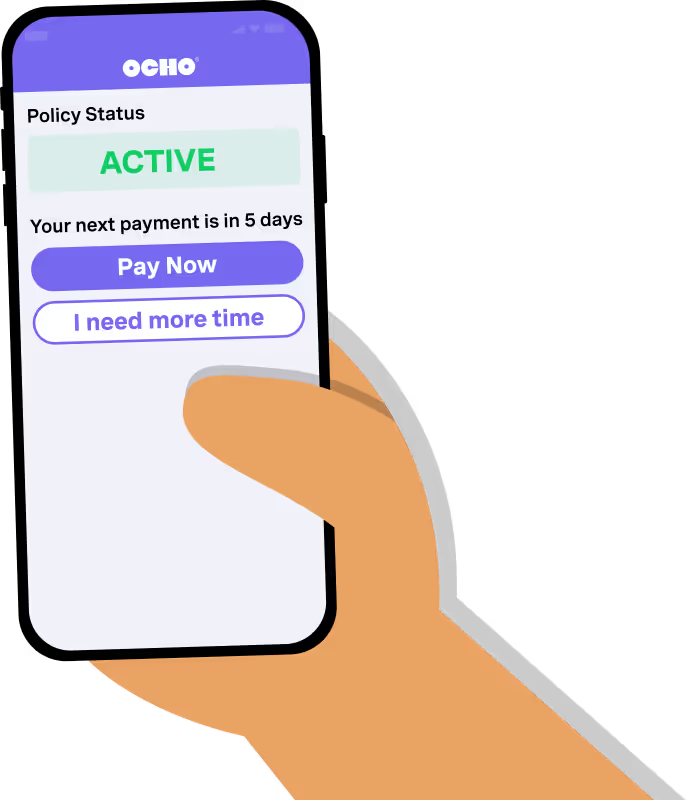
OCHO also provides a built-in safety net: drivers get extra time to make payments when needed-avoiding the instant cancellation risk that plagues Hugo's balance-dependent model. This approach keeps your policy active, protects your driving record, and helps you save money on future premiums through continuous coverage history.
Coverage breadth is where the difference between Hugo and alternative providers becomes most apparent, as detailed in this broader look at how Hugo Insurance compares to flexible alternatives like OCHO.
Hugo provides minimum-coverage and full-coverage options, but availability varies significantly. The company offers three basic tiers:
Hugo's coverage options are limited to auto insurance only. Hugo does not offer umbrella or homeowners insurance policies, and Hugo only sells auto insurance, not homeowners or renters insurance. No roadside assistance or towing coverage is included in any plan. There are minimal customization options for drivers needing specific insurance products beyond basic liability.
Hugo's single-carrier model limits customer options for coverage, meaning you're locked into whatever that single carrier offers in your state.
OCHO offers full coverage options tailored to customer needs, including collision, comprehensive coverage, and liability coverage. Because OCHO works as a broker with multiple carriers, drivers can compare quotes and select policy options that match their vehicle value and protection requirements.
Traditional insurers expand the menu even further with extensive add-ons: roadside assistance, rental car reimbursement, gap coverage, and package discounts for bundling auto with home or life insurance. For drivers who need to protect valuable assets or want peace of mind after an accident, these broader coverage options matter.
Coverage Cat compares rates from multiple insurance carriers, and similar comparison platforms help drivers evaluate what's available. But OCHO's PriceCheck tool and other features stand out by showing real-time quotes side-by-side-customers using it save over $600 on average compared to standard pricing.
Location is often the deciding factor when choosing between Hugo and its alternatives.
Hugo Insurance is not available in all states. Hugo does not offer coverage in California, Texas, or Florida, locking out drivers in three of the country's largest auto insurance markets. Customers moving outside these three states lose access entirely, with no coverage transition path.
Hugo's coverage is limited to low-mileage drivers in these states, further narrowing who can actually benefit from the platform.
OCHO serves customers across nine states-Arizona, California, Illinois, Georgia, New Mexico, Missouri, Texas, Washington, and Wisconsin-with expanding coverage areas. For drivers in major markets like California who need flexible $0-down coverage, OCHO fills a gap that Hugo simply cannot.
Traditional insurers like Progressive, GEICO, and State Farm offer nationwide coverage with local agents in most states. Regional insurers provide competitive alternatives in specific markets, and telematics-based insurance uses smartphone tracking to price policies based on actual driving behavior-available in most states through carriers like Allstate's Milewise or Nationwide SmartMiles.
Drivers with lower mileage may benefit from per-mile insurance plans offered by these carriers, which provide usage based pricing without the coverage gap risks of Hugo's toggle model and are discussed alongside other pay-as-you-go, no-deposit coverage options.

The cheapest daily rate doesn't always translate to the lowest total cost. Long-term insurance costs depend on coverage consistency and premium stability over time.
Pay-as-you-go insurance can lead to higher premiums without continuous coverage. Even short lapses-a few days without active coverage-can trigger high-risk driver classification. This means higher future premiums, potential DMV fines, and loss of any continuous coverage discounts you'd otherwise qualify for.
For drivers who use their car daily, Hugo's rates add up quickly. At $5 per day, that's $150 per month or $1,800 per year for liability only-often exceeding what a traditional 6-month policy would cost with broader protection. Frequent policy cancellations can damage your credit score, compounding the financial impact beyond just insurance premiums.
Hugo's limited coverage options also restrict cost-saving bundling opportunities. Since Hugo's coverage options are limited to auto insurance only, you can't bundle with renters, homeowners, or life insurance for multi-policy discounts or access true $0 upfront coverage through innovative financing.
OCHO provides credit building through on-time payments, meaning your insurance payments can actively improve your financial standing. Consistent payment history with OCHO helps drivers qualify for lower rates over time-often seeing meaningful improvement after 12 months of continuous coverage.
Flexible payment options are essential for drivers with tight budgets, and OCHO's biweekly structure prevents the feast-or-famine cycle that Hugo's balance model creates. Traditional insurers offer multi-policy discounts for bundling auto, home, and other coverage types, though they typically charge installment fees of $3–$12 per payment that add $36–$144 annually to your cost.
Support quality can make or break your insurance experience, especially when you need to file a claim or manage a payment issue.
Hugo is entirely digital, but not in the way you might expect. There is no dedicated mobile app-drivers manage coverage primarily through text messages and the website. Proof of insurance is available digitally, but accessing it requires texting "PROOF" or logging into the dashboard.
Customer service options are limited, with no dedicated agent support for policy questions and minimal online resources for troubleshooting. If your balance drops to zero or auto-reload fails, coverage can stop abruptly with limited recourse. Claims processing may also be slower due to the lean support infrastructure.
OCHO provides dedicated customer support with flexible payment assistance, available by phone and through its mobile app (rated 4.7/5 on the App Store). Drivers can compare quotes, manage payments, upload documents, and request payment extensions directly from the app, and can find quick answers in OCHO's frequently asked questions resource.
Traditional insurers offer 24/7 customer service, local agents, and comprehensive claims support networks. For drivers who want a human on the phone when an accident happens, these established support systems provide significant peace of mind.
Insurance providers like OCHO bridge the gap between Hugo's minimal support and traditional carriers' sometimes rigid processes-offering modern digital tools with real human assistance when it matters, all rooted in OCHO's mission to make car insurance fair and accessible.
Choose OCHO if you want flexible payments without coverage gaps, continuous protection that keeps your premiums stable, and the added benefit of credit-building opportunities. It's the best option for drivers who need affordable car insurance with no large down payment and want to avoid the risks of toggling coverage on and off.
Choose traditional insurers if you need comprehensive coverage options, nationwide availability, and extensive customer support with local agents. They're the best fit for daily drivers with clean records who can manage larger upfront payments and want to bundle multiple insurance products.
Consider Hugo only if you drive very infrequently in Illinois, Missouri, or Ohio and genuinely don't mind the risk of coverage interruptions. Hugo's model can be cheaper for someone who drives just a few days per month-but the long-term costs of gaps, limited protection, and restricted availability make it a narrow solution for a narrow audience, especially when you compare it with flexible options for Illinois car insurance with low upfront costs or Missouri coverage that offers $0 down and tailored protection.
Evaluate your driving habits, budget needs, and long-term insurance goals before selecting a provider. For low-mileage drivers specifically, Allstate Milewise, Nationwide SmartMiles, Mile Auto, and Root Insurance are all worth comparing depending on your state and driving habits. For most drivers seeking a Hugo alternative, OCHO delivers the flexibility of modern insurance without sacrificing the continuous coverage that keeps you protected and your premiums manageable.
Compare & get covered fast
Find and compare auto insurance in minutes, and get your free credit score.
Choose when you pay
Select payment dates that line up with your payday.
Manage everything in one place
Track your policy, manage payments, and request a payment extension right from your dashboard.




.svg)