
Finding an insurance company for high risk drivers can feel like navigating a maze while blindfolded. You’ve got a DUI on your record, maybe a few speeding tickets, or perhaps you let your coverage lapse during a tough financial stretch. Now every insurer seems to want a small fortune upfront—or won’t even give you a quote.
Here’s the truth: being labeled high risk doesn’t mean you’re out of options. Drivers are considered high risk when insurers classify them as having a greater likelihood of filing claims or engaging in risky behavior, such as new drivers, those with past violations, or lapses in coverage. It just means you need to know where to look and how to make coverage actually affordable.
Insurance companies for high-risk drivers generally fall into two categories: major carriers and specialty insurers.
If you’ve been classified as a high risk driver, you’re in good company. This category includes people with DUI convictions, multiple traffic violations, lapses in insurance coverage, very little driving history, or bad credit. The good news? You can absolutely still get insured. Many insurance companies specialize in exactly these situations. Working with licensed agents is especially important for high-risk or complex cases, as they provide expert guidance and help you navigate specialized insurance requirements.
OCHO is not an insurance company, we’re a digital auto insurance broker that helps high-risk drivers compare real-time quotes online from multiple providers in minutes. Instead of calling insurer after insurer and getting rejected, you enter your info once and see which companies will actually cover you.
Here’s where OCHO really stands out: we can often arrange $0 down or low-down-payment policies by financing your down payment, interest-free. That massive upfront cost that’s been keeping you from getting legal coverage? We help you break it into manageable pieces.
On-time payments through OCHO can also help build your credit history, which can gradually reduce your insurance costs over time. And if you maintain responsible driving and continuous coverage for about three to five years, you’ll typically work your way out of high risk status and qualify for lower rates.
Auto insurance is an essential part of responsible vehicle ownership, offering financial protection if you’re involved in an accident or your car is damaged. For most drivers, having at least basic insurance coverage is required by law, but the type and amount of coverage you need can vary based on your driving history and risk profile.
If you’re considered a high risk driver; perhaps due to a poor driving record, multiple accidents, or a series of traffic violations, standard insurance companies may see you as more likely to file claims. This is where high risk auto insurance comes in. High risk insurance is specifically designed for drivers who present a greater risk to insurers, whether because of recent violations, a history of at-fault accidents, or other factors like lapses in coverage.
Understanding how your driving record, past violations, and even the type of vehicle you drive influence your insurance options is crucial. High risk auto insurance provides a safety net, ensuring that even drivers with a challenging history can stay protected and legal on the road. By learning the basics of auto insurance and how high risk insurance works, you can make smarter choices about your coverage and find a policy that fits your needs, even if your record isn’t perfect.
High risk auto insurance, sometimes called “non-standard” insurance, refers to policies designed for drivers that insurers consider more likely to file claims. This includes people with recent DUI convictions, at-fault accidents, or a pattern of speeding tickets. Serious infractions, often called a major violation: such as DUI, DWI, hit-and-run, or driving with a suspended license, can significantly impact your driving record and insurance rates.
Here’s what might surprise you: the actual coverage types available to high-risk drivers are usually the same as standard policies. Liability, collision, comprehensive, uninsured motorist, it’s all there. The main differences are the price, potential surcharges, and sometimes stricter payment rules. High-risk auto insurance premiums are generally higher due to the increased financial exposure they represent for insurers.
Insurance companies determine whether you’re “non-standard” based on several factors: violations from the last three to five years, prior insurance lapses, your age, credit-based insurance scores (in most states), and even the type of vehicle you drive. A 22-year-old with a 2023 DUI driving a sports car? That’s a lot of risk factors stacking up.
In many states, high risk insurance may also come with added requirements like SR-22 filings. These are court or DMV-mandated certificates verifying you carry minimum liability limits, typically required after serious violations like DUIs or driving with a suspended license.
Consider this scenario: a 35-year-old driver with a clean record for a decade gets a DUI in 2023. Almost overnight, they move from a “preferred” customer paying $100 per month to a high-risk driver facing $200+ monthly premiums and needing to file an SR-22 for three years. That’s how fast things can change.

There’s no single national definition of what makes someone a high risk driver. Each insurance provider has its own underwriting guidelines. But most insurers look at similar patterns of risk when deciding whether to classify you as non-standard.
Common categories of high-risk drivers include:
Recent DUI/DWI/OWI convictions – Drivers who have been convicted of serious violations such as DUI, DWI, or OWI from 2022–2024 are almost guaranteed to be pushed into high-risk territory with most carriers.
Multiple at-fault accidents – Two or more accidents within the last three years where you were determined at fault signals increased risk to insurers.
Several speeding tickets – Accumulating moving violations, especially multiple tickets for 15+ mph over the limit, raises red flags.
Serious violations – Reckless driving, driving without insurance, hit-and-run incidents, or driving on a suspended or revoked driver's license almost always result in high risk status.
New or young drivers and young adults – If you were licensed after 2023 with very limited driving history, or if you are a young adult, insurers view you as statistically riskier. The status and experience associated with your driver's license, especially for young adults, directly affects your risk profile and insurance rates.
Older drivers – Drivers in their late 60s and 70s may face higher premiums due to age-related risk factors, even with a clean record.
Poor credit history – In many U.S. states, a low credit score or past payment problems can push you into higher-priced tiers—even if your actual driving record is spotless.
The duration for which a driver is considered high-risk can vary, typically lasting from three to seven years depending on the severity of violations.
The DUI driver: A 25-year-old in Texas gets a DUI in 2023. Now they need an SR-22 filing and face sharply higher premiums for at least three years. Their previous $120/month policy? It’s now $280 or more, and several insurers won’t touch them at all.
The young speedster: A 19-year-old in Florida just got their license in 2024 and already has two speeding tickets (both 15+ mph over). They’ve never had insurance before, which means no prior coverage history. Most standard carriers won’t write them a policy.
The older driver: A 72-year-old in California has a clean driving record but limited recent driving—they’ve been retired and using their car only occasionally. Despite no accidents or tickets, age-related risk factors mean higher quotes from many insurers.
The coverage lapse: A driver in Ohio lost their job in early 2023 and couldn’t afford insurance for six months. No accidents, no tickets—just a gap. When they went to get coverage again, they discovered they’d been re-rated as high risk because insurers view lapses as red flags.
High-risk drivers in these situations should compare multiple insurance companies to find the best rate for their specific risk profile.
Taking a defensive driving course can also help high-risk drivers qualify for discounts on their auto insurance premiums.
Most violations stay “rating-relevant” for about three to five years, depending on state law and individual carrier rules. DUI convictions typically matter longer—often five to seven years for pricing and eligibility purposes.
If you’ve had multiple serious incidents in a short window, like a 2022 DUI plus a 2023 at-fault accident, you may need an extended period of clean driving before insurers will reclassify you as standard.
SR-22 or FR-44 filing requirements are typically set by state DMVs or courts, with most states requiring you to maintain the filing for three years. During that period, keeping your premiums paid on time is crucial, any lapse can restart the clock.
The fastest route to lower premiums is consistent, violation-free driving and no insurance lapses from the date of your most recent issue. Here’s a rough timeline:
Some high-risk drivers face extra hoops to jump through beyond just paying higher premiums. Depending on your situation and state, you may need to meet specific legal requirements like SR-22 filings or carry higher minimum liability limits.
Let’s walk through the most common scenarios.
A DUI or DWI conviction from 2022–2024 almost always triggers a major rate increase. Many mainstream insurers will non-renew your policy or decline to cover you entirely.
Some states have specific filing requirements. Florida and Virginia, for example, require FR-44 filings (which mandate higher liability limits than standard SR-22). Other states use SR-22 as proof of financial responsibility after a DUI conviction.
The key requirement is continuous coverage during the mandated period, typically three years. If your policy lapses even briefly, you may have to restart that three-year clock from scratch.
OCHO can connect you to insurers that actually accept recent DUI convictions and can file SR-22 electronically. Plus, our flexible down payment arrangements mean you don’t have to come up with hundreds of dollars upfront just to get legal again.
We get it, nobody’s proud of a DUI. But everyone deserves a second chance and a realistic path back to affordable coverage.
An SR-22 (or FR-44 in some states) is a state-required form filed by your insurer with the DMV to prove you carry at least the minimum required liability coverage. It’s not a policy type—it’s an add-on filing that your insurance company submits on your behalf.
Common triggers for SR-22 requirements include:
SR-22 requirements can increase your premiums and restrict which carriers will accept you. Not every insurer handles SR-22 filings, so you need to find one that does.
OCHO works with carriers that regularly file SR-22s and can often issue same-day proof of insurance and digital ID cards. For example, a driver in Illinois who needs SR-22 for three years after a license suspension can get coverage bound, SR-22 filed, and proof of insurance delivered—all within hours.
In most states (except California, Hawaii, Massachusetts, and Michigan), insurers can legally use credit-based insurance scores to help set your auto insurance premium. This means drivers with low credit, collections on their record, or thin credit files can be treated as higher insurance risks, even if they’ve never had an accident.
This especially hurts working-class and underbanked drivers. When you’re already struggling financially, being told you need to pay $400 upfront for car insurance can break the bank. Then if you can’t pay and cancel your policy, you get labeled even higher risk for having a coverage lapse. It’s a vicious cycle.
OCHO’s interest-free payment plans and alignment with weekly or bi-weekly paychecks help break this cycle. By making payments manageable, you can keep continuous coverage and potentially start building credit with on-time payments through eligible programs.
Note: Credit-building features depend on specific programs and state regulations. Check with OCHO about eligibility in your situation.
Even if you’re considered a high risk driver, you still have access to a range of coverage options to protect yourself and your vehicle. The most common types of coverage include liability, collision, and comprehensive insurance. Liability coverage is required in most states and pays for damages or injuries you cause to others in an accident. This is the foundation of any auto insurance policy and is especially important for risk drivers who may be more likely to be involved in an accident.
Collision coverage helps pay for repairs to your own car if you’re in an accident, regardless of who was at fault. This can be a valuable option for high risk drivers, as it ensures your vehicle is protected even if you’re involved in multiple accidents. Comprehensive coverage goes a step further, covering non-collision events like theft, vandalism, or weather damage—giving you peace of mind no matter what happens.
High risk drivers may also want to consider additional coverage options, such as roadside assistance or rental car reimbursement, which can be especially helpful if you rely on your vehicle for daily life. Because coverage needs and costs can vary widely, it’s smart to compare quotes from multiple providers. Shopping around helps you find the best coverage options for your situation and budget, ensuring you’re not overpaying for the protection you need. In most states, having the right mix of coverage can make a big difference in both your financial security and your ability to get back on the road after an accident.
How Much Does High-Risk Auto Insurance Cost?
Let’s talk numbers. High-risk drivers typically pay significantly more than standard drivers—often 50–80% higher premiums, and sometimes more than double after a recent DUI.
For context: in 2024, a typical 40-year-old with a clean driving record might pay around $1,200 per year for minimum coverage. A similar driver classified as high risk could easily pay $2,000–$2,500 or more annually.
The major cost drivers include:
Some high-risk drivers can lower their coverage costs by choosing state-minimum liability limits, selecting a higher deductible, or dropping optional coverages on older vehicles. Just be careful—underinsuring yourself can lead to financial disaster if you’re in an accident.
Here’s what OCHO brings to the table: we don’t change the prices insurers charge (they set their own premiums), but we help you compare multiple high-risk quotes quickly to find the most affordable option for your situation.
These are illustrative ranges based on 2024 data, not actual quotes. Your real premium depends on your specific profile, vehicle, ZIP code, and insurer.
25-year-old with 2023 DUI in Texas seeking state-minimum liability: roughly $180–$300 per month depending on insurer and county.
19-year-old with two recent speeding tickets in Georgia: approximately $150–$260 per month for minimum coverage as of late 2024.
Older driver in Arizona with a 2022 at-fault accident and no prior lapses: paying perhaps 30–50% more than a similar driver without the accident, so if a clean-record driver pays $100/month, this driver might pay $130–$150.
The differences between insurers for the exact same profile can be dramatic, sometimes hundreds of dollars per year. That’s why comparing quotes from multiple providers is so critical for high-risk drivers.
OCHO is a digital auto insurance agency built specifically for budget-stretched, often high-risk drivers who need to get and keep legal coverage without massive upfront payments.
We partner with multiple insurance companies that actively write policies for drivers with DUIs, tickets, at-fault accidents, and no prior insurance history across various U.S. states. These are carriers that actually want to work with high-risk profiles, not ones that’ll decline you immediately.
Our real-time quote comparison lets you enter your information once and see multiple pricing and coverage options online or over the phone. No more calling insurer after insurer, explaining your DUI each time, and getting rejected repeatedly.
The interest-free financing feature can break the insurer’s required down payment into several installments over the first 4–8 weeks. This often enables $0 down at the moment of purchase, so you can get legal coverage today instead of waiting until you’ve saved up hundreds of dollars.
OCHO also aligns payment dates with your bi-weekly pay cycle. We give you extra time to pay without late fees and can report on-time payments to help build credit in eligible programs.

Many high-risk policies require 15–40% of the six-month premium upfront. For a $1,800 policy, that’s $270–$720 due immediately, often impossible for working-class drivers living paycheck to paycheck.
Here’s how OCHO changes that: we front the down payment to the insurer, then let you repay us in interest-free installments.
Example scenario:
Eligibility for $0 down and specific plan lengths depends on underwriting, state rules, and your personal risk factors. Not everyone qualifies for identical terms.
The important part: there are no hidden interest charges or late fees from OCHO. But if you fail to make payments, the insurer can still cancel your policy, so staying on track matters.

High-risk drivers often need proof of insurance immediately. Maybe you need to reinstate a suspended driver’s license. Maybe a court set a deadline. Maybe you need coverage before driving to work tomorrow morning.
OCHO can typically deliver digital ID cards and policy documents by email or text within minutes after binding coverage online or via phone.
For drivers needing SR-22, we work with insurers who can file the form electronically with your state DMV, often on the same business day.
Real scenario: A driver in Ohio had their license suspended and needed SR-22 before their reinstatement hearing. They purchased through OCHO in the morning, got SR-22 filed electronically that afternoon, and had proof of insurance ready to present the next day. That’s the speed that matters when your driving privileges are on the line.

Many high-risk drivers are also credit-challenged. It’s all connected, tight budgets lead to missed payments, which lead to policy cancellations, which lead to higher-risk classification, which leads to higher premiums, which leads to tighter budgets.
By making payments predictable and aligned with your income, OCHO helps reduce missed payments and cancellations. In eligible programs, we may report successful, on-time payments so you can build a stronger credit profile over time.
A better credit profile can contribute to lower auto insurance quotes in future years. It helps you move away from high-risk pricing tiers toward standard rates.
Example path forward:
Credit-building and reporting vary by program and state. Results aren’t guaranteed, but the system is designed to help you progress.
Getting classified as high risk isn’t permanent. With the right approach over the next 12–60 months, you can reduce your premiums and eventually exit the high-risk category entirely.
Consistent behavior matters more than any single discount. Clean driving, no lapses in coverage, and improving your overall financial habits will do more for your rates than chasing small promotional savings.
OCHO supports these goals by making it financially easier to keep policies active through flexible, no-interest payment structures.
Every new ticket or accident starting now extends the time you remain high risk. That 2024 speeding ticket? It’ll affect your rates until 2027 or later. Avoid adding new violations at all costs.
Consider taking a defensive driving course where allowed. Some states and insurers will remove points from your record or offer small rate reductions for completing certified courses. Check your state’s rules before enrolling solely for insurance discounts—requirements vary.
Even 12–24 months with no incidents can start to make a noticeable difference when shopping for new quotes. Insurers reward improvement.
Practical tips:
Letting a policy cancel or lapse, even for a few weeks, can push you back into higher-risk tiers when you shop again. Insurers view gaps as added risk, plain and simple.
OCHO’s financing is specifically designed to help you avoid the big, one-time payments that tend to cause lapses. When you don’t have to come up with $400 on the spot, you’re less likely to fall behind.
Set up automatic payments where possible, timed to your paycheck dates. OCHO can help align due dates with your pay cycle so the money comes out when it’s actually there.
Even if you need to temporarily lower coverage levels to stay insured, that’s usually better than dropping coverage entirely. Some coverage is always better than a lapse on your record.
If you’re struggling, contact your agent or OCHO before a payment is missed. We’d rather work something out than watch you lose your policy and set back all your progress.
Pay all your bills on time, not just insurance. Reduce credit card balances when possible. Check your credit report for errors (you can get free reports at annualcreditreport.com).
Improvements won’t be instant. But over 12–24 months, a better credit profile can lead to better rate tiers with many insurers, especially for high-risk drivers who also had low credit scores.
Use OCHO’s structured payment plans as part of a simple monthly budget. Knowing exactly when each payment is due and having it aligned with your income, reduces overdrafts, late fees, and financial stress.
Revisit your quotes annually, particularly after your credit score or driving history improves. Loyalty doesn’t always pay in insurance, shopping around often does.
When you’re high risk, shopping for coverage requires a different approach than standard drivers use. Focus on three things:
Because different insurers treat the same violation very differently, getting quotes from multiple providers is far more important for high-risk drivers than for anyone else. One company might charge you $3,000 per year while another charges $2,000 for identical coverage.
OCHO simplifies this by collecting your information once and matching you with several non-standard carriers where you’re most likely to be accepted.
We work with the following insurance companies for high-risk drivers:
Coverage options: Does the insurer offer SR-22 filings if you need one? Do they provide both minimum and full coverage? Are there endorsements relevant to your state?
Total annual cost: Don’t just look at the monthly payment. Some companies show a “low monthly” price but demand huge upfront down payments. Calculate what you’ll actually pay over six months or a year.
Payment flexibility: How much is the required down payment? Can you align due dates with your paychecks? Are there installment fees? Interest charges? Is an interest-free arrangement through OCHO available?
Service factors: How fast can you get proof of insurance? Is there an easy-to-use app? How are claims handled? These matter even when price is your top concern.
Ask yourself:
The process is straightforward:
Our system is designed for high-risk and budget-conscious drivers. We specifically look for carriers likely to accept your profile rather than wasting your time on inevitable declines.
Once you select a quote, OCHO walks you through:
We also support Spanish-preferred drivers where available, which is especially helpful in underserved communities where language barriers can make insurance shopping even harder.
Ready to see what’s available? Check your options today. Comparing quotes takes just a few minutes and doesn’t obligate you to buy anything.

Many insurers require some down payment, but through OCHO it’s often possible to split that amount into smaller, interest-free installments. In some cases, you can start with $0 due at the time of purchase. Eligibility for $0 down depends on underwriting, state rules, and your risk profile, so not everyone will see the same offers. Complete a quote with OCHO to see the exact down payment and installment options available for your situation.
Yes—you must answer application questions honestly. Insurers will verify your record through state motor vehicle reports that show DUIs, suspensions, and tickets from recent years anyway. Failing to disclose violations can lead to policy cancellation or denied claims later, which puts you in even worse shape. OCHO’s quote process specifically asks about serious violations so we can match you to carriers that are more likely to accept your profile.
As old violations age off (usually after three to five years), some insurers may automatically recalculate your premium. However, you may still need to shop around to see the full benefit of your improved record. Check new quotes about once a year, especially after major violations from 2020–2022 start falling outside the primary rating window. OCHO can help you re-shop coverage when your record improves, potentially moving you from non-standard to more affordable options.
Yes—in many states, non-owner policies are available and can be paired with SR-22 filings for drivers who need to reinstate a license but don’t currently have a vehicle. Non-owner policies typically provide liability coverage when driving cars you don’t own, like rentals or borrowed vehicles. Ask OCHO about non-owner and SR-22 options in your state if you’re between cars but still need to meet legal requirements.
No. OCHO is an auto insurance agency and broker, not the actual insurance carrier. We help you find and finance policies from partner insurers. Claims are handled by the underlying insurance company, while OCHO focuses on shopping, payment flexibility, and helping you keep your coverage active. This setup lets you benefit from established insurance brands plus OCHO’s specialized financing and support for high-risk and budget-stressed customers.
Navigating the world of high risk auto insurance can feel overwhelming, but it’s entirely possible to find affordable car insurance—even with a challenging driving history. By understanding what makes a driver high risk, exploring all available coverage options, and comparing quotes from multiple providers, you can secure the protection you need without breaking the bank.
Remember, your high risk status isn’t permanent. With safe driving habits, continuous coverage, and a focus on improving your credit and driving record, you can work your way back to lower premiums and better insurance options over time. Take advantage of tools and agencies like OCHO that are designed to help high risk drivers get covered and stay covered. With the right approach, you can protect your vehicle, your finances, and your driving privileges—no matter what your past looks like.
Your driving record is one of the most important factors insurance companies use to determine your auto insurance rates—especially if you’re considered a high risk driver. Every ticket, accident, or major violation you’ve been involved in becomes part of your official driving history, and insurers use this information to assess how likely you are to file future claims.
If you have multiple accidents, a series of traffic violations, or a DUI conviction, insurance companies see you as a higher risk. This increased risk means you’ll typically face higher premiums compared to drivers with a clean record. Even a single at-fault accident or a few speeding tickets can push you into a higher risk category, but the impact is even greater if you’ve been convicted of a DUI or have a pattern of repeated violations.
Insurance companies analyze your driving record over the past three to five years, looking for any signs of risky behavior. The more recent and severe the violations, the more they influence your rates. For example, a recent DUI or multiple accidents within a short period can double or even triple your insurance costs. This is because insurers expect that risk drivers are more likely to be involved in future incidents, leading to more claims and higher payouts.
It’s important to remember that your high risk status isn’t set in stone. Over time, maintaining a clean driving record—free from new violations or accidents—can help lower your premiums. As older incidents age off your record, insurance companies will gradually view you as less of a risk, which can open the door to more affordable coverage options.
In short, your driving history is a powerful influence on your insurance costs. By understanding how insurers view your record and taking steps to avoid further violations, you can start to move out of the high risk category and work toward lower rates in the future.
Compara y obtén cobertura rápido
Encuentra y compara seguros de auto en minutos y obtén su puntaje de crédito gratis.
Elige cuando pagar
Selecciona fechas de pago que coincidan con tu día de pago de sueldo.
Gestiona todo en un solo lugar
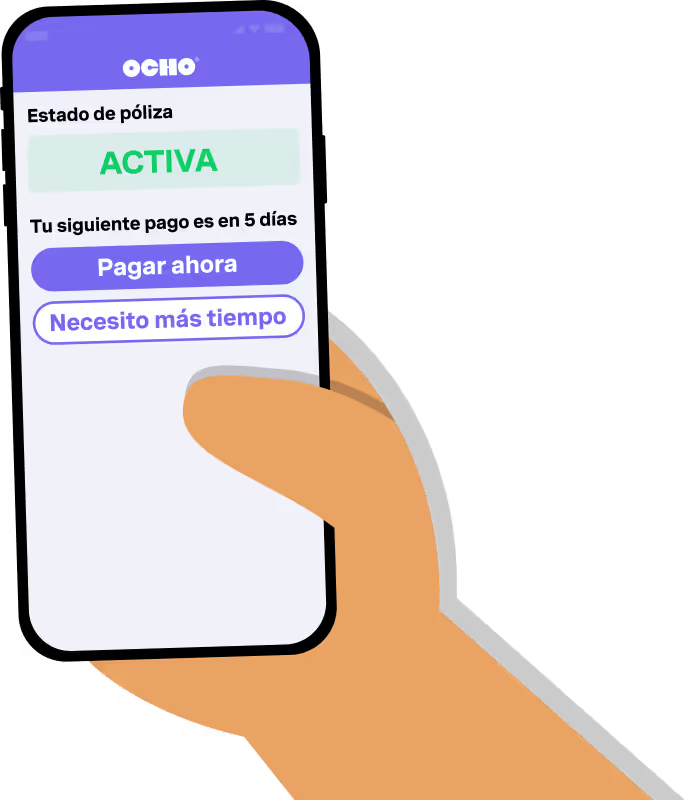
Realiza un seguimiento de tu póliza, administra los pagos y solicita una extensión de pago directamente desde tu perfil.




.svg)